


In modern production plants, maintenance is far more than a technical necessity – it is a strategic success factor. After all, even the smallest faults on a machine or system can have a serious impact on productivity, costs and safety.
Breakdown-based maintenance – a maintenance strategy in which repairs and maintenance work are only carried out once a breakdown has actually occurred – can be an economically viable option in certain companies. The key is to understand it correctly, use it in a targeted manner and support it with digital tools.
In this article, we take a closer look at the maintenance that takes effect in an emergency.
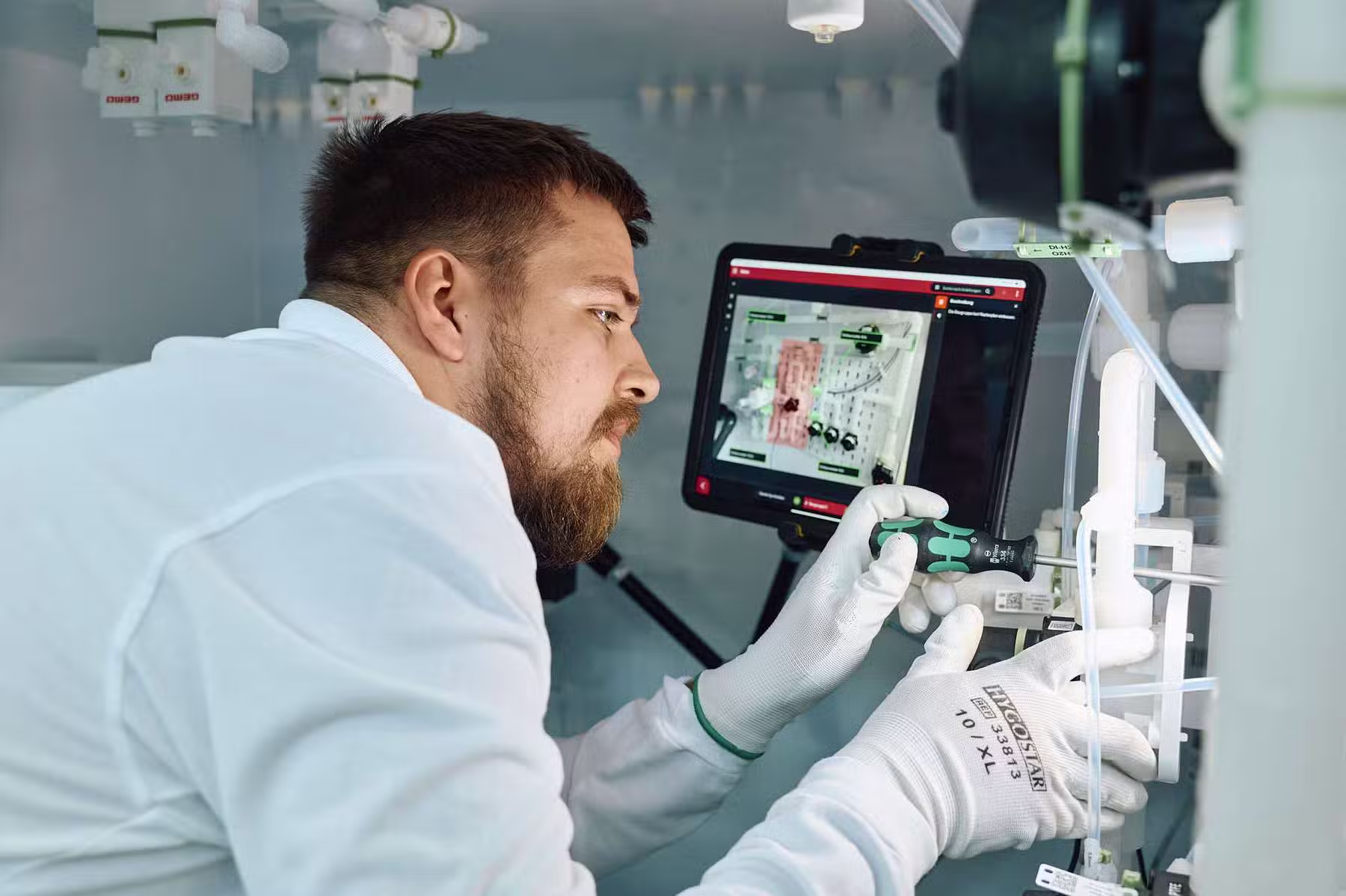
Definition: What do we mean by breakdown-related maintenance?
Breakdown-related maintenance (also known as failure-related maintenance or breakdown maintenance) is a form of maintenance in which maintenance measures and servicing are only carried out after a machine, system or device has failed. The term is often used synonymously with reactive maintenance or run-to-failure.
This approach therefore reacts to a problem instead of preventing it (this would be preventive maintenance).
The aim of such maintenance is to restore functionality with the lowest possible maintenance costs – quickly, reliably and with minimal impact on ongoing operations. Repair work is carried out when a fault has occurred on machines or components, not as part of preventive maintenance tasks, which is more commonly known as preventive maintenance or predictive maintenance.
While preventive maintenance or predictive maintenance rely on monitoring and condition analyses, this method is based on the principle of “repair when necessary”.
Depending on the application, system and industry, this approach can make economic sense – for example, if failures occur infrequently, spare parts are available at low cost or the affected object (the machine, the production system) does not play a safety-critical role.
Why is maintenance so important in production?
In any modern industry, well thought-out maintenance is the means of choice to ensure efficiency, safety and quality.
Efficiency and productivity: A planned machine downtime is better than an unforeseen one. Only when systems work reliably can resources be used optimally and operating costs reduced.
Safety: Defective machines or components pose a risk to employees and products. Functioning maintenance protects people and operations in equal measure.
Quality: Smooth processes ensure consistent product quality – and thus the goals of the entire company.
Legal standards: DIN 31051 and DIN EN 13306, among others, define clear requirements for maintenance measures – they ensure uniformity, traceability and documentation.
A professional maintenance strategy is therefore not an end in itself, but a central element of modern production control. As we have already seen here, a maintenance strategy that only repairs when something is broken brings with it certain challenges – more on this below.
Book your personal demo and experience the benefits directly!
Excursus: DIN 31051 – Maintenance according to standard
An efficient maintenance strategy is not only necessary for economic and organizational reasons. Safety, as defined in the legal framework, also suggests that maintenance and repair work should be kept at a high quality level with adapted strategies. In some cases, very precise specifications are made regarding the procedure.
DIN 31051, for example, describes the systematic structure of maintenance. It divides all activities into four main groups:
Maintenance – measures to maintain the target condition.
Inspection – assessment of the current condition and determination of deviations.
Repair – restoring functionality after a failure.
Improvement – increasing the reliability or service life of systems.
This standard forms the basis of many maintenance strategies, including breakdown maintenance. It ensures that measures, processes and objectives remain clearly defined and comparable – regardless of the size or system of a company.
DIN EN 13306 defines the basic terms and concepts of maintenance throughout Europe. It specifies how activities such as maintenance, inspection, repair and improvement are systematically differentiated and understood.
The aim of the standard is to create a uniform language and structure for asset management and maintenance processes. It thus serves as a basis for national and international maintenance strategies and for the implementation of DIN 31051 in practice.
The different types of maintenance
Failure-related or reactive maintenance
- Failure-related or reactive maintenance
- Preventive maintenance
- Condition-based maintenance
- Predictive maintenance
Each of these strategies has its own application, advantages and disadvantages. A more detailed overview can be found in our article on maintenance management.
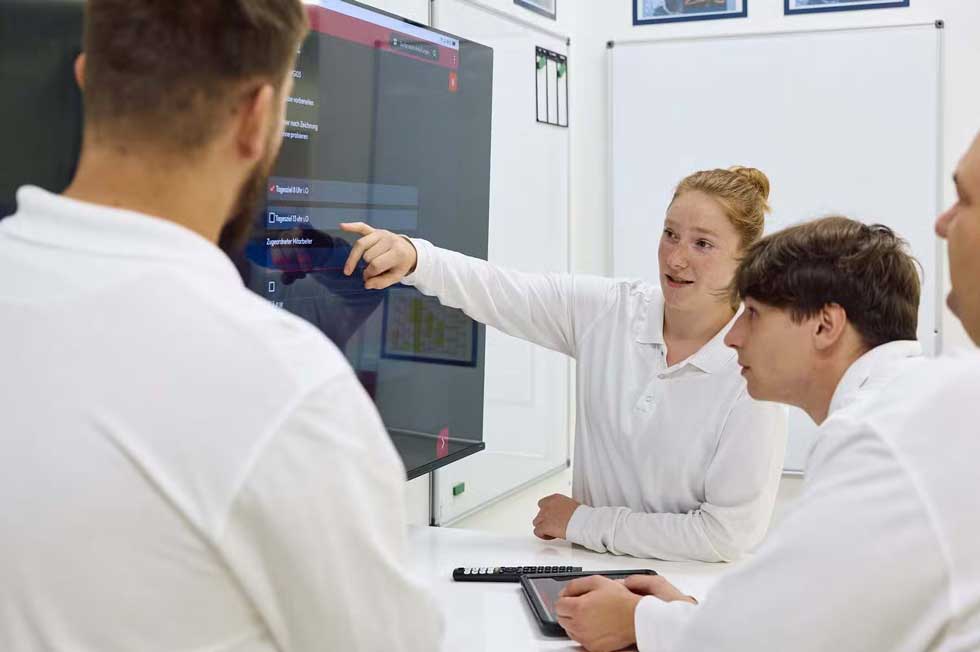
Disruption in the production plant – what this means in Industry 4.0
A malfunction in an ongoing process can have far more consequences today than in the past. In Industry 4.0, where machines, plants and systems are digitally networked, every machine failure has a direct impact on entire value chains.
Failures lead to downtimes that strain resources and budgets and are organizational challenges.
Increasing automation is also increasing complexity – a fault in a single component can quickly affect the entire operation. This is why fast response, clear instructions and digital support are crucial for efficient maintenance.
Time is money – the old saying applies just as much in Industrial Production 4.0 as it did in the past.
Do you want to support your maintenance with digital work instructions? We will be happy to explain how this is possible – click here to get in touch with your contact person.
Advantages of breakdown-related maintenance for production
Despite its risks, fault-based maintenance has clear advantages in certain areas of operation:
Focus on necessity: Maintenance work is only carried out when there is an actual failure – this saves maintenance costs and working time.
Minimal planning: As no fixed maintenance intervals are defined, there is no need for time-consuming planning.
Full utilization of the service life: Machines and systems are used until the actual end of their life cycle – maximum utilization of the investment.
Simple implementation: This method does not require any complex definition of monitoring systems and is therefore easy to implement.
This form of maintenance can therefore be a cost-effective option for companies that have robust devices and where breakdowns occur infrequently.
Are you in a hurry? Click here to go directly to our product, the tepcon instructor!
Challenges and risks associated with breakdown-related maintenance
However, the downside of this strategy should not be underestimated:
Unplanned downtime: This can lead to production stoppages, costs and delays.
High repair costs: Repair work after major breakdowns is usually more expensive than preventive maintenance tasks.
Safety risks: A spontaneous failure can create dangerous situations, especially with safety-critical systems.
Lack of transparency: Without continuous inspections, there is no overview of the technical condition of the machines.
This is why many companies today rely on a combination of reactive, preventive and predictive maintenance in order to achieve the best cost-benefit ratio.
Measures from the malfunction-related maintenance strategy
So what does maintenance actually look like if the company pursues a reactive maintenance strategy? Let’s take a look at specific measures for this form of maintenance.
If a fault is detected, the response must be precise and fast. If problems occur, technicians will take the following steps to get a device or entire system up and running again as quickly as possible:
- Immediate diagnosis and root cause analysis
- Elimination of the fault on the basis of existing professional experience
- Documentation of the repair work carried out
- Use of digital tools for efficient communication and planning
This is where the tepcon “instructor” comes into play.
The tepcon “instructor” in maintenance
The digital tool “instructor” from tepcon makes fault-related maintenance considerably more efficient.
Digital work instructions, process documentation and test instructions not only help technicians and teams to carry out repairs and maintenance quickly, but also guide them through the fault analysis.
With the “instructor”, all troubleshooting steps can be presented in a clear, visual and standardized way – with illustrations, videos and interactive elements. This has advantages for personnel planning and time management, because thanks to detailed instructions for troubleshooting, it takes fewer and possibly not particularly trained employees to resolve problems.
Forms with if-then logic support error analysis and only display relevant information depending on the status of the system. This means that everyone involved knows exactly what needs to be done.
Continuous logging also plays an important role: every intervention, every repair and every step is automatically recorded.
This facilitates subsequent inspections, supports fault analysis and promotes the improvement of the overall maintenance strategy in the long term.
The instructor turns a reactive emergency measure into a structured, digitally controlled process – a smart solution for maintenance in the age of Industry 4.0.
Do you want to take your maintenance strategy for plant and machinery to a new, digital level? Then start your test phase right away.
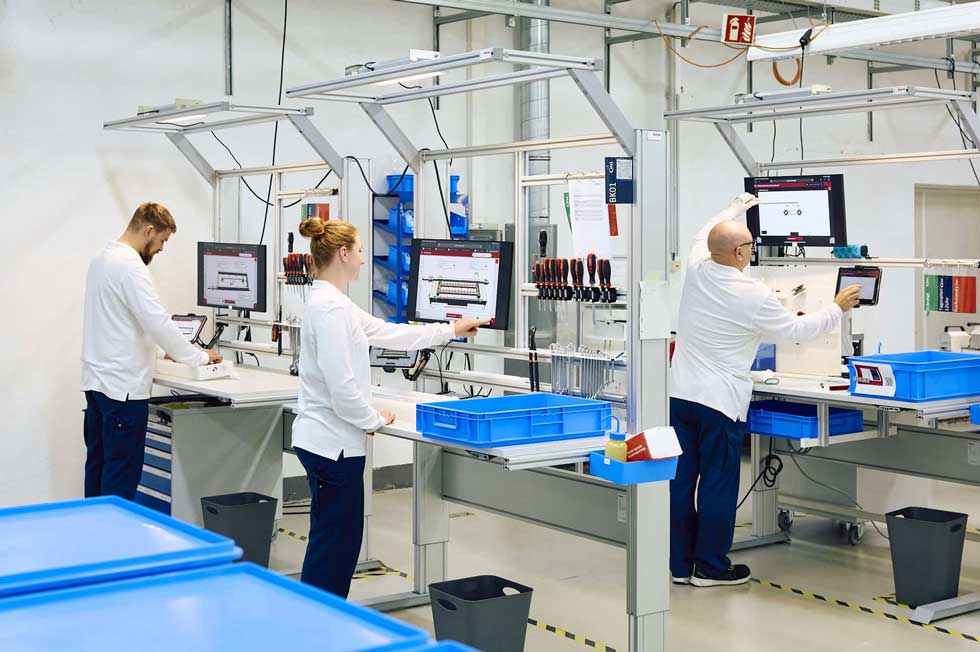
Minimize maintenance and downtimes with the “instructor”: Get your consultation appointment!
Despite modern alternatives, breakdown-related maintenance remains an important component in the plant management of many companies. The key is to control it intelligently, document it transparently and support it digitally.
The tepcon “instructor” does just that:
- Fast response to failures
- Clear instructions and visual aids
- Complete documentation of all measures
- Reduction of downtimes and costs
With the “instructor”, we have actually already arrived in the future of maintenance:
Mobile maintenance is a central element of modern maintenance concepts. Using tablets or smartphones, technicians can use the tepcon “instructor” to access relevant maintenance data, machine histories or spare parts lists directly on site – at any time and from any location.
This allows maintenance work to be documented more quickly, faults to be rectified in a more targeted manner and the quality of the measures carried out to be significantly increased.
The mobile use of the “instructor” considerably shortens response times and increases the efficiency of the entire maintenance organization in the long term.
Find out more now: Your personal contact for the “instructor” is there for you.