


Inhaltsübersicht
- 1 Induction of new employees: the key to a successful onboarding process
- 2 Induction of new employees: Definition
- 3 Why a successful onboarding process is important
- 4 Characteristics of successful onboarding
- 5 The induction plan: Getting new team members on board with a system
- 6 Tips for entrepreneurs: What newcomers need for a successful start
- 7 Tips and measures for the successful integration of new colleagues
- 8 Technical aids in the onboarding process: the tepcon instructor supports the start of the new job
- 9 The tool makes the difference: familiarization in the digital age
- 10 Challenges in onboarding new employees
- 11 Best practices: successful training of your employees in practice
- 12 Optimize training with tepcon now!
- 13 FAQ on the induction of new employees
Induction of new employees: the key to a successful onboarding process
New team members can be difficult to find in times of staff shortages. Once you have recruited them to your company, they should feel welcome in their new position as quickly as possible. Successful onboarding measures also ensure that new colleagues contribute to the company’s success as quickly as possible.
For this reason, we will take a closer look at the question of a successful induction phase.
What does it take to give new employees a good start? How does your company benefit from fast and sustainable onboarding?
What is involved in the induction of new employees and what steps and measures should be in place to ensure successful integration?
Are there digital tools that support the induction of new team members?
We explain all of this below. If you would like a personal consultation right away, you can find our employees directly here.
Among other things, we provide answers to the question of how we can make onboarding easier for you with digital tools.
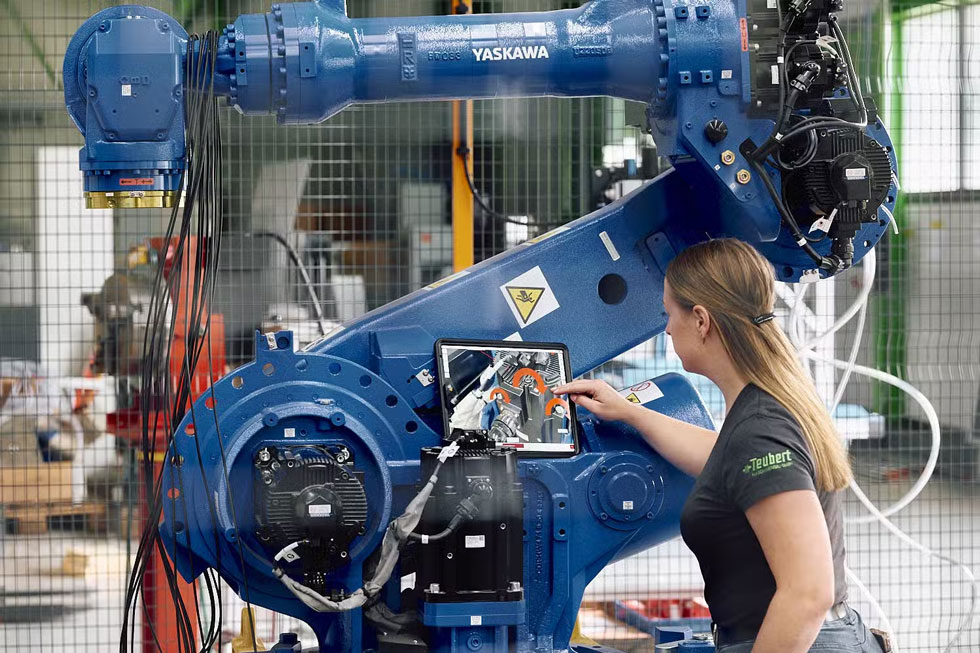
Induction of new employees: Definition
The induction of new employees is a structured process aimed at successfully integrating new colleagues into your organization.
Compensating for the declining quality of training, a lack of personnel for long induction periods for new employees and managing the fast-paced day-to-day business: these are the challenges facing department heads and production and line managers today.
On the one hand, the new employee should be taught as quickly as possible what their tasks are. On the other hand, it must of course be ensured that all work steps are carried out correctly and precisely.
Hardly any company can afford for (senior) employees to take a whole working day or even several days to introduce new team members to their work. Time is not just money here – often the necessary personnel for a comprehensive old-school induction are no longer available.
How do you get this problem under control with our tepcon instructor? Continue reading!
Why a successful onboarding process is important
A professional onboarding process is part of successful recruitment: if the specialists you have recruited disappear again straight away because the onboarding process doesn’t work, you have gained nothing.
Apart from that, it is imperative to keep the induction phase for new employees as short as possible.
Missing or inadequate training can quickly become a safety problem if the prescribed procedure is not followed correctly. Frequent inquiries from new employees hold up the entire company – this should also be avoided as far as possible. However, newcomers still need the information, even if no colleagues or managers are available to provide it.
It is therefore worth giving new employees the necessary attention right from the start, ideally with clearly defined processes for onboarding that provide clarity for the new members of the team.
Book your personal demo and experience the benefits directly!
Characteristics of successful onboarding
Successful onboarding is characterized by several important features:
- Clear communication: New employees need comprehensive information about their tasks, processes and the team.
- Structured process: A detailed induction plan provides orientation and gives new colleagues a sense of security.
- Integration into the corporate culture: Introduce the values and standards of your company so that the new employees feel part of the team right from the start.
- Targeted support: From the provision of materials to regular feedback meetings – any form of help for a fresh start is valuable and saves the management unnecessary effort after the induction phase.
Onboarding that combines these elements not only increases satisfaction, but also the productivity of your new employees. This ensures a quick and satisfying start for both sides – and you save time and money with a well thought-out, quick introduction of the employee to the team.
The induction plan: Getting new team members on board with a system
It’s always good to have a plan: This also and especially applies to induction.
A structured induction plan is at the heart of a successful induction. It ensures that all relevant sub-steps are clearly defined and timed.
This will not only save the time of those who look after new team members (ideally you yourself in combination with a mentor to accompany you during the first few days and weeks): Those who feel warmly and competently welcomed are more likely to stay beyond the probationary period.
If, on the other hand, things go wrong during induction, some new employees decide to leave the team again quickly.
This is part of a typical induction plan:
- Before the first working day: preparation of the workplace, provision of information and welcome letter.
- The first working day: introduction to the team, presentation of the company and briefing on the tasks.
- The first few weeks: training, support from a mentor and regular feedback meetings.
With a well-thought-out induction plan, you can ensure that your new employees receive all the tools and knowledge they need for their job. This is the only way to ensure a successful start to their new tasks without frustration, mistakes and unnecessary delays.

Tips for entrepreneurs: What newcomers need for a successful start
New employees often bring uncertainties and many questions with them. It is particularly important that they receive quick and uncomplicated answers to their questions, for example about processes and the workplace. This can also be done digitally instead of in person: The main thing is that the necessary information is available quickly and easily.
The following aspects are crucial for successful onboarding in your organization:
- Clarity about tasks: New colleagues want to know exactly what is expected of them.
- An open corporate culture: values such as respect and trust facilitate integration.
- Access to information: All relevant documents, contacts and processes should be quickly available.
- Quick integration into the team: A good relationship with colleagues and superiors increases motivation.
If you pay attention to these points, you will create a positive experience for your new employees.
And you are not alone with these tasks during the induction period: there are digital tools that provide quick access to all the necessary information and instructions to support the induction of new employees.
Large parts of the induction process for new employees can now be digitized with little effort.
You can create the necessary work instructions for the new workplace, process instructions for specific procedures and guidelines for new processes in a matter of minutes. In this way, you can help new employees to familiarize themselves with their areas of responsibility in detail – often without any additional personnel support.
For subsequent settings, you can reuse created work instructions, slightly adapted if necessary. Completely different production, service or manufacturing activities can be communicated comprehensively with digital work instructions and completely without personnel costs.
Are you in a hurry? Click here to go directly to our product, the tepcon instructor!
Tips and measures for the successful integration of new colleagues
So how does the induction of the new employee actually work?
We have put together a few ideas for you, all chronologically along the onboarding process.
Proven onboarding tips for employers:
- Plan early on: Determine how the induction should proceed before the first day of work. Create digital work instructions with comprehensive information materials that save personnel costs for the first working day and the first steps.
- Appoint mentors: An experienced person in the team can act as a point of contact and offer individual support.
- Incorporate interactive elements: Use workshops, team-building measures and practical training to add variety to the induction process.
- Obtain feedback: Regular discussions help to optimize the onboarding process.
If you use these tips to help an applicant start work successfully, there is a good chance that the new employee will be enthusiastic about the job beyond the first day – and stay longer than just the probationary period.
Technical aids in the onboarding process: the tepcon instructor supports the start of the new job
Digitalization offers numerous opportunities to make the induction of new employees more efficient. Digital tools such as the tepcon instructor help you to achieve your onboarding goals. For example, they can be used to standardize training courses and make information available at any time.
The use of modern technologies not only improves induction, but also the long-term integration of the employee and new tasks and processes.
Let’s take a closer look at this.
Advantages of digital tools for recruiting, onboarding and the time afterwards
- Structured processes: The onboarding process becomes clear and comprehensible.
- Time saving: The tepcon instructor automatically provides recurring content.
- Flexibility: New employees can learn content at their own pace, supported by videos, 3D instructions and checklists.
The tepcon instructor as a helper during training
The tepcon instructor is an innovative tool that has also proven itself in the induction of new employees. It enables digital instruction directly at the workplace and offers a wide range of functions.
For example, step-by-step instructions guide new colleagues safely through unfamiliar work processes. Without the need for an experienced employee to stand next to them and explain the same steps ten times.
With videos, documentation and checklists, all important information can be accessed at any time and from anywhere. This saves time and reduces stress, as it saves new colleagues many a trip to other employees when questions arise during the process.
Since procedures and processes are different in every company, the tepcon instructor is designed for individuality. The tool allows you to adapt every checklist, instruction and documentation to the needs of your company and the new employee. So that onboarding does not fail due to the specifics of your company – and you can really convey everything your new colleagues need to know in detail.
Our experience with many customers who use the instructor for induction training shows: It can significantly reduce the time spent on training new employees.
Digital tools ensure greater transparency and clarity, they provide detailed information for every workplace at all times and thus increase the overall quality of induction in your company.
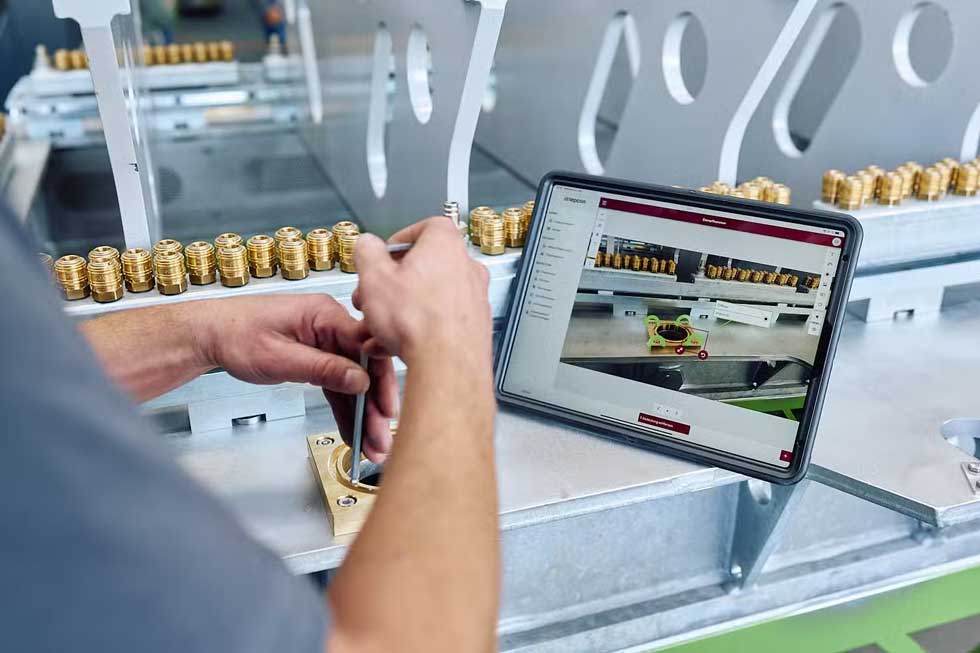
The tool makes the difference: familiarization in the digital age
The requirements for the onboarding process have changed as a result of digitalization. Today, companies have numerous digital tools at their disposal to make the onboarding of new employees more efficient.
Virtual inductions, digital induction plans and cloud-based platforms make it possible to provide information anytime and anywhere without having to assign staff every time. This flexibility is particularly valuable for companies that work remotely or hybrid.
With our digital solution, you can support both new and existing employees in your company: Not only do you save time and resources, but you also offer the newcomers to the team a positive experience right from their first day at work.
Challenges in onboarding new employees
Despite all the preparation, induction can present new employees with challenges. How the first phase in the new job, the first working day, is received should be part of your onboarding process and reflection. After all, it is not uncommon for new colleagues who do not feel properly “accepted” to quickly decide to move on to a different boss and a different company.
Common problems that can occur when training a new employee
If new employees are overwhelmed with a flood of information on their first day at work, this can lead to a feeling of being overwhelmed. New colleagues need time to familiarize themselves. Tools that provide independent access to only the information that is needed at the time help here.
If there is no suitable contact person, for example a so-called mentor or “buddy”, new employees quickly feel left alone.
New employees also need clarity about what the company expects of them: Precise definitions, goals and instructions for all tasks and processes avoid uncertainty, excessive demands and mistakes.
In order to avoid these stumbling blocks, structured and, in some cases, personal training is crucial. As a “virtual colleague”, the tepcon instructor can provide valuable support and significantly reduce the time and effort required from their “human colleagues”.
Best practices: successful training of your employees in practice
Some companies have developed proven strategies to optimize the induction of new employees, for example:
Mentoring programs: An experienced colleague accompanies the new employee during the first few weeks.
Onboarding events: Joint events for all employees promote an understanding of the corporate culture and values.
Checklists and guidelines: These ensure that no important steps are forgotten.
Such measures not only strengthen trust, but also promote identification with the values and goals of your company.
Book your personal demo and experience the benefits directly!
Optimize training with tepcon now!
Use the advantages of modern technology to take your induction to a new level. With the tepcon instructor, you can make the new employee’s first day at work a success.
Whether at your desk or on the shop floor – with the instructor you can create guidelines, the checklist for the day, the precise work instructions for each individual process on the working day.
Save a lot of energy, time and personnel, and convince new talent to work in your company: with a smooth and professional onboarding process that makes it easier for both sides to get the new employee off to a good start.
Future employees work independently, quickly and flexibly: We have the necessary tools for this!
Find out how you can increase the satisfaction of your boss and new colleagues with a structured onboarding process and digital tools. Contact us and start a successful future – with a professional induction plan and the tepcon instructor at your side!
FAQ on the induction of new employees
Why is a structured induction for new employees so important?
With a clear checklist, for example, you can ensure that all important aspects, such as the introduction to work processes or the communication of rules, are covered. Even the smallest details, such as the equipment for the desk, can be prepared using a checklist.
Effective induction increases motivation and promotes long-term employee retention, which also reduces recruiting costs.
How can training be tailored to the skills of employees?
Digital work instructions allow new employees to access only the information they currently need: This takes into account the individual level of knowledge and saves time.
Regular meetings with superiors or mentors help to review progress and adapt the induction to the needs of the new colleague. This ensures a smooth start to the new job.