


Inhaltsübersicht
- 1 What Knowledge Management Is All About
- 2 Definition: Knowledge Management
- 3 Why is knowledge management so crucial for businesses today?
- 4 How does knowledge loss occur—and what are its consequences?
- 5 What types of knowledge exist within the company?
- 6 What are the objectives of knowledge management?
- 7 An Overview of the Knowledge Management Process
- 8 Digital Technologies and Knowledge Management Systems
- 9 Knowledge Management Tools as Enablers of Efficiency
- 10 Side Note: How Important Is Corporate Culture for Knowledge Management?
- 11 Knowledge Management Methods for Sustainable Knowledge Transfer
- 12 How does knowledge management improve business processes?
- 13 Why is knowledge management a competitive advantage?
- 14 How can it be successfully integrated into existing work processes?
- 15 How does knowledge management support innovation?
- 16 Preserving knowledge for the long term
- 17 What models and approaches are there?
- 18 Conclusion: Knowledge Management as a Strategic Foundation
- 19 FAQ on Knowledge Management
What Knowledge Management Is All About
Knowledge is power: This old adage remains just as relevant in modern businesses. In a globalized economy where information seems to be available anywhere and anytime, companies benefit from a well-thought-out strategy regarding their corporate knowledge culture.
The field responsible for this is knowledge management. It ensures that knowledge within the company is not lost, but is systematically recorded, structured, and made available. It connects people, processes, and systems to preserve expertise over the long term, make it more readily accessible, and foster innovation.
Especially in times of rising employee turnover and shorter tenure, knowledge management is becoming a strategic foundation: without structured knowledge capture, valuable experience, well-established processes, and key contacts are lost. A professional knowledge management system addresses this issue, improves the quality of decision-making, and enables sustainable organizational learning.
Definition: Knowledge Management
Knowledge management describes the systematic handling of knowledge within an organization. The term encompasses all processes and activities aimed at identifying, acquiring, developing, storing, distributing, and utilizing knowledge. This definition makes it clear that knowledge management goes far beyond the mere collection of information. It is not merely a matter of storing data, information, or content, but of strategically converting these into value.
This is precisely where knowledge management differs from information management. While information management primarily focuses on the administration of data and information, knowledge management concentrates on their application in a business context. Knowledge thus becomes a strategic resource that must be actively managed: In the literature on knowledge management, this relationship is described as a central component of modern corporate management for achieving knowledge-related goals.

Why is knowledge management so crucial for businesses today?
The importance of knowledge management has grown significantly in recent years. Companies operate in an increasingly dynamic world where knowledge becomes outdated more quickly while, at the same time, new knowledge is constantly being generated. At the same time, demographic changes and rising employee turnover are putting valuable knowledge assets at risk.
When employees leave the company, not only is explicit knowledge lost, but implicit knowledge as well. This term encompasses forms of knowledge such as experience, skills, and routines that are often undocumented. The loss of this “tacit knowledge” can have a significant impact on your production efficiency. Projects are delayed, known mistakes are repeated, and efficiency declines.
Knowledge management mitigates this risk by systematically capturing and making knowledge accessible. Companies that follow a clear knowledge management strategy have been shown to achieve better results because they can access existing knowledge more quickly and continuously expand their knowledge base.
How does knowledge loss occur—and what are its consequences?
Knowledge loss often creeps in gradually and goes unnoticed for a long time. It becomes particularly critical when experienced employees—who are usually the custodians of tacit knowledge—leave the company or when internal changes take place. Without a structured approach to knowledge preservation, established processes, proven solutions, and valuable contacts disappear.
This loss affects not only individual tasks but can destabilize entire organizations. Finding information and data takes longer, decisions become less certain, and costs rise because projects have to be rethought and the remaining employees lack the necessary expertise. Knowledge holders often possess tacit knowledge that cannot be easily replaced.
Systematic knowledge management prevents this from happening by identifying and documenting knowledge early on and transferring it to a central knowledge database. This ensures that a solid knowledge base remains available regardless of individual personnel.
What types of knowledge exist within the company?
Knowledge within a company can generally be divided into two categories.
Explicit knowledge
With the help of digital tools, your employees can easily capture this knowledge capital: Let our experts explain how we can support you with our software.
Tacit knowledge as a critical success factor
Leveraging implicit knowledge in a targeted manner
Overall, it is clear that knowledge management is always a cultural endeavor. An organization can only benefit from it in the long term if employees are willing to share their knowledge. An open knowledge culture therefore forms the foundation of any knowledge management strategy.
In a hurry? Click here to go directly to our product, the tepcon instructor!
What are the objectives of knowledge management?
Knowledge management aims to leverage knowledge as a strategic resource and use it to gain a competitive advantage. To this end, companies define specific knowledge objectives that specify what knowledge is needed to achieve their strategic goals.
Essentially, three main objectives can be identified:
- Preserving knowledge to prevent knowledge loss and maintain existing knowledge bases
- Improving the use of knowledge to streamline processes and speed up decision-making
- Promoting innovation by combining and linking existing knowledge resources
These objectives illustrate that knowledge management encompasses both operational and strategic levels.
An Overview of the Knowledge Management Process
The knowledge management process describes the systematic sequence of all activities necessary for managing knowledge. It begins with the identification of relevant knowledge assets and extends through to their practical application in day-to-day work.
First, knowledge that is critical to the company’s success is identified. This knowledge is then supplemented through acquisition, such as through continuing education or external sources. In a subsequent step, the knowledge is processed and stored in appropriate systems. Distribution ensures that all relevant employees have access—for this dissemination, digital tools have long since become indispensable.
This process is not static but iterative in nature. Knowledge managers must continuously adapt processes and information resources to respond to new requirements. Automated documentation using “instructor AI” is particularly efficient, as it allows clearly structured and easy-to-understand instructions and process descriptions to be created at the click of a button.
Digital Technologies and Knowledge Management Systems
Modern knowledge management systems are a central component of successful knowledge strategies. They enable the structured storage of information and ensure that knowledge can be found quickly. Integration into existing IT environments is particularly important, as isolated solutions are rarely accepted.
A knowledge management system serves as a central knowledge platform where information is consolidated. Document management systems handle version control and the structured storage of content, while modern AI-powered solutions enhance the search and linking of knowledge.
The use of appropriate tools and software leads to a significant increase in efficiency, as employees spend less time searching for information and can access relevant content at any time.
How does that work exactly? Find out during our consultation or sign up right away for your 14-day trial with the “instructor”.
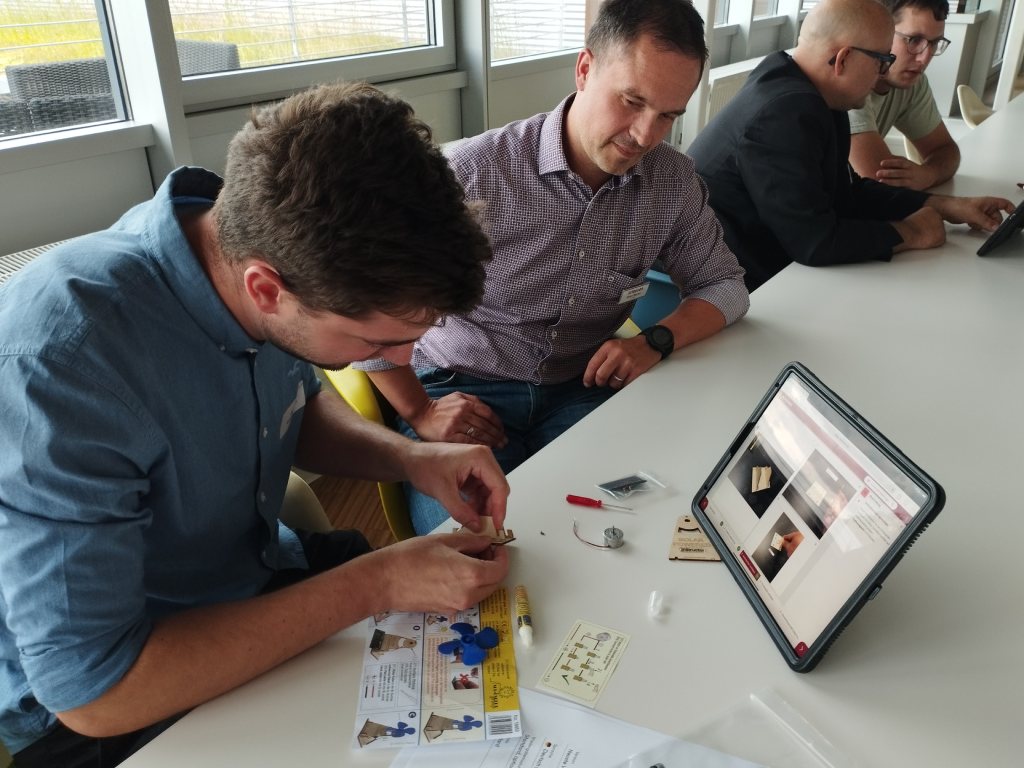
Knowledge Management Tools as Enablers of Efficiency
Knowledge management tools help companies systematically capture, store, and distribute knowledge. However, these tools are only effective if they are integrated into daily workflows and are easy for employees to use.
Side Note: How Important Is Corporate Culture for Knowledge Management?
Knowledge management is not only a technical challenge but also a cultural one. A thriving knowledge culture ensures that knowledge is actively shared and that employees are willing to pass on their expertise.
This culture is based on trust, transparency, and clear rules for all employees. Managers play a central role in this, as they actively model and promote the sharing of knowledge. Without such a culture, even the best systems are generally ineffective.
A strong culture of knowledge helps to transform individual knowledge into collective knowledge. This creates a stable knowledge base that functions independently of any single individual.
Knowledge Management Methods for Sustainable Knowledge Transfer
In addition to technical solutions, knowledge management employs various methods that support knowledge transfer. These include, for example, mentoring programs, workshops, and structured feedback formats.
These methods promote the direct exchange of expertise among employees and facilitate the sharing of tacit knowledge. At the same time, they support learning within the organization and strengthen collaboration between teams.
It is important to note that, in addition to these models, digital tools remain the first choice, as they are indispensable across the various methods of knowledge transfer—not only for storing the knowledge gained, but also for making the results of the exchange available to your employees.

How does knowledge management improve business processes?
Knowledge management plays a key role in optimizing processes. When employees can access existing knowledge more quickly, projects can be implemented more efficiently. Information is available where it is needed, and decisions can be made based on a solid foundation of knowledge. Thanks to appropriate software tools, staff no longer need to be assigned to handle knowledge transfer, as self-explanatory step-by-step instructions guide users through the relevant processes.
Another advantage is the elimination of duplicate work. Existing solutions do not need to be redeveloped, which reduces costs and conserves resources. At the same time, the systematic documentation of successes and failures enables the continuous improvement of products and services.
Why is knowledge management a competitive advantage?
Companies that consistently implement knowledge management benefit from greater innovation and improved adaptability. Knowledge is used strategically to develop new solutions and optimize existing processes.
This competitive advantage stems in particular from the ability—thanks in part to digital tools—to leverage knowledge more quickly than other market participants. Companies can respond more quickly to changes and adapt their strategies flexibly. Knowledge management thus becomes a critical success factor.
What role do people play in knowledge management?
People are at the heart of all knowledge management. They are the bearers of knowledge and the key players in the knowledge management process. No company can function without their active participation.
Employees contribute their skills, experiences, and perspectives to the organization. The exchange of knowledge fosters a collective understanding that forms the foundation for successful collaboration. It is the responsibility of leaders to encourage this exchange and create the appropriate conditions for it.
The ideal tool for sharing, documenting, and accessing data and knowledge later is digital: Let us explain the details of our “instructors” in detail.
Get in touch with us now Contact and take your maintenance to the next level.
How can it be successfully integrated into existing work processes?
Effective knowledge management must be seamlessly integrated into existing processes. Only then will it be accepted by employees and actively utilized. The implementation of isolated solutions often results in systems going unused and their potential remaining untapped.
Companies should therefore make sure to establish knowledge management as an integral part of their daily operations. Clear responsibilities, easy access, and an intuitive user experience: that’s exactly what we make possible with “instructor.”
Challenges in Practice
In practice, companies face various challenges in knowledge management. These include, in particular, a lack of time for documentation, unclear responsibilities, and a reluctance among employees to share knowledge.
Technical hurdles can also play a role when systems are not user-friendly or are not sufficiently integrated. However, these challenges can be overcome with a clear strategy and appropriate measures.

How does knowledge management support innovation?
Knowledge management acts as a catalyst for innovation. By combining and linking existing knowledge, new ideas and solutions emerge.
Organizations that actively utilize knowledge are able to respond more quickly to change and develop innovative products and services. Knowledge management thus lays the foundation for sustainable development.
What role do managers play?
Their responsibilities include fostering an open culture of knowledge, providing resources, and encouraging employees to participate actively. Through their behavior, they shape how knowledge is managed within the organization.
AI in Knowledge Management
The use of technology to support a culture of knowledge is a key factor in its success. Artificial intelligence (AI) can significantly improve knowledge management through real-time analysis and the provision of relevant information. Immersive technologies such as virtual reality create realistic and risk-free learning environments that are revolutionizing the learning process.
The tepcon “instructor” can, for example, be used as a connected worker platform: This helps us support knowledge transfer within your company, for example through comprehensive worker guidance, with digital work instructions and interactive learning opportunities. Internal wikis, social intranets, and similar tools can also be part of a knowledge management strategy.
What do you need to foster a positive knowledge culture in your company? A key prerequisite is that your organization is open to new technologies, ensuring successful implementation.
We would be happy to advise you on the possibilities our digital tool offers for your internal knowledge management, including in the area of AI.
Preserving knowledge for the long term
Knowledge preservation is an ongoing process that involves various measures. In addition to systematic documentation, opportunities for personal exchange play an important role. Only by combining technical and social approaches can knowledge be preserved in the long term.
Companies should ensure that knowledge is not only stored but also regularly updated. This keeps it relevant and ensures it can be used effectively.

What models and approaches are there?
The academic literature contains various models of knowledge management, each with its own areas of emphasis. Some models focus on processes, while others emphasize people or technologies.
These models provide guidance for developing custom strategies and help companies devise appropriate solutions. Despite their differences, all models share the same goal: to make knowledge systematically usable.
Conclusion: Knowledge Management as a Strategic Foundation
Knowledge management is a key foundation for the success of modern businesses. It connects people, processes, and systems and enables the efficient use of knowledge.
Companies that strategically implement knowledge management benefit from better decision-making, more efficient processes, and greater innovation. At the same time, they safeguard their knowledge for the long term and lay the foundation for sustainable growth.
A concrete real-world example demonstrates how these principles can be implemented: The tepcon instructor is a digital assistant designed specifically to help preserve knowledge within the company. Whether it involves products, internal processes, or the structured handover of tasks to successors, this tool ensures that information is centrally recorded and accessible to all employees in a clear and understandable way at all times. Work instructions are not merely created as static documents but are built step by step along real-world processes. In this way, maintenance procedures, machine operations, or changes to processes can be systematically documented and shared within the team. Companies thus benefit from a clearly structured knowledge base that simplifies day-to-day work and contributes to quality assurance in the long term.