


Inhaltsübersicht
- 1 Strategies and digital support from the tepcon “instructor”
- 2 Definition of maintenance management
- 3 The importance of maintenance in the company
- 4 Legal basis for maintenance management
- 5 Strategic and operational maintenance measures
- 6 Basic measures in maintenance management: maintenance, inspection, repair, improvement
- 7 Strategies for maintenance (reactive, condition-based, preventive, prospective)
- 8 Maintenance – a key success factor
- 9 Measures in maintenance management
- 10 Overall equipment effectiveness as a key figure
- 11 Digital instructions and their advantages in maintenance management
- 12 Digitize maintenance management now
- 13 FAQ on maintenance management
Strategies and digital support from the tepcon “instructor”
Today, modern maintenance management is a decisive success factor for manufacturing companies. It ensures that systems, machines and equipment work reliably, that safety is guaranteed and that unplanned downtimes are minimized. At the same time, it helps to secure the value of production equipment over its entire service life.
In this article, we take a closer look at the principles, measures and strategies involved in maintenance management – and how digital solutions such as the “instructor” can help.
Would you like individual advice on the combination of maintenance activities and our product? Then contact us directly here!
Definition of maintenance management
Maintenance management refers to the entirety of all organizational, technical and administrative measures required to ensure the functionality of systems, machines and equipment over their entire service life.
The legal basis for this can be found in the relevant regulations: DIN 31051 and DIN EN 13306 provide binding definitions and terms.
At its core, maintenance management is about ensuring that the planned use of objects in the company succeeds without unexpected failures through systematic maintenance planning, clear definition of processes and targeted control of maintenance activities. The aim of maintenance is therefore to preserve the target condition of the production facilities or to restore this condition after malfunctions.
In short, maintenance management ensures that everything runs as it should.
The importance of maintenance in the company
The importance of maintenance has increased significantly in recent decades. Whereas in the past, work was often reactive, today it is clear that without targeted maintenance management, downtimes, high costs and limited safety can massively jeopardize the competitiveness of an industrial company.
A strategic organization of maintenance activities ensures the reliable operation of production equipment, buildings and devices. This leads to a longer life cycle of the machines and systems, better productivity and minimization of disruptions to the ongoing process.
Legal basis for maintenance management
The legal framework for maintenance management is diverse and forms a binding basis for all companies that operate plant, machinery or equipment.
- DIN 31051 defines the four basic measures of maintenance: maintenance, inspection, repair and improvement. It describes the systematic procedure that enables maintenance activities to be carried out seamlessly and thus ensures clear organization.
- DIN EN 13306 goes one step further: it specifies binding terms and standardized definitions so that the same basic principles are used throughout the industry. This includes the exact description of the target condition and the actual condition, the definition of maintenance strategies and specifications for documentation and monitoring. In this way, the standard creates a common language for specialists, manufacturers and testing organizations.
- Other legal regulations also apply, such as the Occupational Health and Safety Act, the Ordinance on Industrial Safety and Health and the requirements of the employers’ liability insurance associations. They stipulate that systems must be inspected regularly to ensure the safety and health of employees.
The consequences of non-compliance with these requirements can be considerable:
- Legal consequences: Failure to comply with regulations can result in fines, liability claims or, in the worst case, criminal prosecution.
- Economic risks: Lack of or inadequate maintenance can lead to longer downtimes, high costs for unplanned repairs and a shortened service life of properties.
- Risk to safety: If standards are ignored, the probability of malfunctions, accidents or technical impairments increases, which can endanger employees and operations.
- Loss of warranty: Manufacturers often link warranty services to proof of regular maintenance in accordance with the standard. A lack of documentation can mean that claims cannot be asserted.
This makes it clear that compliance with the standards and legal requirements for maintenance management is not just a question of organization, but also protects the function of the production equipment, ensures competitiveness and minimizes risks for the entire company.
Book your personal demo and experience the benefits directly!
Strategic and operational maintenance measures
In maintenance management, a distinction is made between strategic and operational measures.
Strategic measures include long-term planning, the organization of tasks and the definition of maintenance strategies. The aim is to systematically focus on efficiency, minimize downtimes and extend service life.
Operational measures, on the other hand, relate to the specific implementation of activities such as inspection, maintenance or repair.
Both levels are interlinked: only through a consistent combination of maintenance management strategies and actual practice can companies make optimum use of their production resources.
Basic measures in maintenance management: maintenance, inspection, repair, improvement
The cornerstones of maintenance management are defined in DIN 31051:
- Maintenance: Delaying wear and tear through preventive activities.
- Inspection: Regular assessment of the actual condition in order to detect deviations from the target condition at an early stage.
- Repair: Restoring the functionality of an object after failures or malfunctions.
- Improvement: Adaptation of facilities to increase the efficiency and value of production resources.
These four basic measures form the basis of all maintenance activities. They enable systematic implementation, ensure planned use and prevent unplanned downtime.

Strategies for maintenance (reactive, condition-based, preventive, prospective)
Maintenance management recognizes different maintenance strategies that are applied depending on the property and operation:
Reactive maintenance: Intervention only after a failure. Inexpensive to prepare, risky due to long downtimes.
Preventive maintenance: Time- or usage-dependent measures to minimize risks.
Condition-based maintenance: Monitoring of relevant parameters in order to continuously compare the actual condition with the target condition.
Prospective maintenance: use of data analysis and AI to predict future faults.
The choice of the appropriate strategy depends on the function, value and use of the systems. A combination of different approaches and measures is often chosen to achieve the intended goal.
Maintenance – a key success factor
Modern maintenance is much more than just repairing defective machines. It is an integral part of management and crucial to a company’s productivity and competitiveness. Above all, however, it is an ongoing process that requires constant adjustments and new measures: the entire maintenance project requires management attention at all times.
Through clear organization, systematic planning and intelligent control of maintenance activities, the benefits of high system availability, lower costs and longer system service life can be fully exploited.
Are you in a hurry? Click here to go directly to our product, the tepcon instructor!
Measures in maintenance management
Selecting the right measures is a key aspect of maintenance management.
The maintenance measures include
- all technical and administrative measures relating to both operational implementation and systematic control.
- specific activities such as maintenance, inspection, repair and improvement.
- strategic tasks such as defining suitable maintenance strategies and documenting all processes.
Each of these individual measures contributes to securing the target status in production and makes it possible to minimize downtimes.
Achieving the target condition – the primary goal in maintenance management
The target condition describes the defined, functional condition of an object or system. All maintenance activities are aimed at maintaining this target condition or restoring it after deviations.
Precise documentation or determination of the target condition is therefore essential. It forms the basis for the planning of maintenance measures and the subsequent assessment of the success achieved with the maintenance measures carried out.
Recording the actual condition – basis for the assessment
Recording the actual condition is another key task in maintenance management. Regular monitoring, inspection and assessment reveal deviations from the target condition.
Only when the actual status has been precisely determined can targeted measures be initiated to restore functionality after failures, for example.
Overall equipment effectiveness as a key figure
Anyone involved in maintenance management will occasionally come across the abbreviation OEE or “overall equipment effectiveness”.
Overall equipment effectiveness (OEE) is one of the most important key figures in maintenance management. It combines value drivers such as availability, performance and quality. A high OEE shows that systems, machines and equipment are being used efficiently.
The OEE can be sustainably improved through a close combination of maintenance strategies, documentation and digital control.
Digital instructions and their advantages in maintenance management
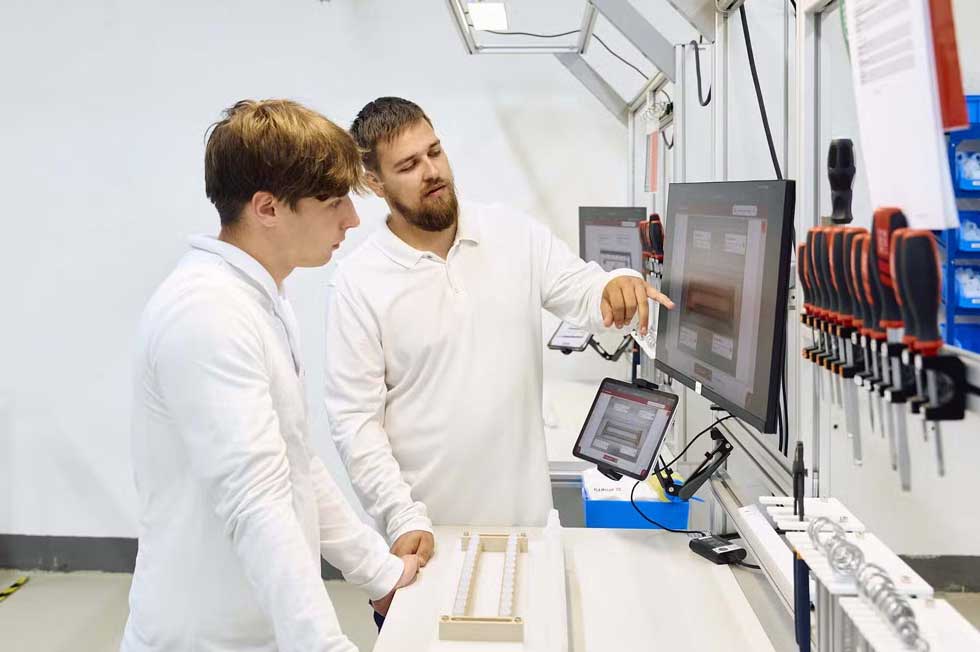
Create strategies, keep documentation and optimize with digital control: This is where our “instructor” software comes in as an indispensable helper in maintenance management. After all, digital work instructions, process and test instructions are a key lever for optimizing maintenance management.
They enable uniform documentation of all maintenance activities.
Employees receive clear instructions on how to carry out activities such as inspection, maintenance or repair.
Errors are reduced, safety is increased and efficiency is improved.
Standardized processes and transparent organization improve the productivity of the entire operation.
The “instructor” not only supports compliance with DIN EN 13306 and DIN 31051, but also the consistent improvement of all relevant processes.
Digitize maintenance management now
Efficient maintenance management is the basis for safe systems, low downtimes and high productivity. With the tepcon “instructor” you get a tool that sustainably improves the execution of maintenance activities. request a demo now and experience how digital work instructions can take your company to the next level in the area of maintenance planning and execution.
FAQ on maintenance management
What are the four maintenance measures?
What is maintenance management?
Maintenance management describes the entirety of all organizational and technical actions that are necessary to permanently ensure the target condition of systems and devices. It involves the systematic planning, monitoring and targeted control of measures throughout the entire management process. In addition to cost control, typical aspects include ensuring availability and extending service life.
What is the difference between maintenance and servicing?
What types of maintenance strategies are there?
Four basic strategies can be distinguished in maintenance management: reactive, preventive, condition-based and prospective approaches. They differ in their approach to wear and tear and risks. Reactive strategies only take effect after malfunctions, preventive strategies are based on fixed intervals, condition-based strategies use continuous measurements and prospective strategies are based on data analyses. Each strategy has its specific advantages and is selected depending on the equipment used, the production requirements and the desired objectives.