


Reducing Lead Times
Industrial manufacturing faces constant pressure to produce faster, more resource-efficiently, and—above all—error-free. In this challenging environment, lead time is one of the most meaningful metrics for a company’s operational success. It plays a decisive role in determining how agile a company is in responding to changing customer demands and how efficiently its capital is utilized. Anyone who wants to streamline processes and work more productively must accurately track, analyze, and systematically reduce this metric. This guide provides practical insights into how total lead time is composed, where typical bottlenecks occur, and which targeted strategies—particularly through the digitization of work instructions—you can use to permanently minimize unproductive downtime in your manufacturing operations.
The tepcon instructor: The digital solution to long wait times in production
Before we dive deep into the theoretical fundamentals of key performance indicators, it’s worth taking a look at real-world practices on the factory floor. Many companies are looking for that one major lever to speed up their processes. Often, however, the real cause of delays isn’t outdated or slow machinery, but rather missing or unclear information. Employees spend a lot of time searching for paper records, consulting with supervisors, or waiting for a process step to be approved.
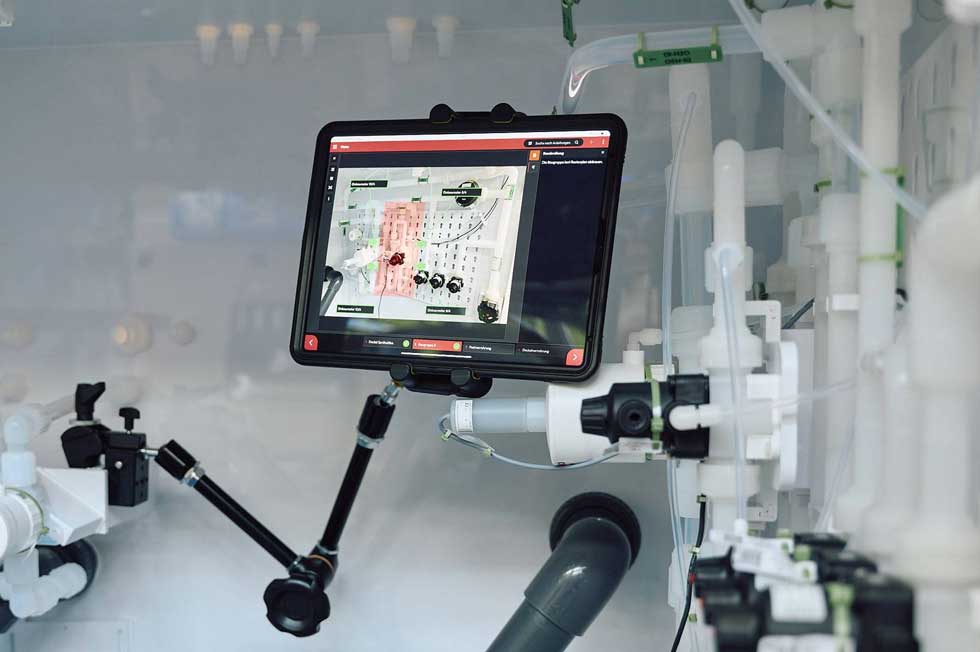
This is where our tepcon instructor comes into play: This intelligent software solution is designed to actively reduce total lead time by minimizing friction between stations. The instructor guides employees through every process—visually and in an easy-to-understand way. Whether in traditional production, final assembly, or supporting technical services, the system provides the necessary expertise directly at the workplace. Unproductive search times are eliminated, and the team can focus fully on actual value creation.
Rapid implementation through digital work instructions
Instead of bulky manuals or confusing Excel spreadsheets, workers today use tablets, smartphones, or fixed monitors right on the production line. With a quick scan, they can access the appropriate work instructions. The instructor guides staff safely through the process using images, short video clips, and interactive checklists. This speeds up setup procedures, shortens training times, and ensures that each production step flows seamlessly into the next. Using the software thus lays the foundation for a measurable increase in production efficiency.
Definition: What Is Lead Time?
A clear definition is necessary to develop targeted measures. In industry, lead time refers to the period of time it takes for an order to pass through all stages of production from start to finish. It serves as a key performance indicator for the speed and efficiency of the entire value chain.
The total lead time of a product
The total lead time of a product traditionally begins with the customer placing an order and ends with delivery or final completion at the plant. This period therefore encompasses far more than just the active processing of the workpiece. It reflects the entire journey of the order through the company—from administrative order processing through work planning to logistics.
In short: Throughput time consists of processing time and waiting time.
Accurate knowledge of this total time provides the basis for systematically analyzing processes.
In a hurry? Click here to go directly to our product, the tepcon instructor!
The Four Components of Lead Time
To develop sound strategies for optimizing lead times, process engineers break down the total lead time into four main components. The sum of these factors equals the total lead time:
Processing Time
This is the productive phase. Employees or machines are actively working on the material. This is where the direct value creation takes place—the value for which the customer ultimately pays. Surprisingly, in many companies, pure processing time often accounts for only a small fraction of the total duration.
Setup time
Before machining begins, technicians prepare the machines. Setup time includes tool changes, loading new CNC programs, calibrating sensors, or making specific materials available at the workstation. Long setup processes interrupt the production flow, reduce machine availability, and drive up costs.
Transport Time
Materials, components, and semi-finished products move through the production halls. Transport time refers to the duration it takes to travel from one workstation to the next or from an intermediate storage area to a machine. Intelligent hall layouts aim to keep these transport routes as short as possible so that production output is not slowed down by logistical bottlenecks.
Dwell Time and Waiting Time
This is usually where the greatest potential for cost savings lies. Dwell time is the period during which the product lies idle. This typically occurs when workpieces are waiting in front of machines experiencing bottlenecks, are temporarily stored in buffer storage areas, or when employees are waiting for approvals or missing components. Every minute of waiting time is unproductive and unnecessarily extends the duration of the order.
The Importance of Lead Time for Companies
Fast production determines a company’s market position. The significance of this metric therefore extends far beyond the factory gates and influences overall operational performance—and thus profitability.
Why Time Is Money in Industrial Operations
Long dwell times tie up valuable capital. When semi-finished products sit idle in the production facility, work-in-progress inventory builds up. This inventory occupies expensive warehouse space, requires constant administrative effort, and carries the risk that components will be damaged by unnecessary handling. Every day that an order leaves the plant sooner results in earlier receipt of payment. A shorter turnaround time thus directly strengthens the company’s liquidity.
Short Turnaround Times – Benefits at a Glance
- Higher Customer Satisfaction: Customers appreciate fast response times. Those who reliably meet or beat delivery deadlines build long-term customer loyalty.
- Improved delivery reliability and on-time performance: The shorter the process, the less room there is for unforeseeable disruptions. On-time performance and the ability to deliver on schedule increase measurably.
- Increased flexibility: Agile manufacturing adapts to last-minute changes or rush orders without bringing the entire system to a standstill.
- Increased Productivity: Employees spend less time waiting or searching and can focus on actual value creation, which directly increases labor productivity.
- Improved competitiveness: Speed is one of the strongest selling points today compared to manufacturers who are stuck in outdated, sluggish structures.
How can lead times be reduced?
The question “How can lead times be reduced?” is constantly on the minds of managers and production supervisors. The answer requires a systematic analysis of all internal and cross-departmental processes within the company.
Strategies for Optimizing Lead Times – Measures That Really Help
Reducing lead times requires a holistic approach. Those who focus solely on a single machine often merely shift the bottleneck to the next workstation. Therefore, a comprehensive view of the entire value chain is necessary. The following practical approaches help to accelerate processes in a sustainable way:
Integrate Local Suppliers into the Supply Chain
Optimize Production Requirements
Establish clear processes and work instructions
Leveraging Automation and Smart Technologies
Detecting Problems Early
Outsource specific subprocesses
Implementing the Just-in-Time Method
Increase Flexibility Through Batch Splitting
Reducing Lead Time with Digital Systems
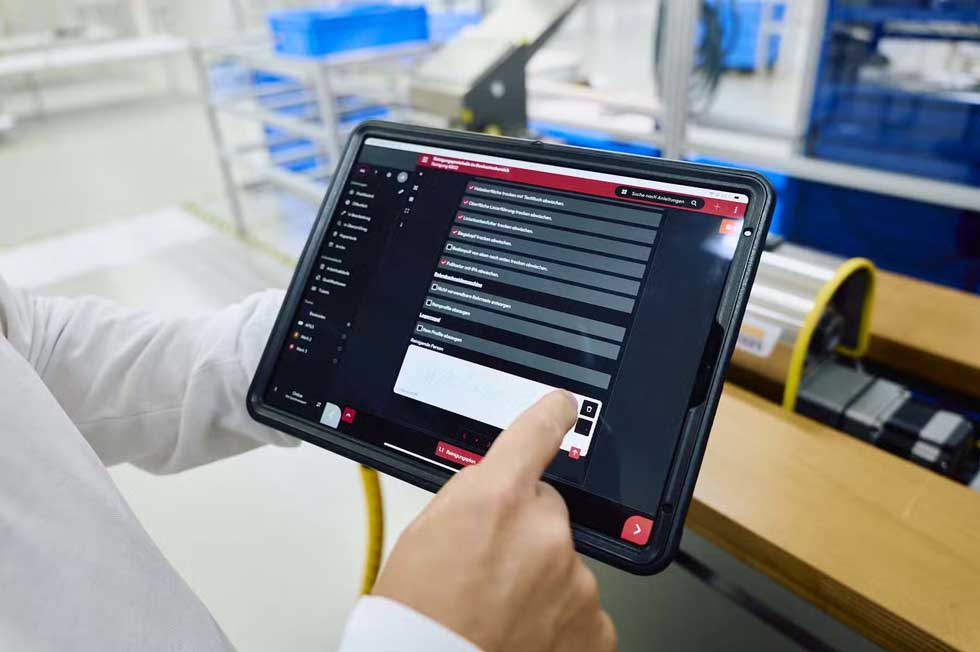
The most effective way to reduce lead times is through the comprehensive and efficient digitization of information flows. Where yellowed blueprints cause delays in searching for information, digital platforms provide immediate clarity for every user and every department.
Improving Quality and Preventing Shortages
Of course, when accelerating processes, one must not lose sight of quality. A defective component that fails inspection at the end of the line must be laboriously reworked or even scrapped. This doubles the lead time for that specific product and incurs avoidable costs.
The tepcon instructor ensures a high level of process reliability here. Since operators check off inspection steps directly in the software, the error rate decreases. The software allows users to store images of correct conditions, which facilitates visual defect detection. Avoiding scrap and shortages is one of the most effective methods for sustainably optimizing lead time.
Transparency from Customer Order to Completion
With digital assistance systems, you can generate valuable data in real time. You can seamlessly track progress from order placement to final completion. When an employee completes a digital checklist, the status is immediately visible to the next station, quality assurance, and logistics. This seamless flow of information reduces buffer times and speeds up material transport. The system thus also helps managers identify creeping delays early on and take action to prevent them.
In a hurry? Click here to go directly to our product, the tepcon instructor!
Reducing Lead Times: A Real-World Example
To bring the theoretical concepts to life, let’s look at a typical example from a medium-sized assembly plant.
From Order to Warehouse: Before and After
A manufacturer produces specialized assemblies. In the past, the process was sometimes bumpy: The worker received a paper work order. If information about new component revisions was missing, he would set the workpiece aside—and unproductive downtime would begin. Setup procedures took a long time, as concrete, practical know-how existed only in the minds of a few long-time employees. Consequently, the company struggled with inconsistent on-time delivery rates.
The introduction of the tepcon instructor changed this. Today, employees scan the order at their workstations. Tablets immediately display the current, illustrated setup instructions. Employees prepare the machines in a targeted manner. During machining, they digitally check off specific quality characteristics and desired conditions. If any uncertainties arise, a short instructional video stored in the system provides assistance. There are hardly any follow-up questions or wait times for supervisors. The finished component passes inspection without defects and goes directly to the warehouse or to shipping.
In such real-world scenarios, lead times are often reduced by 20 to 30 percent—achieved through the seamless, digital provision of information right where it’s needed. At the same time, cost savings increase as waste is minimized.
Conclusion: Greater Competitiveness Through Efficient Processes
The goal of shortening lead time is not a one-time effort, but rather an ongoing cycle of improvement. Companies that rise to these challenges and continuously work to reduce lead times secure their market position for the long term. Reducing lead time by cutting setup, transport, and idle times frees up tied-up capital, improves on-time delivery, and relieves staff of unproductive search tasks.
The use of modern software provides a solid foundation for this. The tepcon instructor empowers your team to complete tasks faster, more reliably, and with consistently high quality. It eliminates traditional information bottlenecks and makes the valuable expertise of top specialists available to the entire workforce. Those who tap into this potential benefit from lower unit costs, maximize the performance of their equipment, and ensure long-term customer satisfaction.