


What Process Documentation Is All About
Process documentation is the structured, written, or visual recording of workflows, responsibilities, and outcomes within a company. It clarifies who does what, when, and how; prevents knowledge loss; accelerates the onboarding of new employees; and forms the foundation for process optimization and automation.
Well-documented processes are not an end in themselves, but a strategic tool: they ensure quality, reduce costs, and strengthen collaboration between teams and departments. Companies that consistently implement process documentation make their operations more robust, efficient, and future-proof.
Explanation: What is process documentation?
The term describes the structured, written, or visual representation of internal business processes. It includes everything necessary to present a process flow in a comprehensible manner, from individual process steps and the people involved to results and quality requirements.
Documentation is the informational backbone of a company, capturing the intricacies of workflows, procedures, and key insights.
Process documentation can take many forms: from text-heavy documents and checklists to visual representations such as flowcharts or process diagrams. Flowcharts are particularly popular due to their versatility and ease of use. What matters is not the form, but consistency: process documentation is an ongoing task that should be regularly reviewed and updated to ensure its relevance and accuracy.
At its core, the goal is to present all relevant information in a way that is understandable, accessible, and immediately usable for employees. This documentation often serves as a guide for performing tasks and provides clarity on how processes operate within the organization.
What challenges does process documentation address?
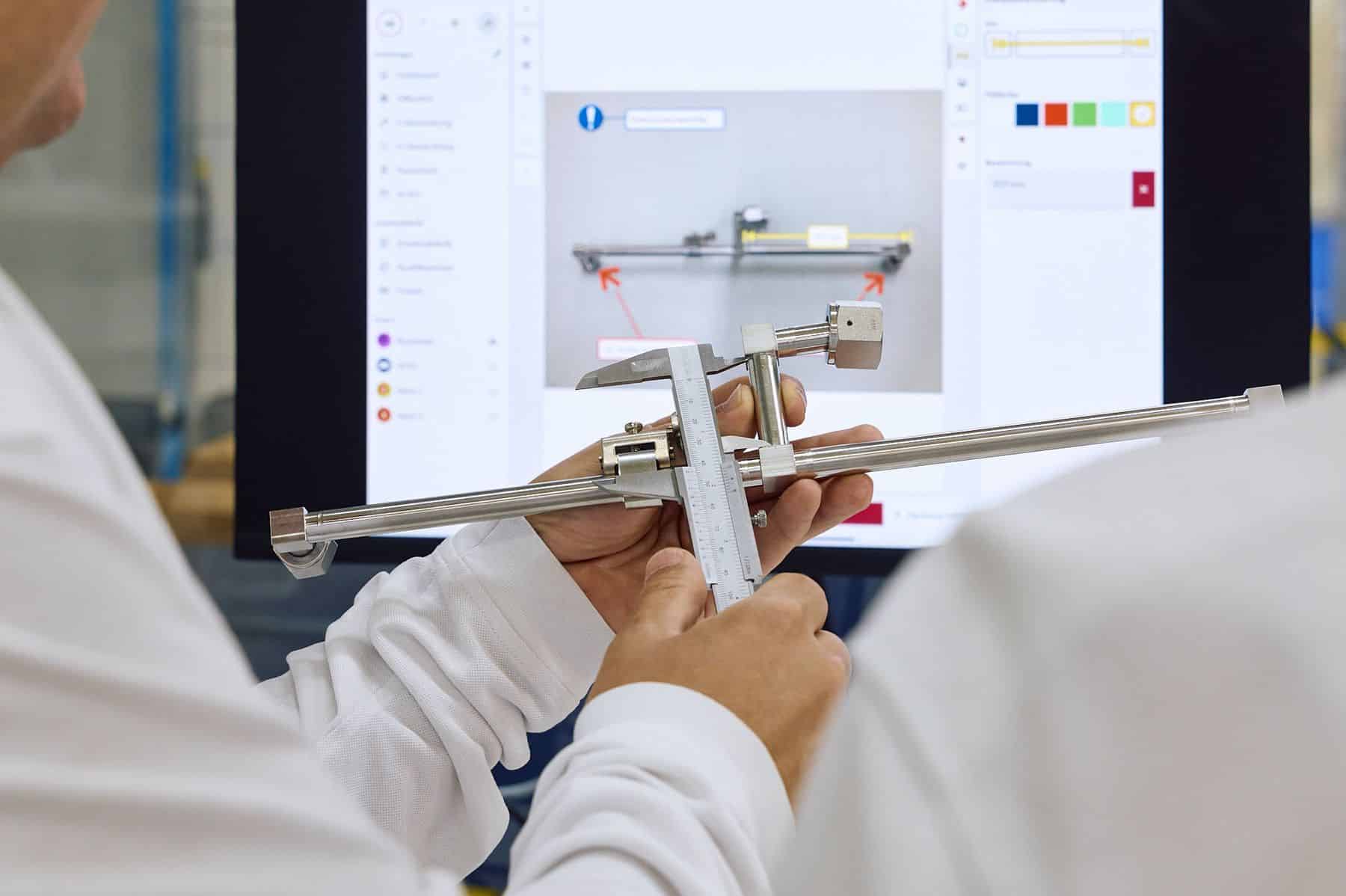
In many companies, processes run smoothly for years without ever being documented in writing. As long as the experienced people who know them are there, everything works. But as soon as someone leaves the team, falls ill, or moves to another department, gaps emerge: Who does what now? In what order? What needs to be taken into account?
Process documentation addresses precisely this vulnerability, sometimes referred to as a “knowledge monopoly.” It prevents valuable knowledge from leaving the company along with individual employees and ensures that workflows remain traceable and reproducible. At the same time, it reduces misunderstandings and confusion because team members have an agreed-upon standard to follow, rather than having to reinterpret each task from memory.
Furthermore, it helps identify bottlenecks in processes: Only when a workflow is laid out in black and white do weaknesses, duplication of effort, and inefficient steps become visible. Process documentation is thus not merely a knowledge archive, but the starting point for any targeted process optimization.
Why is process documentation essential for businesses?
Without clear documentation, uncertainty, inefficient workflows, and misunderstandings arise. Businesses need structured processes to ensure their performance and operate their business smoothly. Documentation—often using digital tools—is one of the key elements that provides this structure.
Documentation ensures that all team members know what steps are necessary to develop a product or provide services. It creates transparency regarding past and future processes, improves communication, and ensures that tasks are performed consistently.
In a hurry? Click here to go directly to our product, the tepcon instructor!
Process Documentation as the Foundation for Stable Processes
Process documentation creates a stable foundation for all business processes. By establishing clear structures, it prevents work from being performed inefficiently or costly errors from occurring. At the same time, it replaces confusion with efficiency and information: Thanks to modern tools, all stakeholders can access the same data at any time, as soon as it is needed.
This structure establishes a uniform standard that significantly improves collaboration between departments and teams.
We would be happy to explain exactly how this is possible with the tepcon instructor during an initial consultation.
How does documenting your processes help with teamwork?
Team collaboration is significantly facilitated by careful process documentation. When all team members have access to the same information, they can work together more efficiently and coordinate their tasks more effectively. Work instructions no longer need to be supervised by experienced individuals, as your teams work their way through individual steps in self-learning mode, based on previous documentation.
This is particularly crucial in cross-functional projects. Different departments often operate with varying perspectives and requirements. A clear process map of all necessary steps ensures that everyone involved works toward a common goal and that misunderstandings are avoided.
Making processes transparent and avoiding misunderstandings
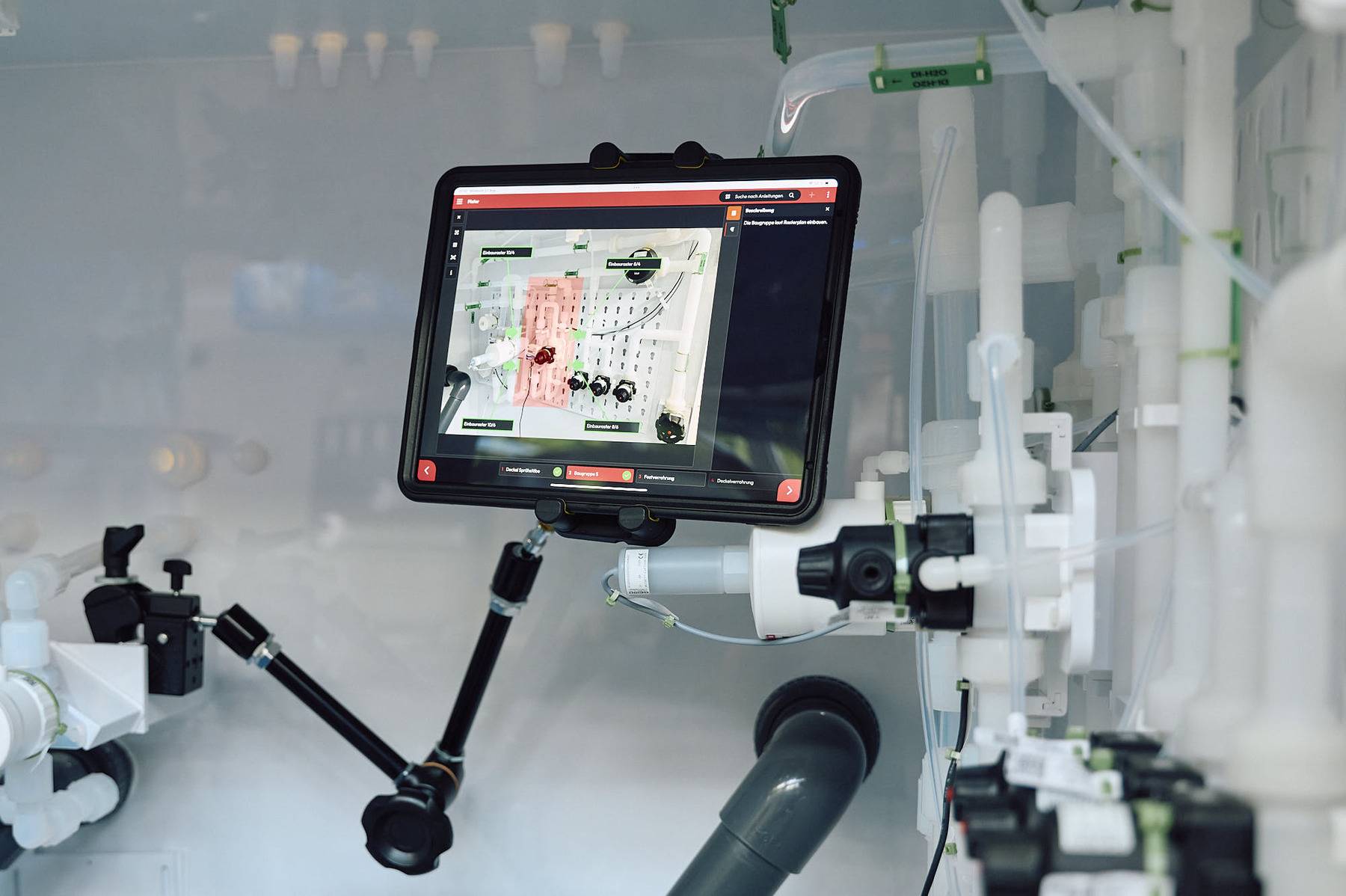
Transparent processes are the key to a successful organization. Process documentation ensures that all activities are traceable and that clear process boundaries are defined.
Thanks to documentation using our product, the instructor, employees always know which steps are required and what results are expected. Communication becomes more precise and faster, as all stakeholders can access the same level of information, even when they are not physically on-site.
Documenting Processes and Preventing Knowledge Loss
A key purpose of process documentation is to preserve knowledge within the company. When employees leave the company, valuable information is often lost. Documented processes ensure that this knowledge is retained and that all information is captured promptly and with minimal effort.
The documentation serves as a central knowledge base where all relevant content is consolidated. This ensures that knowledge remains available regardless of individual employees and can be accessed at any time.
In a hurry? Click here to go directly to our product, the tepcon instructor!
Good documentation promotes independence and motivation
Clearly structured process documents enable employees to complete their tasks independently. They rely less on asking for clarification, have relevant information available at the click of a button, and can make decisions more quickly.
This independence has a positive effect on employee satisfaction and motivation. At the same time, it reduces the time and organizational burden on team leaders, as less coordination is required.
Process Documentation Improves Efficiency and Quality
Thorough process documentation leads to measurable improvements in efficiency and quality. This is because clearly defined process steps reduce errors and optimize workflows.
Documenting your processes is much more than just an administrative task. It is a strategic tool for improving organizational performance.
Process Management and Structured Processes in the Workplace
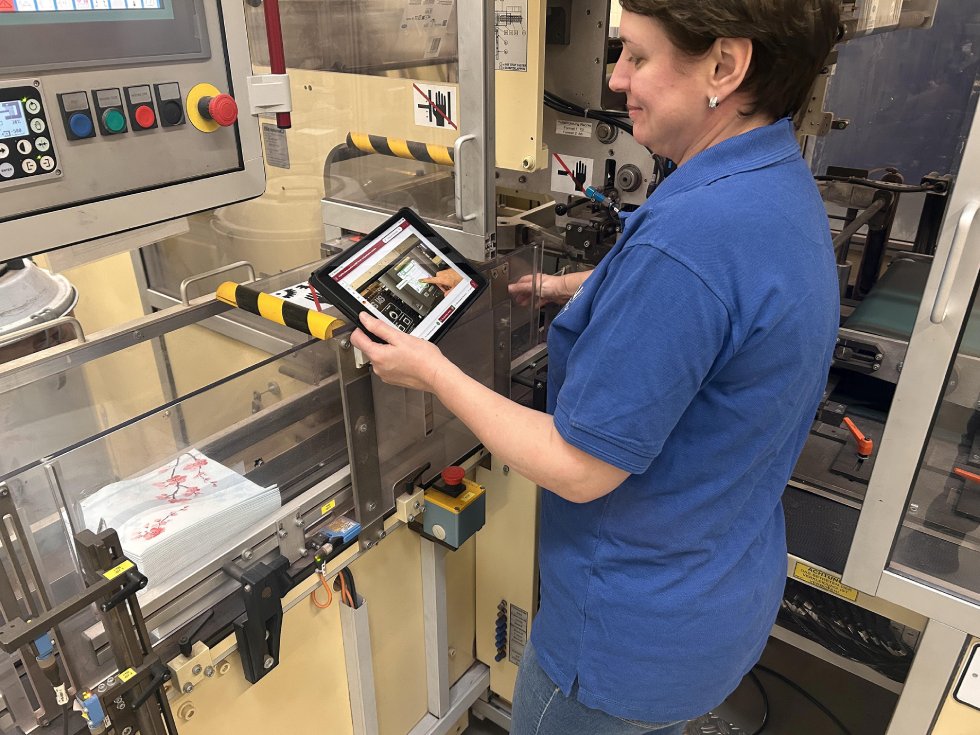
Successful process management is directly based on process documentation. Only when processes are clearly defined and documented can they be analyzed and optimized.
Documentation serves as the starting point for any process optimization. It provides the necessary information to identify weaknesses and implement targeted improvements.
Process Documentation and Process Optimization in Synergy
Documentation is a central component of process optimization. It enables companies to identify bottlenecks and continuously improve their processes.
By analyzing documented processes, companies can develop targeted measures to increase their efficiency and make better use of their resources.
Benefits of Process Documentation at a Glance
Thorough documentation pays off in several ways. Here are the key benefits:
- Knowledge retention: Knowledge remains within the organization, even when employees change roles or leave the company.
- Faster onboarding: New team members get up to speed more quickly because clear instructions and guidelines are available.
- Consistent quality: Everyone works to the same standard, which reduces errors and waste.
- Increased efficiency: Teams spend less time searching, asking questions, and guessing, since all necessary information is centrally available.
- Compliance and audits: Documented processes facilitate compliance with legal regulations and increase confidence during audits.
- Foundation for automation: Well-documented processes are a prerequisite for implementing automation tools.
- Transparency and collaboration: Cross-functional teams can collaborate more efficiently when everyone has the same overview of processes.
- Process optimization: Only by mapping processes can optimization potential be identified and leveraged.
When considering the aforementioned knowledge management methods, it becomes clear that: Digital guides are, in principle, more scalable and can also be accessed anytime, anywhere.
Challenges in Establishing Process Documentation
Although the benefits are obvious, the implementation of consistent process documentation often fails in many companies due to common obstacles. Recognizing these obstacles is the first step toward overcoming them.
Lack of time and the pressures of daily life
Hoarding knowledge instead of sharing it
Perfectionism slows down progress
Insecurity and a lack of self-confidence
Loss of trust in old documentation
What elements should be included in good process documentation?
Comprehensive process documentation includes several key elements. These include a description of the process steps, a definition of responsibilities, and a specification of inputs and outputs.

Step by Step: How to Document a Process
Creating process documentation doesn’t have to be complicated. If you take a structured approach, you’ll quickly achieve a useful result. Here are the most important steps:
- Identify and name the process: Which workflow should be documented? Clearly naming and defining the process boundaries is the first step.
- Determine the process’s objective: What is the purpose of this process? How does it contribute to the company’s goals? Understanding the purpose ensures that the documentation remains focused.
- Identify the people involved and their roles: Who is involved? What are the responsibilities of the individual team members? Clear role definitions prevent confusion.
- Define inputs and outputs: What resources, information, or materials are needed? What is the expected outcome?
- Record process steps in logical order: The individual activities are arranged in the correct sequence. A visual representation of the process is recommended here, such as a flowchart or step-by-step guide.
- Gather feedback: Colleagues and team leaders review the documentation for completeness and clarity. Those who carry out the process on a daily basis often have valuable insights into missing details or resources.
- Publish and make the documentation accessible: The documentation must be available where it is needed—directly within the workflow, not in a folder that no one can find.
- Review and update regularly: Processes change. Documentation is a dynamic resource that must grow alongside the company.
Important: Process documentation is not a project with an end date, but an ongoing task. The best framework for this is a process management system that integrates documentation into daily work.
What forms of process documentation are there?
Process documentation can take various forms. In addition to traditional text-based documents, visual representations are becoming increasingly important.
A flowchart is a typical example of a visual process representation. It allows complex processes to be depicted in a simple and understandable way.
Creating Clear and Comprehensible Process Diagrams
A good process diagram is characterized by its ease of understanding and intuitive usability. The use of graphical elements facilitates comprehension and application in day-to-day work.
Visual representations are particularly helpful in quickly grasping complex processes and implementing them efficiently, without the need for time-consuming training or supervision by experienced staff.
In a hurry? Click here to go directly to our product, the tepcon instructor!
Process Documentation as a Guide for Day-to-Day Work
Comprehensive documentation serves as a guide for employees and teams. It outlines the steps required to successfully complete tasks.
This guide not only supports the execution of projects but also the continuous improvement of processes.
How does process documentation support the onboarding of new employees?
New employees benefit greatly from clear process documentation. It provides them with a structured overview of their tasks and allows them to get up to speed more quickly, which significantly reduces the onboarding period.
Leveraging Best Practices in Process Documentation
Process documentation makes it possible to identify and standardize best practices within the company. These proven methods can then be applied to other projects. Using digital tools, best practices can be easily made accessible to all team members—which, in the long run, saves both time and money.

Why Does Process Documentation Often Fail in Practice?
Many companies underestimate the effort involved and the importance of process documentation. Often, there is no clear framework or suitable tools for documenting processes efficiently.
Cultural factors also play a role. If knowledge sharing is not encouraged, valuable knowledge remains locked away in the minds of individual employees.
Process documentation is an ongoing process
Process documentation is not a one-time task, but an ongoing activity. Processes are constantly changing, and the documentation must be updated accordingly.
Regular reviews and updates are necessary to ensure the content remains relevant.
In a hurry? Click here to go directly to our product, the tepcon instructor!
Digital Tools for Process Documentation
Analog methods such as printed manuals or static PDF documents have had their day. They quickly become outdated, are difficult to maintain, and are hardly practical for employees in their day-to-day operations. Modern digital software tools solve these problems and offer far more than simple text storage.
Our tepcon instructor is a software solution developed, among other things, for the digital documentation of workflows and processes.
It combines the essential functions required for professional process documentation into a single integrated system:
Step-by-Step Media: Visual Process Documentation
With just a few clicks, you can create or embed marker images, videos, PDF documents, 3D content, and work instructions. This results in step-by-step guides that not only describe processes but also demonstrate them. Visual elements make process steps unambiguous and significantly reduce errors in execution.
Checklists and Forms
Protocols, checklists, activity logs, and suggestions for improvement can be directly integrated into step-by-step instructions. This ensures that not only the process itself is documented, but also its execution—in a traceable, audit-proof manner and without any disruption in the workflow.
Inspection Instructions: Ensuring Quality
Clear inspection instructions specify the criteria by which a process step is considered successfully completed. Each inspection step is documented in a traceable manner, ensuring that everyone on the team always works according to the same, verified guidelines.
Building Blocks and Variants: Efficient Process Management
Frequently used process steps can be saved as reusable building blocks. Changes to these building blocks are automatically applied to all instructions in which they are used. This saves time, reduces errors, and ensures consistent content throughout the documentation. Variant management also makes it possible to map different product variants or process variants within a single process model.

Versioning and Approval Workflow
Every change made to a process document is versioned and stored in an audit-proof manner. A structured approval workflow ensures that a specialist verifies the accuracy, completeness, and clarity of the content before new material is published. This way, everyone involved can be confident that the current version is reliable.
Search and Access: Documentation That Gets Found
Instructions can be accessed directly via QR code, barcode, link, email, or Microsoft Teams. A powerful full-text search with tags and filter settings makes even extensive documentation and best practices instantly findable. This ensures that process knowledge doesn’t end up in a folder that no one opens, but is available right where it’s needed.
Tasks and Workflows: Planning and Managing Processes
In instructor, work processes can not only be documented, but also planned, assigned, and monitored. The system determines who does what and when, while also providing the appropriate instructions. Every action is automatically logged, so it is always possible to track who performed which process and what the result was.
Analytics: Data-Driven Process Optimization
Transparent analytics provide insight into process flows, identify opportunities for optimization, and highlight where improvements are most urgently needed. In this way, process documentation becomes the foundation for targeted process optimization based on real data.
Multilingualism: Working Without Language Barriers
instructor automatically translates your instructions into up to 133 languages. This makes instructor particularly valuable for companies operating internationally or teams with employees from different countries. Communication and documentation across language barriers thus become second nature.
Import and Interfaces: Seamless Integration
Existing process documents can be imported directly into instructor and edited there. Through GraphQL and REST interfaces, instructor integrates flexibly into existing IT environments and ERP systems.
In a hurry? Click here to go directly to our product, the tepcon instructor!
Artificial Intelligence Is Here: Process Documentation with instructor AI
Creating process documentation is often time-consuming—especially when it comes to writing clear, understandable descriptions for individual process steps. This is exactly where instructor AI comes in. It analyzes the visual content—that is, the images, symbols, and labels of a step—and combines this with the existing text information to automatically generate a clear, understandable text suggestion. With a single click, a structured description is created that contains everything needed to perform the step.
AI Import: Digitizing Existing Documents
Automatic release notes and summaries
AI that adapts to the writing style
The result: faster, more consistent, and higher-quality process documentation with significantly reduced effort. Process management taken to a new level.
Process Documentation as a Strategic Success Factor
Process documentation is a critical success factor for companies. It creates transparency, improves collaboration, and enables the efficient use of resources.
Companies that systematically document their processes are better equipped to respond to changes and adapt their strategies.
Process Documentation with tepcon – Get Started Now
As your partner for innovative digitalization strategies, we help you implement process documentation in a simple, efficient, and sustainable way. With the tepcon instructor, you have a powerful, field-proven tool at your disposal that documents processes, preserves knowledge, and directly supports your team in their daily work.
Do you have questions? We have solutions!
Schedule a free initial consultation to see how instructor can take your process documentation to the next level.