instructor Release “Zoo”
Each version bears the name of an endangered animal and reminds us to value technology and nature equally, to nurture achievements and to treat them responsibly.


- Animal ambassadors
- 2026.2 - African Penguin
- 2026.1 - Otter
- 2025.4 - Amur leopard
- 2025.3 - Leaf-tailed gecko
- 2025.3 - Axolotl
- 2025.1 - Dugong
- 2024.7 - Kulan
- 2024.6 - Blue Coral
- 2024.5 - Akoko
- 2024.4 - Pangolin
- 2024.3 - Aquatic warbler
- 2024.1/2 - Red-headed shrike
Our animal ambassadors
Each version of our tepcon instructor is dedicated to an endangered species – selected by a team member and lovingly placed on the login screen.
These small portraits are not only intended to remind us of their functionality, but also to draw attention to our natural environment. The following portraits add exciting facts that go beyond the usual – let’s get to know these impressive creatures better.

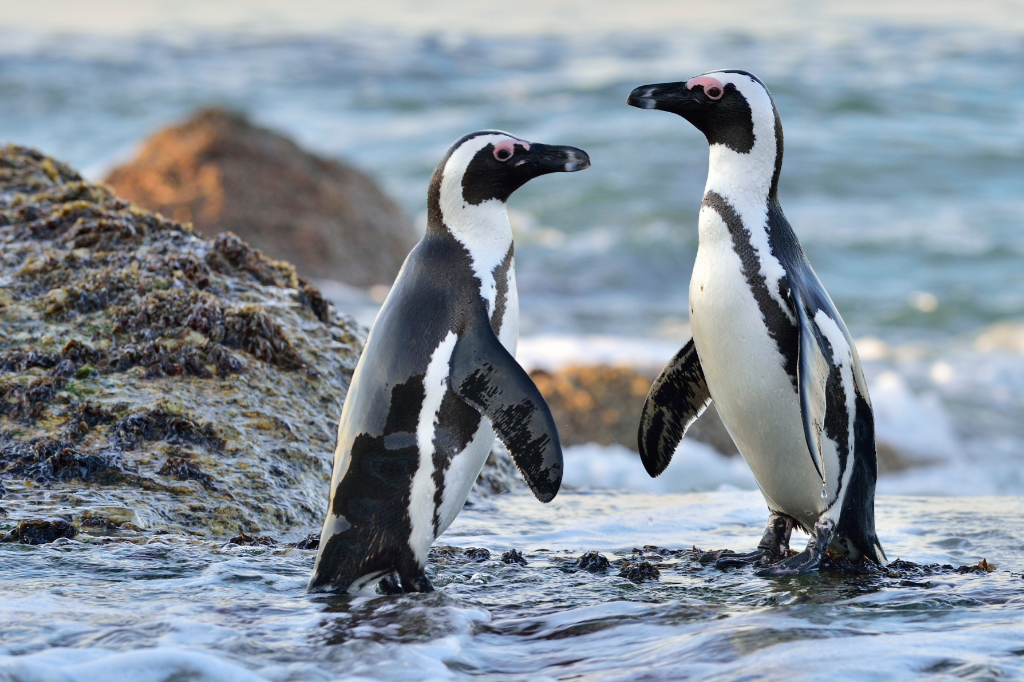
2026.2 – African Penguin
The African penguin lives along the coasts of South Africa and Namibia. It gets its name from the distinctive black stripes and spots on its face that look like a pair of glasses.
Unfortunately, the African penguin is highly endangered, mainly due to overfishing, habitat loss, and environmental pollution. In the 1950s there were still about 140,000 breeding pairs off the coast of South Africa; today there are fewer than 10,000. They are starving!
Special feature
One special characteristic is its loud, donkey-like call, which is why it is also known as the “jackass penguin”.
2026.1 – Otter
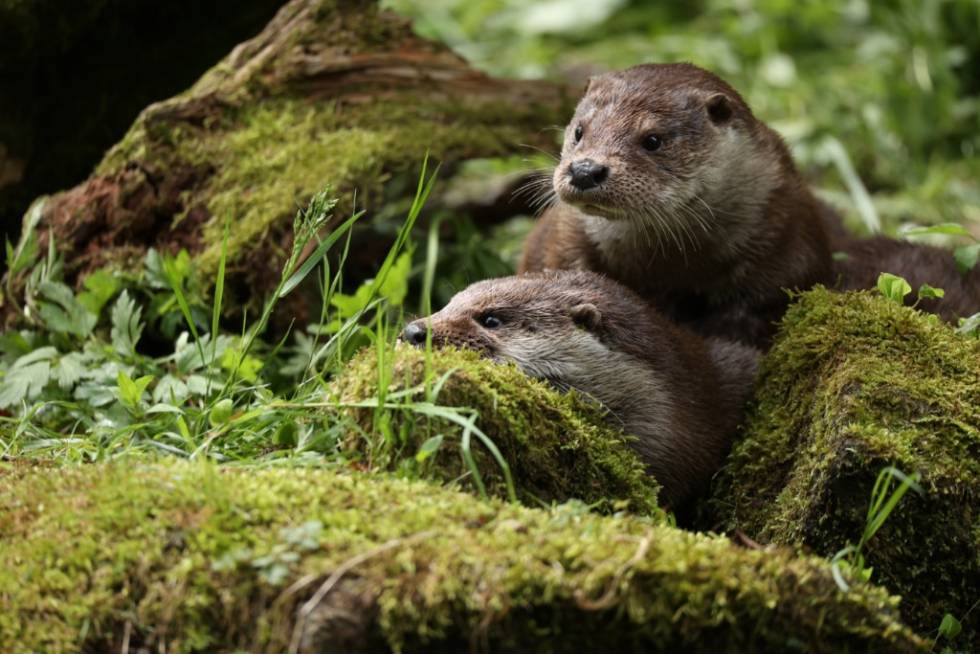
The otter is a highly endangered species in Germany, threatened primarily by habitat loss and road traffic. It lives in clean, fish-rich waters and is considered an important indicator of an intact environment.
Special feature
With up to 70,000 hairs per square centimeter, it has one of the densest pelts in the animal kingdom. This keeps it warm and dry in cold water.
2025.4 – Amur leopard
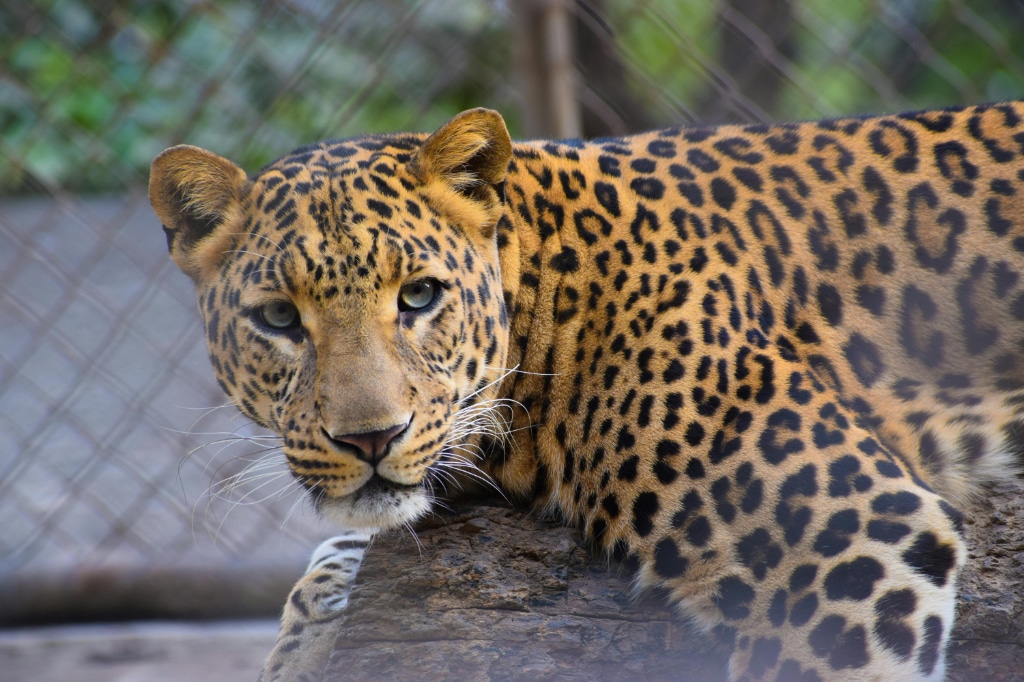
The Amur leopard is an extremely rare leopard subspecies from the far north-east of Asia and is perfectly adapted to icy winters and warm summers. With barely more than 120 adult animals, it is one of the rarest big cats in the world and struggles with habitat loss and poaching.
Special feature
Amur leopards can weigh up to 60 kg and, despite their size, can hunt prey that is up to three times their own weight
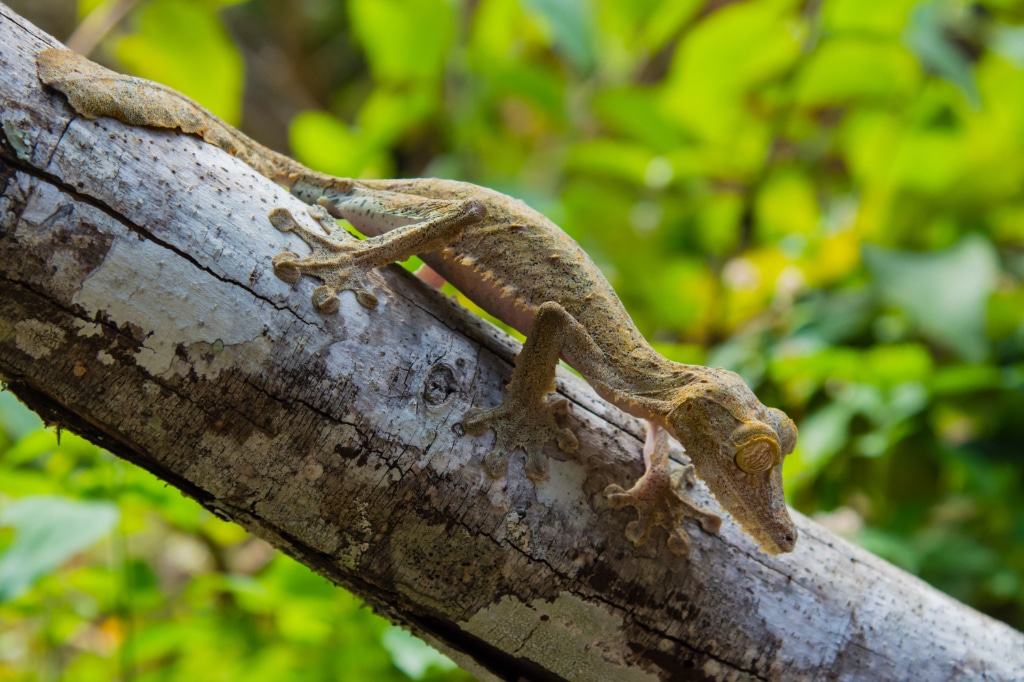
2025.3 – Leaf-tailed gecko
This nocturnal lizard from Madagascar is a master of camouflage: flat body, leaf-like tail – invisible on the bark. Threatened by deforestation, some species are up to 30 cm long.
Special feature
Many leaf-tailed geckos have no eyelids and moisten and clean their eyes with their own tongue – a fascinating trick of nature.
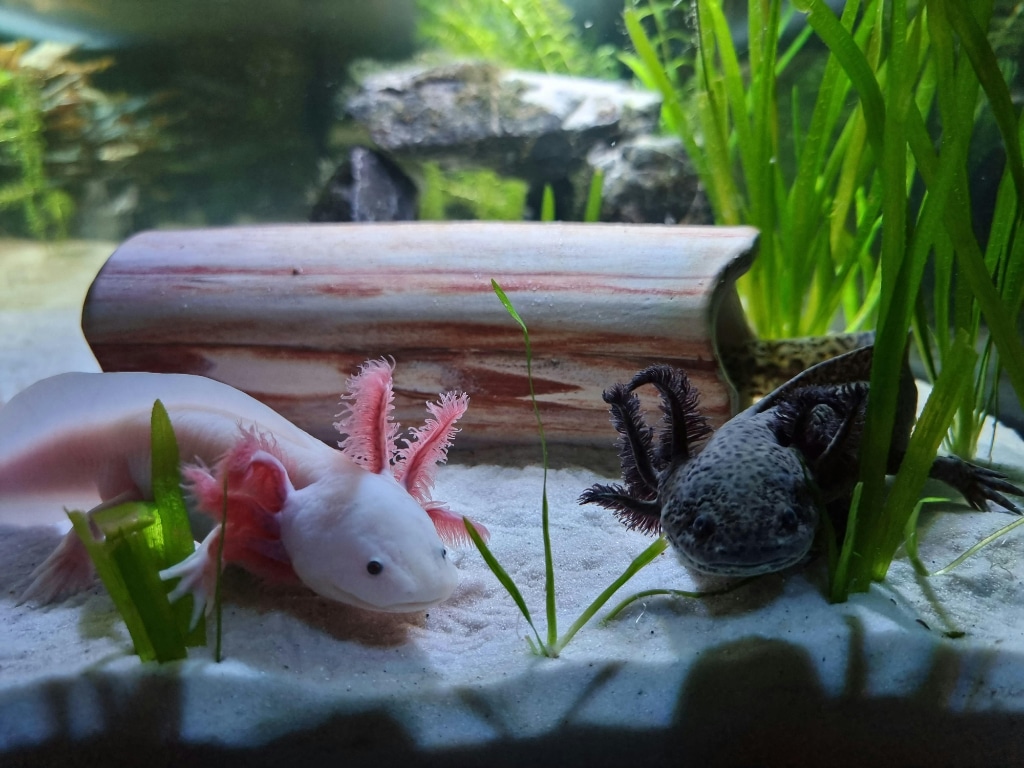
2025.3 – Axolotl
The Mexican fluke remains in the larval stage throughout its life and is endangered due to environmental degradation. It has an impressive ability to regenerate tissue.
Special feature
Axolotls can regenerate not only limbs, but also heart, lungs, brain and more – without scarring. The latest research shows that a gene called Hand2 acts like a GPS – a key role in understanding how humans might one day regenerate body parts.

2025.1 – Dugong
These manatees, which can weigh up to 1000 kg, roam the tropical waters of Southeast Asia. Marine pollution affects them.
Special feature
Dugongs are closely related to elephants! They are one of the only herbivorous marine mammals and have a flipper-like tail fin similar to a whale fluke
Highlights of the version
- Basic shapes for marking surfaces
- Extended time recording for steps and instructions
- Step navigation via swipe gestures
- …
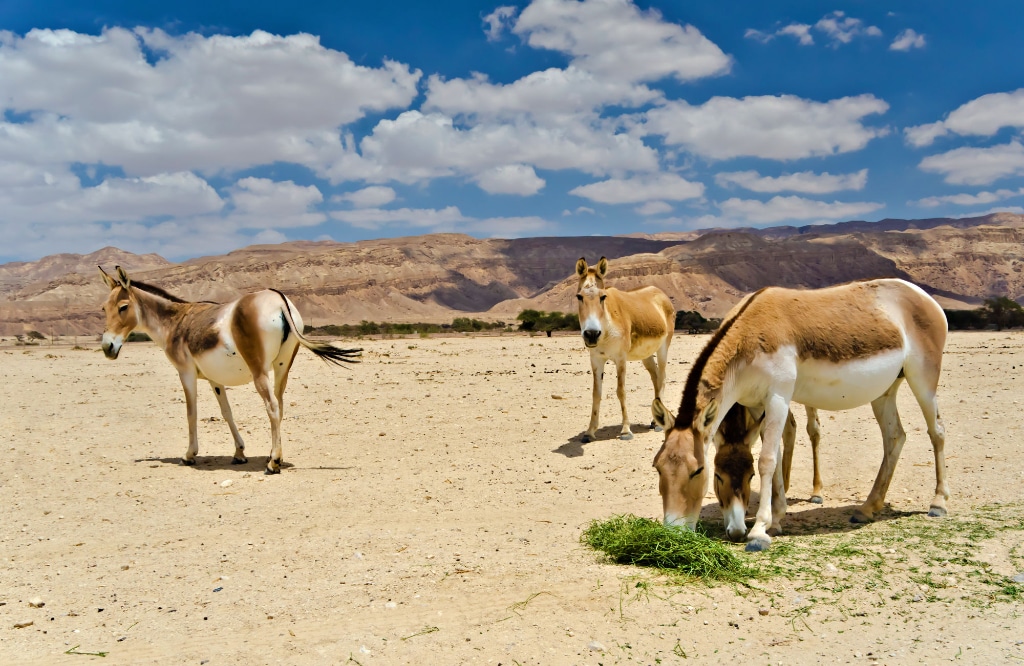
2024.7 – Kulan
Turkmen onager. This wild donkey from Central Asia is an endangered onager subspecies.
Special feature
Kulans are among the fastest land mammals – they can reach speeds of up to 70 km/h! They also migrate over huge distances in extreme environments.
Highlights of the version
- Description fields and attachments for markers
- Calculations in forms
- New menu languages
- …
2024.6 – Blue Coral
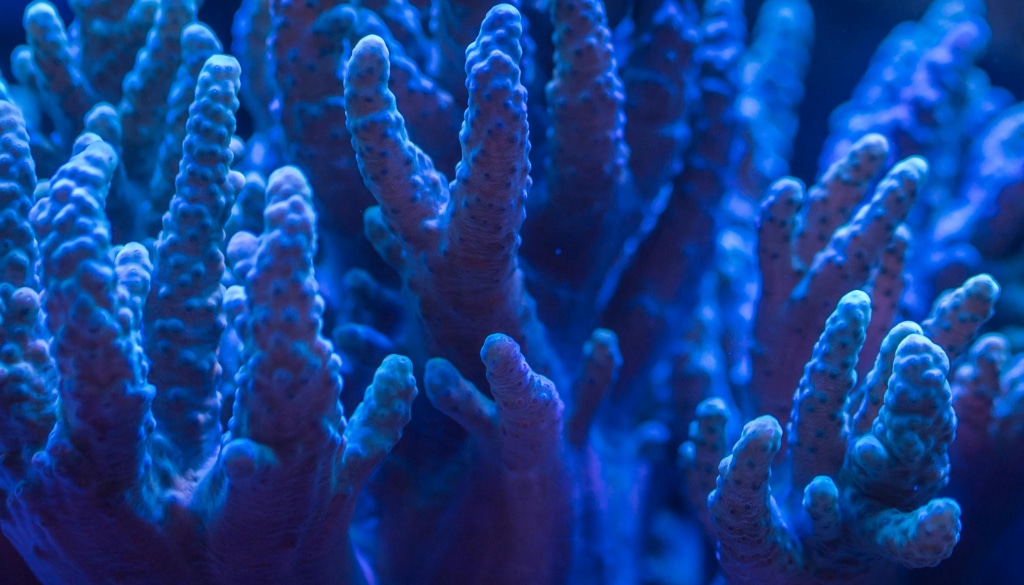
This coral species from the Indo-Pacific has a skeleton made of aragonite instead of normal limestone and displays impressive shades of blue and green.
Special feature
It is the only octocoralliar alive today that forms a massive skeleton – and has done so unchanged since the era of the dinosaurs. It also produces a natural “sunscreen” – its pigment protects against UV radiation, even if its symbiotic algae are lost.
2024.5 – Akoko
A robust coastal plant, adapted to sandy, dry conditions, but endangered by construction and introduced species.
Special feature
The plant disperses its seeds spectacularly: the red seed capsules “explode” when ripe and throw 1-4 seeds into the surrounding area – an impressive natural dispersal strategy.

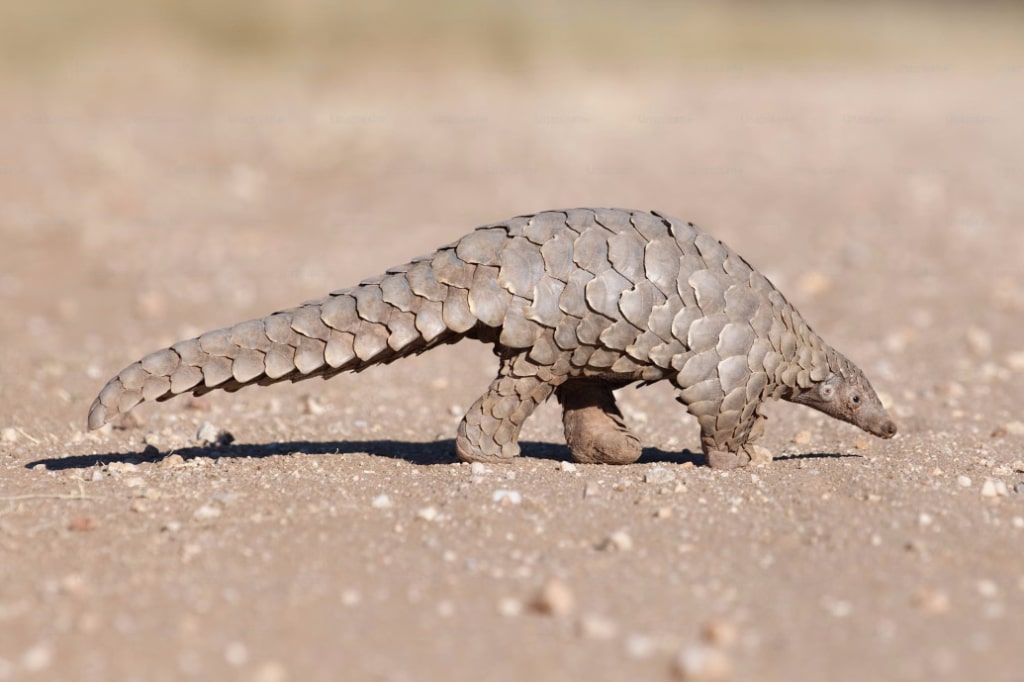
2024.4 – Pangolin
The nocturnal mammal curls up when in danger. Poaching and illegal trade pose a serious threat to it.
Special feature
Pangolins are the only scaled mammals – their scales account for up to 20 % of their body weight. They also devour up to 70 million insects a year!
Highlights of the version
- Reusable work steps as building blocks
- Illustration of variants in instructions
- Export of instructions with building blocks and variants
- …
2024.3 – Aquatic warbler
A rare songbird from Eastern European wet meadows, with camouflage plumage. Habitat loss and climate change are endangering it.
Special feature
This bird is one of the rarest songbirds in Europe and an indicator of intact wet meadows – its protection shows where overall ecological sensitivity is required.
Highlights of the version
- Offline mode: Instructions without Internet
- Change tracking of changes between versions
- Copying steps, blocks and step media
- …

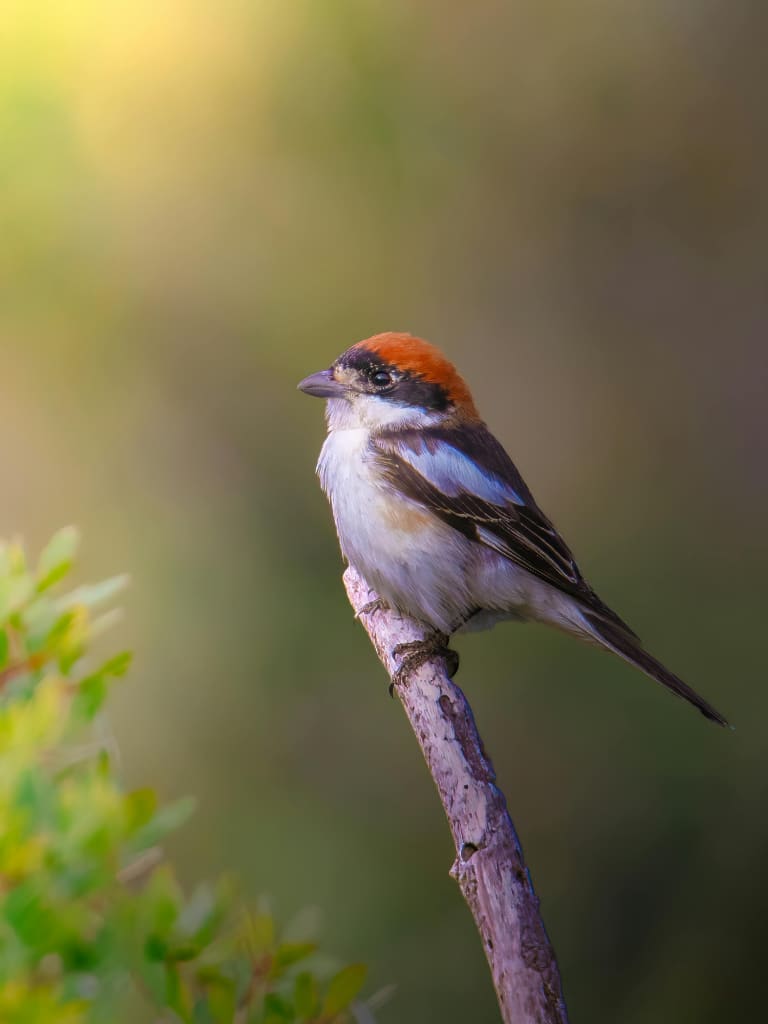
2024.1/2 – Red-headed shrike
This colorful bird with a red head hunts insects and small vertebrates – often impaling its prey artfully on thorns. Endangered by landscape change and pesticides.
Special feature
Red-headed shrikes are considered “carnivorous skewers” – by spearing their prey, they can neutralize the prickly poison of insects and store it in the nest – a clever survival and nest protection trick.
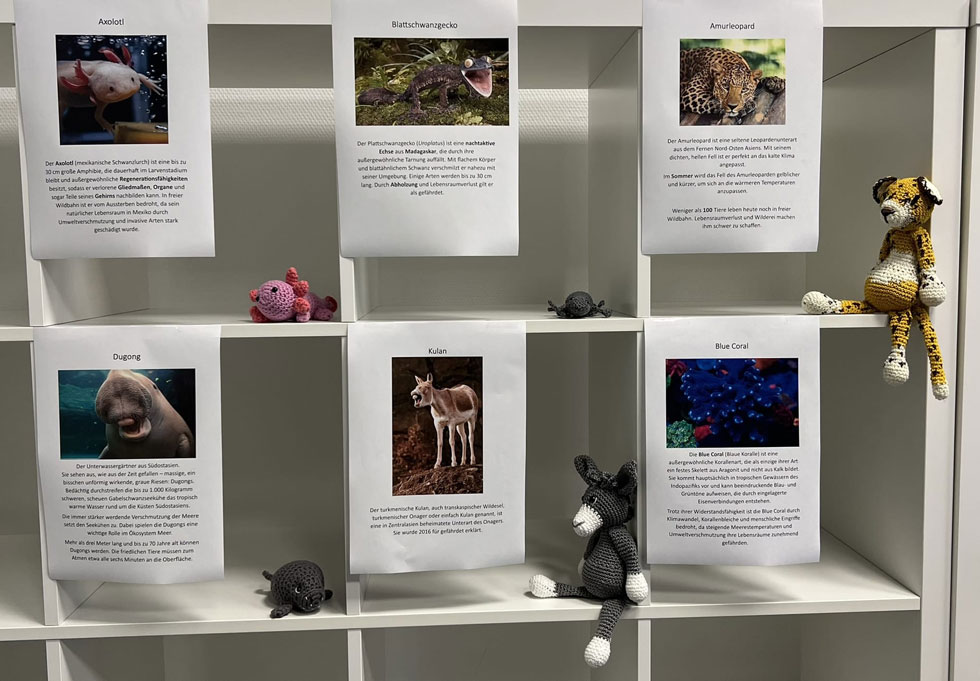
His mother, Agnes Welte, who has discovered crochet for herself, handcrafts the right animal for every release – whether axolotl, manatee or other special-looking animals. And every time the result is simply beautiful!

instructor Release "Zoo"