Versioning & release process
Versioning and change tracking ensure that every manual is always up-to-date and consistent. This prevents errors, documents changes transparently and eliminates the possibility of different versions.
This ensures clear traceability, improves collaboration and guarantees high quality and safety standards.


- Version history
- Review & change tracking
- Publish work instructions
- Reference to changes
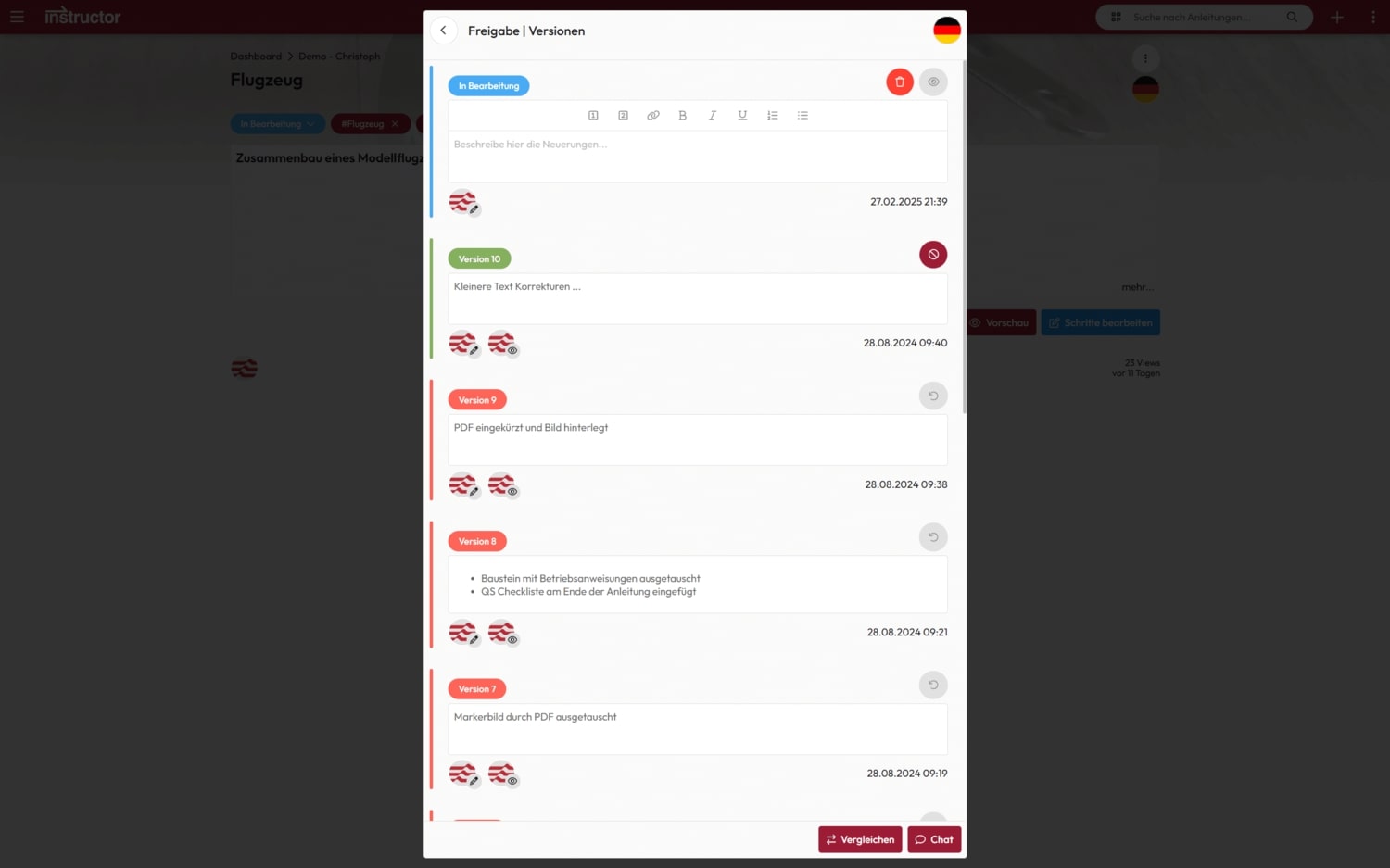
Version history
Each version of a work instruction or manual goes through a structured approval process. It is fully documented who created the version, what changes were made and who approved it.
This means that it is always possible to see how a manual has developed and who is responsible for its release.
Review & change tracking
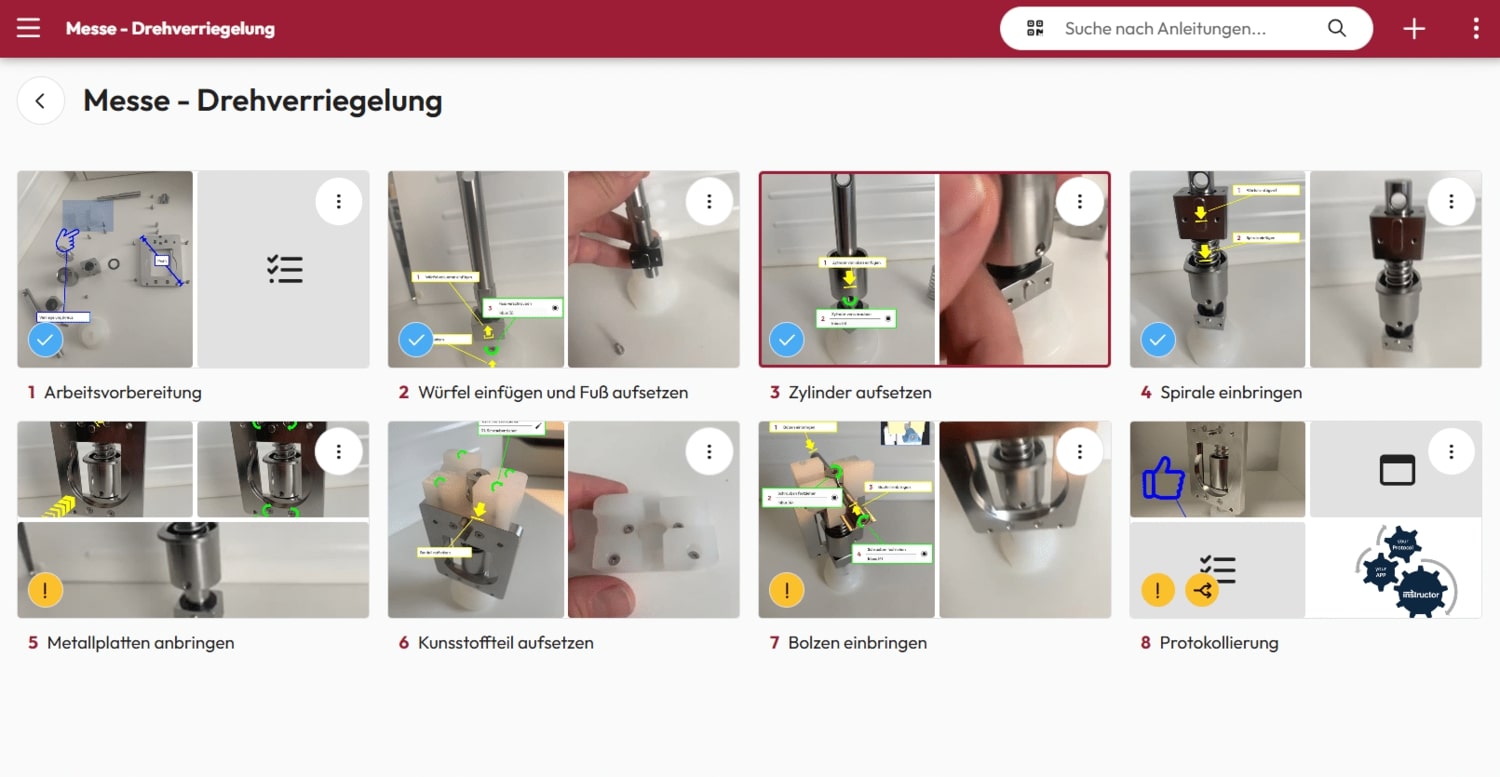
Before work instructions and manuals are published, they go through an approval process.
Using the dual control principle, a reviewer checks the work processes for correctness, completeness and comprehensibility. This ensures that all content is clear, correct and ready for use.
Publish work instructions
The instructor not only offers versioning functions, but also supports the release process.
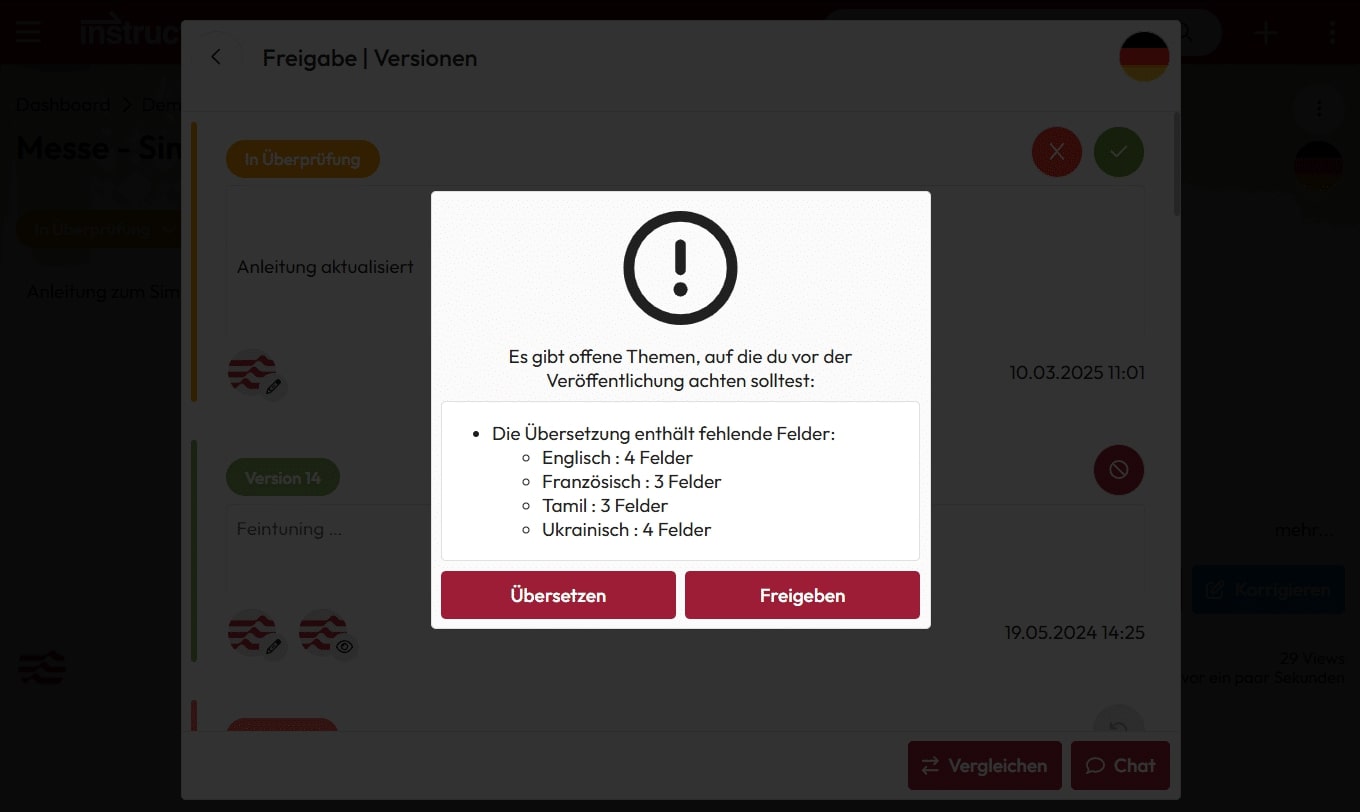
Through targeted queries, he ensures that all content is complete and that no translations are missing, for example – this guarantees error-free and consistent publication.
Reference to changes
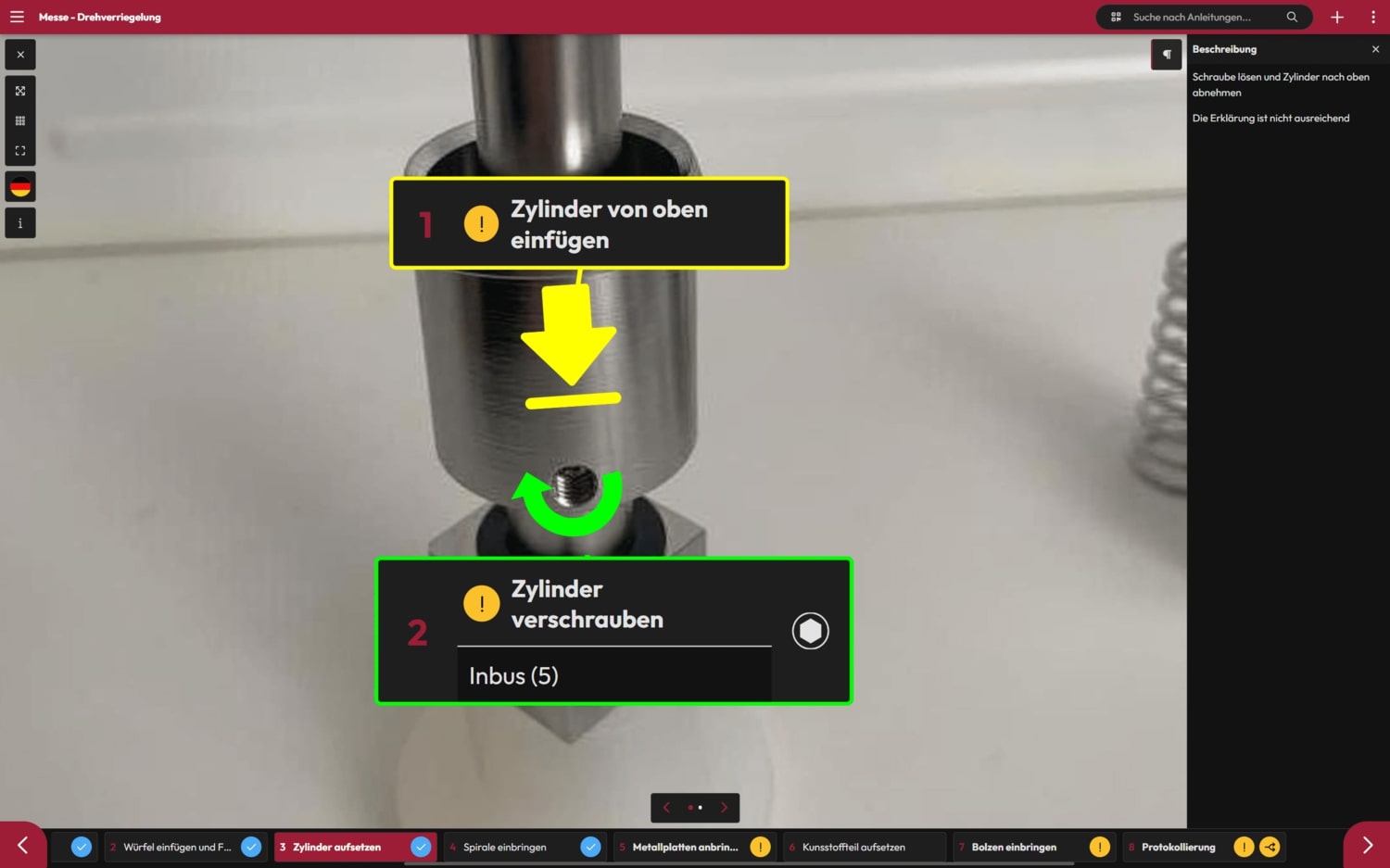
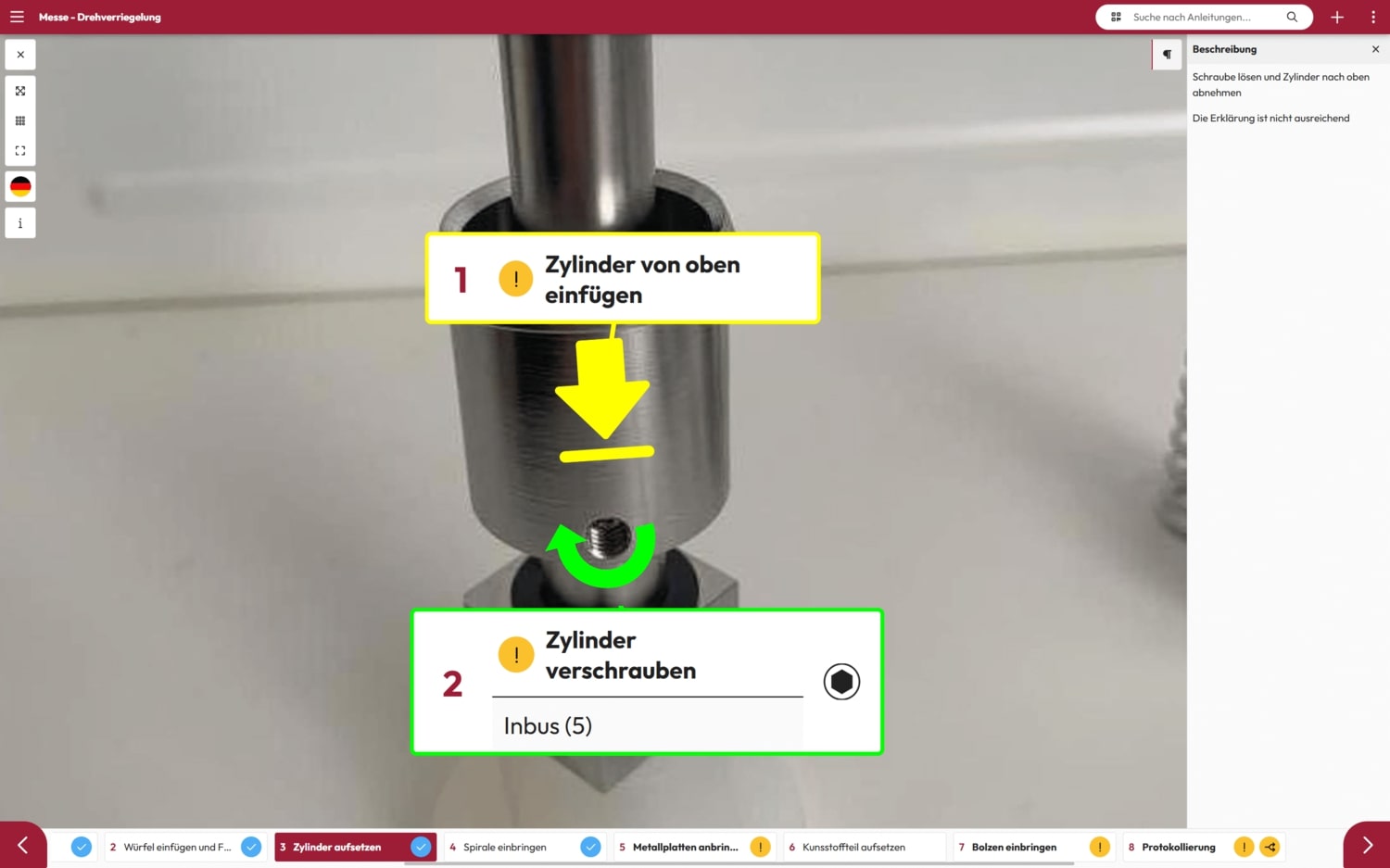
Change tracking makes differences between versions visible to users and reviewers at a glance. Users are notified of changes that are highlighted visually when they call up a work instruction.
Reviewers can concentrate specifically on the adjustments without having to check the entire manual again – this keeps the approval process efficient and transparent.
We are delighted with the trust placed in us by many satisfied customers!