


Worker Self-Inspection Made Easy
With the instructor software solution, we at tepcon GmbH in Donaueschingen offer a digital tool for worker self-inspection and worker assistance. The application guides production employees so they can perform assembly and quality inspections independently. This eliminates the need for confusing paper documentation and time-consuming follow-up inquiries. This article explains in detail how operator self-inspection works, what specific benefits it offers, and how you can successfully digitize your quality assurance in practice.
Operator Self-Inspection: The Key to Higher Quality in Industrial Manufacturing
Operator self-inspection, often referred to as operator self-check, is a central process in modern industrial manufacturing. It involves the systematic inspection of a workpiece by the employees themselves, either directly during or immediately after machining. The goal is to identify defects, errors, and deviations from established quality standards at an early stage and to correct them immediately through appropriate corrective actions.
Most assembly processes consist of various, tightly synchronized steps. Since not all tasks are performed by the same employees, the production process requires that each worker conduct a dedicated inspection upon completing their task. We define this quality control step in the assembly process as a worker self-inspection. During this process, skilled workers use defined inspection criteria to verify that all specified requirements have been met.

Why Worker Self-Inspection Is Important
Detecting Issues and Malfunctions Early
One of the greatest advantages of worker self-inspection is the early detection of defects. Errors that are only discovered in later steps or during a final inspection of finished components result in high costs due to rework or scrap. By performing inspections directly at the workstation, employees identify deviations immediately before the product reaches the next station. A timely analysis of the recorded inspection data also helps the company quickly correct incorrect machine settings.
Error Prevention
Operator self-inspection goes far beyond mere error detection. It plays a preventive role in avoiding defects by directing employees’ focus toward specific quality standards. Workers develop a deeper understanding of the importance of their tasks and the impact of deviations on the final product. Manufacturing companies that rely on structured worker self-inspections minimize risks, reduce the number of defective parts, and improve product quality in the long term.
Team Motivation: Get Your Employees On Board!
Another key aspect is involving employees in taking responsibility for quality. When they are actively involved in quality assurance, their motivation increases. The awareness that they have a direct influence on product quality strengthens team spirit and leads to a positive work atmosphere. A prerequisite for this is that the company provides workers with training and clear instructions. A thorough introduction to the topic of worker self-inspection promotes engagement and ensures successful implementation.
Want to know what worker self-inspection with the tepcon instructor can do for your company? Click here to schedule your free initial consultation!
Would you like to learn more about self-inspection by workers?
How Quality Assurance Works: What Matters in Worker Self-Inspection
Creating Transparency and Ensuring Quality Checks
For worker self-inspections to be fully effective, quality control must be a seamlessly integrated part of every work process. Transparency is essential here: Employees must know exactly which specifications apply, which tests they are supposed to perform, and where the data is documented.
Quality checks can be standardized using digital checklists and clear guidelines. Outdated paper forms or inflexible Excel spreadsheets hinder data collection in this context. With a well-designed software solution, employees no longer overlook any details, as they are required to fill out mandatory fields. The result: All workpieces consistently meet the required quality standards, and management receives reliable evidence to support data-driven decisions.
Would you like to learn more about self-inspection by workers?
How Quality Assurance Works: What Matters in Worker Self-Inspection
Creating Transparency and Ensuring Quality Checks
For worker self-inspections to be fully effective, quality control must be a seamlessly integrated part of every work process. Transparency is essential here: Employees must know exactly which specifications apply, which tests they are supposed to perform, and where the data is documented.
Quality checks can be standardized using digital checklists and clear guidelines. Outdated paper forms or inflexible Excel spreadsheets hinder data collection in this context. With a well-designed software solution, employees no longer overlook any details, as they are required to fill out mandatory fields. The result: All workpieces consistently meet the required quality standards, and management receives reliable evidence to support data-driven decisions.
Complexity of Processes: Clear Documentation
Complex manufacturing processes require clear and comprehensive documentation. A well-organized structure for operator self-inspections makes it easier for the team to perform the necessary checks and record quality data directly.
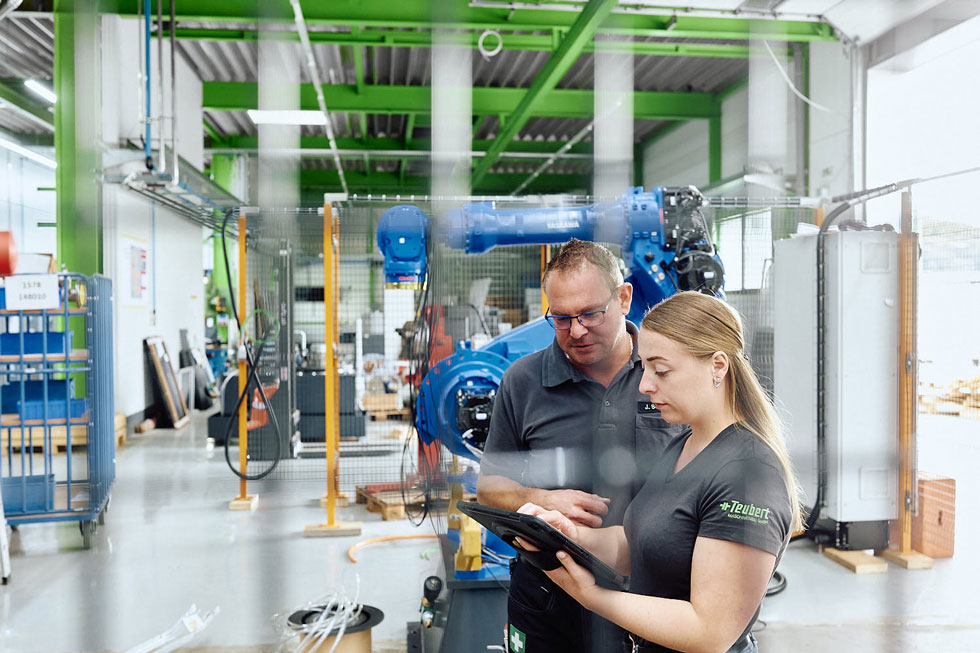
Tips for Self-Inspection: How to Make Your Quality Control More Efficient
Do you want to improve your quality control throughout the production process and are you looking into how to implement modern worker self-inspection in your own company? Then these tips will help you get started:
Plan the Implementation Carefully
Start with a carefully planned implementation of worker self-inspection. Explain the concept to the team in a clear and understandable way, and ensure that everyone has the necessary tools and knowledge to carry it out. Also highlight the limits of self-inspection—for example, at what severity level of defects a quality manager must be consulted.
Using Checklists
Checklists are an indispensable tool for standardizing inspections. They help workers consistently monitor the quality of each workpiece. The use of digital checklists reduces the need for follow-up questions and consolidates all relevant information directly at the production line.
Regular Training
One of the prerequisites for smooth operations is the ongoing training of employees. They must be familiar with the current quality standards and inspection criteria—not just at the beginning, but on an ongoing basis.
Feedback and Optimization
Provide employees with regular feedback on their work and the effectiveness of the worker self-inspection. Gather suggestions for optimizing the procedures and implement them promptly.
Integration of Modern Technologies
Use digital tools to document every inspection and automatically evaluate results. This simplifies tracking, replaces error-prone paper-based systems, and contributes to long-term process improvement. Such an application ensures seamless monitoring of production.
Digital worker self-assessment, checklists, and inspection documentation always available on-site
The industry in which your company operates is of secondary importance. Every company that employs workers in the production process or provides services faces the challenge of giving these employees precise instructions. However, in addition to simply conveying information, it is essential for workers to independently verify their own work steps to ensure a consistently high standard in production. This is where worker self-inspection comes into play.
Traditionally, work instructions, inspection guidelines, or various checklists are used for this purpose. Creating these documents is often quite time-consuming. On the one hand, they should be clear and easy to understand; on the other hand, they must also cover all possible scenarios. If instructions are not clearly formulated, questions arise. This costs everyone involved time and interrupts the process until the open questions are answered.
The Solution from tepcon
With instructor, we have developed a software solution that reduces this effort and makes processes significantly more effective and streamlined. Work instructions, inspection guidelines, audit checklists, and similar documents can be created, adapted, or expanded in a matter of minutes.
This gives us the ideal solution for modern quality assurance in production: a tool that not only imparts knowledge but also supports quality control through individual worker self-inspections.
Would you like to learn more about self-inspection by workers?
Quality Assurance 4.0: A User-Friendly Tool for Worker Self-Inspection
One goal has always been our top priority: to make the application as simple and intuitive as possible for the user—that is, the worker. Our solution: to equip instructions with machine-readable codes, such as QR codes or barcodes. These codes, attached directly to the equipment, allow access to all necessary documents or instructions at any time.
Operator Self-Checks in Many Languages
After scanning the codes, the stored instructions can be translated into up to 133 languages with just one click. This ensures that even international employees understand all technical content and can apply it confidently during the process.
Explain and Guide Inspections via Video; Document Results
The tepcon instructor visually guides employees through the process: Complex work and inspection steps can be explained directly via video, making the instructions particularly clear and easy to understand. However, this multimedia support works both ways. To reliably record unforeseen events, the worker can take photos or record videos directly within the software to document the actual process flow. This not only ensures complete traceability but also shortens communication channels, as in many cases there is no need for a personal consultation with a supervisor. All quality data documentation is digitized and can be accessed worldwide in the cloud via computer, tablet, or smartphone.
Self-Inspection 4.0: straightforward, independent, efficient
With the instructor, operator self-inspections finally live up to the term “self” and relieve organizations of unnecessary monitoring tasks.
The tepcon instructor unlocks the potential for our customers to design processes that are more effective, simpler, and more traceable—and to eliminate the need for paper instructions. The instructor’s user interface is easy to use and can be taught with minimal training.
Do you have any questions on this topic? Are you looking for case studies? Please contact us here—we look forward to hearing from you.