


A structured maintenance plan is the foundation for reliable maintenance of machinery and equipment. It defines the necessary maintenance tasks, maintenance intervals, responsibilities, and deadlines, and ensures that maintenance activities are carried out in a systematic, traceable, and legally compliant manner.
Unplanned outages, rising costs, and extended downtime are among the greatest risks in industrial production environments.
At the same time, studies show that structured maintenance planning can reduce unplanned downtime by up to 32%, and that digital tools can increase the efficiency of maintenance operations by up to 25%.
In this guide, you’ll learn what makes a good maintenance plan, what it should include, how to create a maintenance plan, and how to use digital tools like our tepcon „instructor“ Significantly improve your maintenance.
Want to get started right away? Then Please contact us or go directly to the Testphase over!

Definition of a maintenance schedule – what exactly is it?
A maintenance schedule is a structured document that outlines all regular maintenance and repair tasks for machinery, equipment, devices, and other operational resources. It specifies which maintenance tasks must be performed, when, how often, and by whom.
The plan serves as a starting point for technicians’ daily work, as a mandate for specific tasks, and as a checklist for implementation. At the same time, it provides evidence of diligent equipment maintenance to management, auditors, or external service providers.
A comprehensive maintenance plan is therefore a key tool in maintenance planning.
Book your personal demo and experience the benefits firsthand!
Maintenance and repair – what’s the difference?
The two terms are often used interchangeably, but they refer to different parts of a broader concept.
-
Maintenance includes all activities designed to slow down wear and tear, such as cleaning, lubricating, or adjusting.
-
Maintenance is the umbrella term and also includes inspection, repair, and improvement.
A maintenance plan focuses primarily on maintenance activities, but is always part of a comprehensive maintenance strategy.
Maintenance Schedule and Maintenance Log for Machinery – What’s the Difference?
The maintenance schedule specifies which tasks are planned.
The maintenance log documents which tasks were actually performed.
The two go hand in hand: The plan sets the course, while the log provides the data needed for optimizations, verification, and future decisions.
What types of maintenance work are there?
In practice, this is known as Maintenance Management Various maintenance tasks:
-
preventive maintenance
-
Predictive maintenance (data-driven)
This classification helps to determine the scope and frequency of the measures in a meaningful way.
Why Your Business Needs a Maintenance Schedule
Without a structured plan, problems can quickly arise: unplanned disruptions, significant downtime, and unnecessary spare part costs.
A systematic maintenance plan ensures that safety guidelines are followed, maintenance is performed on time, and critical assets are prioritized before downtime occurs.
Preventive maintenance of machinery is 5–10 times cheaper than reactive repairs following a breakdown.

Benefits of a structured maintenance plan
- Reduction of unplanned downtime
- longer service life of machines
- lower repair costs
- greater operational efficiency
- clear responsibilities for everyone involved
- Legal certainty in accordance with DIN 31051
What should be included in a maintenance plan?
A good maintenance plan should include at least the following:
- List of all machinery, equipment, and devices in the company
- Description of Maintenance Tasks
- scheduled maintenance intervals
- the technician or maintenance planner responsible for the specified tasks
- required replacement parts and supplies
- Reference to the manufacturer’s specifications
- Documentation in the maintenance log
Maintenance Schedule Template – A Quick Start with a Clear Structure
A template is a structured framework for maintenance work. It systematically lists machines, intervals, responsibilities, and documentation.
Many companies start out using Excel templates. While these offer an easy way to get started, they quickly reach their limits when it comes to scalability, updates, and transparency.
Checklist: Create a Maintenance Schedule
This checklist will help you create one:
1. Record all equipment
2. Prioritize critical equipment
3. Define maintenance procedures
4. Set maintenance intervals
5. Assign responsibilities
6. Schedule appointments
7. Establish documentation
Book your personal demo and experience the benefits firsthand!
Maintenance Planning in Industry 4.0
In Industry 4.0, massive amounts of data are generated by sensors and control systems. This data enables condition-based maintenance planning.
Digital maintenance plans combined with sensor data reduce costs, increase efficiency, and enable predictable maintenance cycles.
How the tepcon “instructor” supports your maintenance planning
The tepcon “instructor” is your software for digital instructions. It enables:
- centralized management of all maintenance plans
- step-by-step instructions for maintenance tasks
- real-time digital documentation
- Quick adaptation to changes
- Access on all devices
This is how you replace paper-based systems and complex Excel files with a future-proof system.
We support your maintenance digitally
With the tepcon “instructor,” you go far beyond traditional maintenance documents and take your maintenance plan to a whole new level: Instead of scattered Excel files, paper lists, or confusing maintenance manuals, you’ll work with a digital system that structures and visualizes maintenance tasks and makes them available to everyone involved in real time.
The “instructor” is not just software—it is a comprehensive tool for creating, managing, and using digital instructions for machines and systems, including all relevant maintenance intervals, inspection instructions, and checklists required for modern maintenance.
Specifically, this means: “instructor” not only tells you and your team when, what, and where to do something, but also covers the HOW. Almost all systems have checklists of what needs to be done, but the employee is not guided through the maintenance process, and the results are not logged in a traceable manner. “instructor” guides you step by step through the individual processes without any additional staffing requirements.

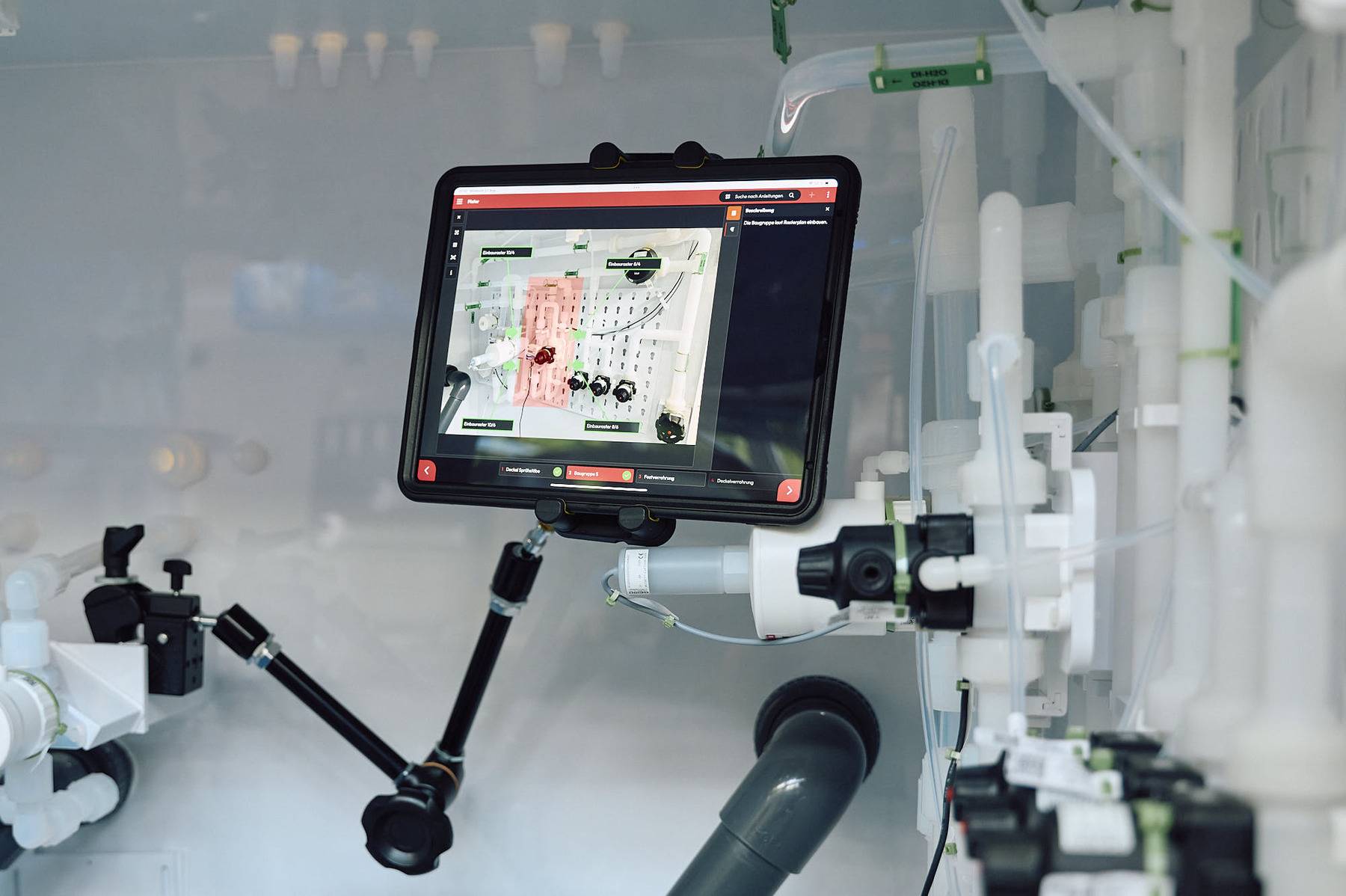
Unlike traditional manuals, “instructor” allows you to create multimedia step-by-step instructions: You can integrate images, videos, documents, and icons, ensuring that your technicians know exactly what to do during every maintenance task.
This digital visualization significantly reduces common sources of error, improves process quality, and delivers knowledge directly on-site.
A key feature of our “instructor” is its cloud-based availability: instructions can be accessed from any device—whether on a tablet on the production floor, a smartphone during a service call, or a desktop in the office.
With integrated version and change management, current updates are recorded in an audit-proof manner and distributed to the linked systems. This ensures your employees always work with the correct version, significantly increasing transparency regarding ongoing maintenance work and the traceability of changes.
This data-driven approach boosts the efficiency of your maintenance organization, makes resource planning more effective, and reduces costs.
In addition, “instructor” supports you in continuously improving your maintenance processes: Automatically logged work steps, integrated checklists, and feedback from the field help optimize processes while also documenting who performed which steps and with what results.
This digital documentation provides valuable historical data that makes your maintenance predictable, traceable, and audit-ready—a crucial foundation for sustainable efficiency and legally compliant records within your company.
Start the trial phase right now—or ask us your questions about this topic here!
Book your personal demo and experience the benefits firsthand!
FAQ on the Maintenance Planner
What does a maintenance schedule include?
A maintenance plan includes all scheduled maintenance tasks for machines, systems, and equipment, including the corresponding maintenance intervals, responsibilities, and required tools. It documents which maintenance measures must be performed, how often they are carried out, and which spare parts are required.
In addition, the maintenance plan serves as a structured work order for technicians and as a checklist for maintenance within the company.
Who creates a maintenance schedule?
Maintenance schedules are typically developed by maintenance planners, maintenance managers, or experienced technicians who are familiar with the company’s machinery and equipment. Manufacturer specifications, existing service plans, and internal experience are often taken into account. In many companies, the maintenance plan is developed jointly by maintenance, production, and quality management. This ensures that all maintenance work is planned in a practical, realistic, and cost-effective manner.
What does maintenance involve?
Maintenance includes all work required to keep machines and equipment in good working order. This includes cleaning, lubricating, adjusting, inspecting, and replacing wear parts. The goal of these maintenance measures is to prevent malfunctions, reduce machine downtime, and extend the service life of the equipment.
What does the inspection include?
Inspections are used to systematically monitor the condition of machines and equipment. This involves visual inspections, measurements, and functional tests to detect wear, damage, or deviations at an early stage. The results of the inspections are incorporated into the maintenance schedule and the maintenance log. This allows necessary maintenance work to be planned in a timely manner.
What are the 4 types of maintenance?
A distinction is made between preventive, condition-based, predictive, and corrective maintenance. Preventive maintenance is performed at fixed intervals, while condition-based maintenance is based on the actual condition. Predictive maintenance uses data and sensors to predict failures. Corrective maintenance is performed only after a failure has occurred.
What are maintenance procedures?
Maintenance tasks are all specific activities specified in the maintenance plan. These include, for example, cleaning, lubricating, adjusting, calibrating, or replacing parts. They are an integral part of any structured maintenance plan.
What are the four categories of maintenance?
According to DIN 31051, the four maintenance activities consist of routine maintenance, inspection, repair, and improvement. The maintenance plan primarily covers routine maintenance and inspection. Repair and improvement are documented separately. Together, they ensure the reliable operation of machinery and equipment.
How should a maintenance schedule be structured?
A maintenance plan should be clear and logically structured. Machines, maintenance tasks, intervals, responsibilities, and deadlines must be clearly identifiable. In addition, a maintenance plan template should be used to ensure consistent content. This allows maintenance planners to maintain an overview at all times.
Are maintenance records required?
Maintenance logs are mandatory in many industries, particularly for safety-critical machinery and equipment. They serve as proof that maintenance work has been performed properly. They are also important for management, insurance companies, and regulatory agencies. The maintenance log complements the maintenance schedule.
What is the difference between maintenance planning and scheduling?
Maintenance planning determines which maintenance tasks are necessary. Scheduling determines when this work will be carried out. Together, they provide structure, clarity, and predictability. Without clear scheduling, even the best maintenance plan loses its effectiveness.
What maintenance is required?
Mandatory maintenance is required by law, manufacturer specifications, and standards. Machinery and equipment that are particularly safety-critical must be maintained on a regular basis. The maintenance schedule ensures that these maintenance tasks are carried out. This helps minimize risks and liability issues.
How often does maintenance need to be performed?
The frequency depends on usage, wear and tear, and the manufacturer’s recommendations. Many maintenance intervals are defined in the service schedules. The maintenance schedule consolidates this information in one place, making planning straightforward.
What is a maintenance plan?
A maintenance concept outlines the overarching maintenance strategy within a company. It defines types of maintenance, objectives, and organizational processes. The maintenance plan plays a central role within this concept. Together, they form the foundation for efficient maintenance.
What is a lubrication schedule?
A lubrication schedule is a specific maintenance plan for all lubrication points. It specifies the lubricant, the interval, and who is responsible for these tasks. Lubrication schedules are a key component of maintenance planning. They play a significant role in extending the service life of production equipment in operation.