


Inhaltsübersicht
- 1 Key points at a glance
- 2 Definition
- 3 Why is knowledge transfer essential in today’s business environment?
- 4 Explicit and Implicit Knowledge in the Workplace: Why the Distinction Matters
- 5 What are the benefits of systematic knowledge transfer?
- 6 Knowledge transfer ensures that valuable knowledge is retained during staff turnover
- 7 The Role of Knowledge Transfer in a Vibrant Knowledge Culture
- 8 Challenges: What Makes Knowledge Transfer Difficult
- 9 Methods and Approach: How to Succeed in Knowledge Transfer
- 10 The TOM Model in Knowledge Transfer
- 11 Personalized and codified knowledge transfer: Sharing expertise in a targeted manner
- 12 Knowledge Transfer in Practice: An Overview of Methods
- 13 Digitalization, AI, and Opportunities for Knowledge Transfer
- 14 Knowledge Management Systems: Digital Infrastructure as the Foundation
- 15 The tepcon “instructor” supports knowledge transfer within your company
Key points at a glance
Knowledge transfer is one of the key resources of the modern economy: The successful transfer of knowledge protects against knowledge loss during staff turnover, accelerates the onboarding of new employees, boosts productivity, and secures long-term competitive advantages. Demographic change and rising employee turnover make structured knowledge transfer a success factor that companies can no longer leave to chance.
The most successful organizations combine personalized approaches, such as mentoring and workshops, with codified methods, such as digital documentation and knowledge management systems—and consistently integrate the flow of knowledge into their daily workflows.
Definition
What is knowledge transfer?
The term “knowledge transfer” describes the systematic, goal-oriented process of transferring knowledge, experience, and skills from one person, team, or department to another. This transfer of knowledge can take place both within a company and across company boundaries—for example, in the context of collaborations, supplier relationships, or services.
In practice, knowledge transfer within a company means that relevant information, process knowledge, and experiential knowledge do not remain solely in the minds of individual employees, but are actively shared, documented, and made available to others. The term encompasses both formal structures such as training sessions, manuals, and digital platforms as well as informal channels such as conversations, peer-to-peer exchanges, and collaborative problem-solving.
Knowledge transfer is closely related to the broader topic of knowledge management, but goes beyond the mere storage of information: it involves actively putting knowledge into circulation to ensure the flow of knowledge throughout the organization.
Why is knowledge transfer essential in today’s business environment?
The world of work is undergoing profound change. Demographic shifts, increasing employee mobility, a shortage of skilled workers, and rapid digitalization are changing how and where knowledge is created, used, and shared. Companies that ignore this shift risk losing valuable knowledge from their specialists and managers when they leave for another job—and with it, experience, process understanding, and well-established know-how that has been built up over years.
The risks are particularly serious when experienced employees retire or leave the company for other reasons. This poses a risk of losing knowledge that is difficult to replace. At the same time, the pressure to train new employees quickly and efficiently is increasing. A structured knowledge transfer is therefore not a luxury, but a strategic necessity.
Why are informal structures no longer sufficient?
Many companies rely on knowledge being passed on through observation, asking questions, and on-the-job training. These informal methods have their value—but they fall short as soon as employees leave the company, teams grow, or processes become more complex. Without deliberately designed structures, knowledge gaps emerge that only become apparent when a problem arises and no one knows the answer anymore.
Establishing clear processes and responsibilities for knowledge transfer is therefore one of the most important challenges facing modern companies.
In a hurry? Click here to go directly to our product, the tepcon instructor!
Explicit and Implicit Knowledge in the Workplace: Why the Distinction Matters
Not all knowledge can be shared equally effectively. To develop an effective knowledge transfer strategy, it is helpful to distinguish between two basic types of knowledge:
Explicit knowledge encompasses all content that can be clearly articulated, documented, and formally communicated: process descriptions, technical instructions, quality standards, checklists, and structured documentation. This knowledge is easily accessible and can be efficiently captured, stored, and shared using digital tools.
Implicit knowledge, on the other hand, is the knowledge embedded in employees’ minds, hands, and experiences: intuitive judgment, well-established routines, a sense of when a machine starts to malfunction, or how best to handle a difficult customer. This experiential knowledge cannot simply be written down—it is developed through practice, observation, and interaction.
One of the biggest challenges in knowledge transfer within organizations is that tacit knowledge makes up the bulk of a company’s knowledge, yet is the hardest to transfer. Those who recognize this choose the right methods: digital documentation for explicit knowledge, and personal exchange, mentoring, and shared practice for tacit knowledge.
What are the benefits of systematic knowledge transfer?
Consistent knowledge transfer pays off for companies in several ways:
First, it prevents the loss of knowledge. When employees leave the company—whether due to resignation, retirement, or restructuring—the knowledge that has been documented and shared remains within the organization. This ensures continuity in processes, products, and customer interactions.
Second, systematic knowledge transfer speeds up the onboarding process. New employees get up to speed more quickly when they have access to structured documentation, digital guides, and experienced contacts. The onboarding period is shortened, and productivity increases sooner.
Third, a healthy flow of knowledge fosters innovation. Teams that openly share experiences and ideas develop solutions more quickly and creatively. The exchange of ideas among different groups, departments, and perspectives is a key driver of continuous improvement.
Fourth, companies that successfully transfer knowledge secure their competitive edge. They respond more quickly to changes in the workplace, make more informed decisions, and gain sustainable competitive advantages over their rivals.
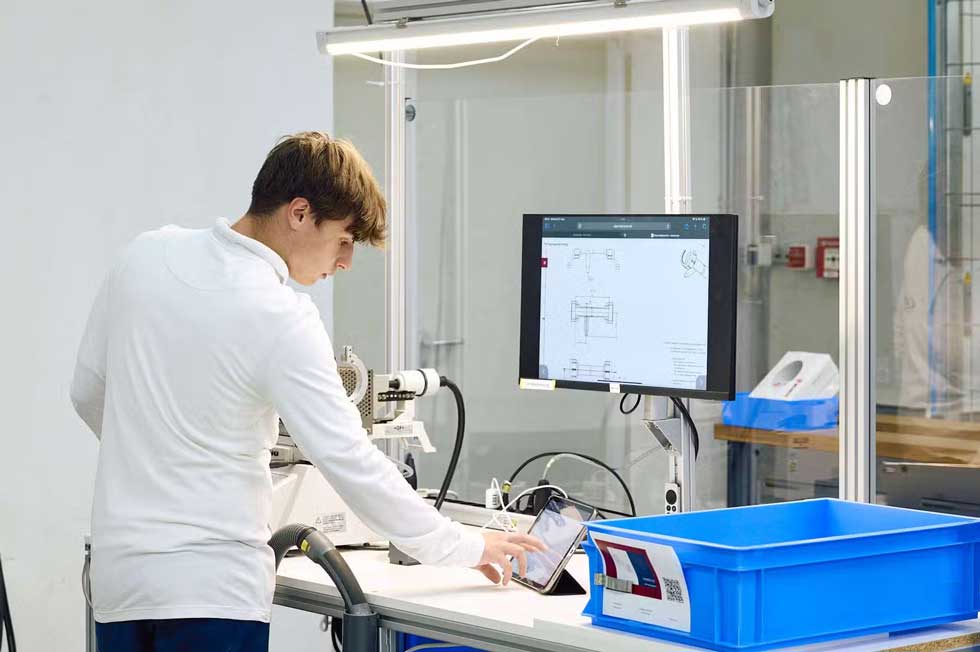
Knowledge transfer ensures that valuable knowledge is retained during staff turnover
A real-world example illustrates the importance of this issue: An experienced technician leaves the company after 20 years. Not only does he know the technical processes inside and out, but he also knows which custom solutions were developed for specific customers, how certain machines react to different materials, and which informal communication channels yield the fastest results when problems arise. This valuable knowledge isn’t recorded in any file—it exists only in his memory.
Without a structured knowledge transfer, this knowledge will be irretrievably lost when this person leaves. Their successor will have to start from scratch and painstakingly rebuild the same expertise—a significant loss of time, quality, and resources.
Structured exit interviews, targeted documentation measures, and the early involvement of new employees in the day-to-day tasks of departing colleagues are concrete strategies for countering this scenario. Identifying key knowledge holders is a crucial first step: Which individuals within the company possess particularly critical, hard-to-replace knowledge? This is where knowledge preservation should be prioritized.
Knowledge transfer helps prevent the retirement problem
Demographic change is turning retirement into a structural challenge: In the coming years, large numbers of experienced employees will be retiring across many industries. By investing in knowledge transfer early on, organizations can ensure that this experiential knowledge is not lost but remains available to the next generation—as a foundation upon which they can build.
In a hurry? Click here to go directly to our product, the tepcon instructor!
The Role of Knowledge Transfer in a Vibrant Knowledge Culture
Knowledge transfer is not an isolated tool, but a central component of a vibrant knowledge culture within the company. Knowledge culture describes how a company handles the resource of knowledge: whether knowledge is withheld as a personal power factor or actively shared as a common good; whether learning from one another is taken for granted or viewed as a waste of time; whether documentation is perceived as a bureaucratic burden or as a valuable contribution to the organization.
In a strong knowledge culture, knowledge transfer is not a special project but a daily practice. It is integrated into work processes, exemplified by leaders, and supported by appropriate structures and technologies. Knowledge transfer thus becomes a natural part of the way a company operates and learns.
At tepcon, we firmly believe that technical solutions can only reach their full potential when the willingness to share knowledge is deeply ingrained in our culture. Digital tools can greatly simplify the transfer of knowledge—but they cannot replace the human commitment to actually passing on that knowledge.
Challenges: What Makes Knowledge Transfer Difficult
As important as knowledge transfer is, in practice companies face a number of challenges that make it difficult:
The “knowledge is power” mentality as an obstacle
Lack of infrastructure and organizational structures
A particularly common issue: Many companies rely on inefficient or unsuitable tools, such as Office products, which make tasks like documenting procedures extremely tedious and time-consuming. As a result, processes are often not documented at all—both the process itself and the lessons learned remain in the employee’s head rather than being incorporated into accessible knowledge repositories.
With the tepcon “instructor,” you can capture knowledge in minutes without interrupting your actual work. This is the first and most important step in knowledge preservation—the entire knowledge culture of the company is built on it.
Generational differences and geographical distance
The geographical distance between employees—especially in companies with multiple locations or remote teams—can also have a negative impact on knowledge transfer. What used to happen during casual conversations in the hallway or shared lunch breaks now has to be deliberately organized and conducted digitally.
The complexity of tacit knowledge
As previously described, the complexity of tacit knowledge poses a fundamental challenge. This knowledge is, by definition, difficult to grasp, difficult to document, and difficult to transfer. It requires special methods—and a willingness to invest time and resources in personal interaction.
Methods and Approach: How to Succeed in Knowledge Transfer
Effective knowledge transfer doesn’t happen on its own. It requires structures, methods, and a clear strategy. The best solutions combine digital documentation with face-to-face interaction and integrate knowledge transfer into daily workflows.

The TOM Model in Knowledge Transfer
The TOM model provides a proven framework for organizing knowledge transfer. It encompasses three dimensions that together form the basis of an effective knowledge transfer strategy:
Technology (T) refers to the technical tools and platforms that enable knowledge transfer: knowledge management systems, digital documentation tools, learning platforms, and collaboration software. Without the right technologies, knowledge transfer remains time-consuming and prone to errors.
Organization (O) encompasses structures, processes, and responsibilities: Who is responsible for capturing knowledge within the company? What processes govern the handling of information? How is knowledge transfer integrated into workflows? A clear organizational structure is essential for ensuring that knowledge transfer takes place reliably.
“People (P)” stands for the human aspect: motivation, skills, leadership culture, and a willingness to share knowledge. Technology and organization alone are not enough—ultimately, it is people who determine whether knowledge transfer succeeds in practice.
By keeping all three dimensions of the TOM model in mind, you lay the foundation for a sustainable flow of knowledge within the company.
Personalized and codified knowledge transfer: Sharing expertise in a targeted manner
In practice, a fundamental distinction is made between two approaches to knowledge transfer:
Personalized knowledge transfer occurs through direct interaction between people. Knowledge is not primarily stored in documents, but is passed on through conversations, collaborative work, and observation. This approach is particularly well-suited for implicit, experience-based knowledge that is difficult to formalize.
Codified knowledge transfer, on the other hand, relies on the systematic collection and storage of knowledge in the form of documentation, manuals, knowledge databases, and digital platforms. This knowledge is accessible independently of individual employees—a key advantage in companies with high employee turnover.
The key to success lies in combining both approaches. Explicit knowledge should be systematically digitized and documented in accessible formats. Implicit knowledge can be transferred through personalized methods such as mentoring, coaching, or job rotation. The most successful companies manage to pursue both approaches simultaneously—and in doing so, they finally put an end to the era of paper clutter and thick paper manuals.
Knowledge Transfer in Practice: An Overview of Methods
Mentoring Programs: Sharing Practical Knowledge in a Targeted Manner
Job Rotation: Changing Perspectives and Sharing Knowledge
However, this method also has drawbacks; for one, it is quite time-intensive: Instead of acquiring general knowledge from every area to apply it at some point in the indefinite future, tailored on-the-job training is often more efficient.
Workshops and Knowledge Workshops: Developing Solutions Together
In workshops and so-called knowledge workshops, teams work together to develop solutions to specific challenges. This collaborative process not only promotes knowledge transfer but also fosters innovation: when diverse experiences and perspectives from different groups come together, new ideas emerge. Workshops are particularly well-suited for making implicit knowledge visible and open to discussion. However, it is important to take into account the time-intensive nature of this method.
Communities of Practice: Informal Exchange of Experiences
Exit interviews and structured knowledge transfer
Digital learning platforms and e-learning
The use of digital learning platforms has long played a key role in the modern economy and industry: content can be created once and accessed indefinitely, regardless of time or location. With such an application, employees can learn at their own pace, and companies can systematically track learning progress. Modern platforms also allow for the integration of videos, interactive modules, and practical examples from the company’s own operations—a huge advantage over traditional training formats.
When considering the aforementioned knowledge management methods, it becomes clear that: Digital guides are, in principle, more scalable and can also be accessed anytime, anywhere.
Digitalization, AI, and Opportunities for Knowledge Transfer
Digitalization is fundamentally transforming the way knowledge is shared. What used to be laboriously recorded on paper, filed away in cabinets, and—at best—retrieved from memory can now be digitally captured, organized, and made available at any time, even for remote access. The days of thick paper manuals and analog filing systems are over—and this presents a real opportunity for companies of all sizes.
Digital documentation tools make it possible to translate complex processes into step-by-step guides, videos, and interactive formats. This not only preserves knowledge but also makes it understandable and applicable to every employee. This reduces errors, shortens the training period, and improves the quality of work.
How is artificial intelligence changing the way we handle knowledge?
The use of artificial intelligence opens up countless new possibilities for knowledge management: AI-powered systems can automatically analyze, categorize, and search through large amounts of data for relevant information. They identify knowledge gaps, provide personalized learning recommendations, and actively alert employees to relevant content.
In the future, AI systems will not only make knowledge accessible but will also help to make implicit knowledge explicit: through intelligent conversation analysis, automatic logging of decision-making processes, and AI-supported interview systems for knowledge capture. The combination of human experiential knowledge and machine-processable information will take knowledge transfer to a new level.
Knowledge Management Systems: Digital Infrastructure as the Foundation
Knowledge management systems are digital platforms that record, store, organize, and share information and knowledge. They form the technical foundation for effective knowledge transfer and make knowledge accessible regardless of individual personnel.
A good knowledge management system enables you to centrally manage documentation, use search functions, keep content up to date, and control access rights. It integrates into employees’ daily workflows and makes knowledge transfer a natural part of their routine—rather than an occasional special project.
It is important to note that knowledge management is not just a matter of having the right software, but also a matter of organization and culture. Technology provides the infrastructure; people fill it with valuable knowledge. Viewing knowledge management as a strategic foundation is essential for digital systems to realize their full potential.
The tepcon “instructor” supports knowledge transfer within your company
As your partner for innovative digital solutions, our goal is to make technological change tangible for your company—and this is especially true when it comes to knowledge transfer within the organization.
Our tepcon “instructor” is a modern software solution for digital guides, work instructions, and documentation. It helps you capture valuable knowledge, store it in a structured way, and make it accessible to all employees at any time—regardless of location, time, or individual. This makes your company less dependent on individual knowledge holders and more resilient in the face of the challenges of the modern workplace.
With the “instructor,” you can:
- Capture complex processes and procedures as digital step-by-step guides
- Let your employees enter knowledge directly—quickly, intuitively, and without any prior technical knowledge
- Significantly shorten onboarding processes and improve their quality
- Preserve experiential knowledge before it leaves the company
The tepcon “instructor” is your digital foundation for systematic knowledge transfer that is truly integrated into daily practice. We take knowledge transfer to a whole new level.
Let’s work together to ensure that knowledge stays within your company, grows, and makes a difference.