


Process Management and Process Management Software: Greater Efficiency with the tepcon instructor
In today’s industrial world, process management is far more than simply documenting workflows in dusty file folders. It encompasses the strategic and operational management of all business processes to maintain quality, efficiency, and scalability over the long term. Modern process management software takes this established approach to a whole new level: It transforms static paper-based knowledge into dynamic, controllable, and precisely measurable digital workflows.
This comprehensive guide is specifically aimed at production managers, quality managers, IT managers, and executives in the manufacturing industry. Digital transformation requires tools that successfully master the demanding leap from theoretical planning at a desk to practical implementation directly on the shop floor.
In this article, you’ll learn in detail what the conceptual foundations of process management are, what hurdles traditional approaches often fail to overcome in practice, and why conventional tools often no longer meet today’s requirements. Above all, however, we’ll show you how to bring about a paradigm shift with innovative solutions like the tepcon instructor and permanently overcome highly demanding challenges such as increasing product variety or complex language barriers.
In this article, you’ll learn in detail what the conceptual foundations of process management are, what obstacles traditional approaches often face in practice, and why conventional tools frequently fail to meet today’s requirements. Above all, we’ll show you how to bring about a paradigm shift with innovative solutions like the tepcon instructor and permanently overcome highly demanding challenges such as increasing product variety or complex language barriers.
Anyone who wants to succeed in today’s global marketplace must not only understand their business processes but also actively manage them based on data. BPM (Business Process Management) is the key to this. We’ll explore how you can transform untapped corporate knowledge into a digitally connected, continuously self-optimizing value chain, thereby building your operational excellence on a robust foundation.
Fundamentals and Challenges in Everyday Industrial Life
To understand the benefits of digital assistance systems, it is first worth taking a detailed look at the mechanisms that drive day-to-day work in manufacturing and service companies. The discrepancy between theory and practice often constitutes the critical bottleneck here.

What Is Process Management? Business Process Management as the Backbone of Value Creation
At its core, process management describes the systematic identification, design, documentation, and ongoing control of workflows within an organization. It is by no means simply a matter of stringing together isolated tasks. Rather, the focus is on gaining the most comprehensive and seamless understanding possible of how different departments, machines, and people interact with one another on a daily basis to achieve a common business goal. A well-thought-out business process management system serves as a strong backbone for companies. It makes these complex interactions visible to all stakeholders, objectively measurable, and steerable toward specific goals.
The strategic importance of this management approach rests on four central pillars that form the foundation of successful and resilient organizations:
- Quality Assurance: Standardized workflows ensure that teams work according to reliable guidelines across shifts, departments, and locations. This sustainably reduces error rates and maintains high product quality.
- Operational Efficiency: Clearly structuring process chains quickly identifies unnecessary loops, wait times, and resource-intensive duplication of work. Process management software helps reduce costs and increase efficiency. Transparency: Managers and employees know at all times who is responsible for which specific step. Mission-critical processes, where downtime is costly, benefit particularly from this overview, as friction losses are minimized.
- Scalability: As a company grows, proven and well-documented processes can be transferred much more easily. This allows the success of one location to be seamlessly replicated.
In a hurry? Click here to go directly to our product, the tepcon instructor!
Why Companies Should Use Software for Process Modeling
For a long time, processes were passed down only verbally or in simple text documents. But today, the decision to use software for process modeling is often inevitable in organizations, as processes have become so complex that they can hardly be grasped any other way. A single process flow today often involves dozens of individual steps, safety checks, and material requirements.
Likewise, the needs of employees have changed. They require clear, visual guidelines instead of text-heavy folders. A multitude of variables within highly complex systems must be taken into account on a daily basis. When departments use process modeling software, they create a central location where a process is not only described and documented, but also logically structured and linked to resources. This is the first—but essential—step toward making the knowledge of individual experts available to the entire workforce.
The Role of Process Management Software in Modern Industry
The complexity of the modern manufacturing industry can no longer be effectively managed with the analog tools of the past. Tools such as the classic clipboard with tracking slips very quickly reach their limits in agile production environments. When documents are printed out, they often become outdated in record time. They are difficult to locate when needed on short notice and offer management no way to perform quick, data-driven analysis.
When important information lies dormant in isolation on local hard drives or in dusty file folders, a critical knowledge gap emerges. In this context, digital support comes into play, and the trend in practice is clear: Over 50% of companies in Germany use process management software. It serves as the central digital hub for all usable corporate knowledge. Such software not only collects data but also promotes cross-departmental collaboration. It ensures that employees on the shop floor, field service technicians, and administrative staff always have access to the same information base.

Requirements for Process Management Tools and BPM Tools
Before companies decide on a technology, they should clearly define their goals. Over 50% of companies in Germany use BPM software. The market has grown correspondingly large and complex: There are over 200 providers of process management software worldwide. A software comparison usually quickly reveals how differently the market’s focus areas are distributed. While traditional process management tools often serve only to manage text documents, a dedicated BPM tool structures workflows into measurable, logically linked chains.
Anyone who conducts a detailed comparison between their own requirements and the available features will quickly recognize their actual operational needs. While many conventional process management solutions are well-suited for modeling or as structured repositories for static text, their graphical representations are primarily aimed at management. To function as a viable alternative directly on the shop floor, practical applications require systems that actively involve employees working at the machine and build a genuine bridge to physical implementation.
The Evolution of Modeling into Operational BPM Software
When companies begin to visualize their processes, they often use well-known programs such as Microsoft Visio or specialized modeling tools like Adonis for purely graphical representations. Such tools are ideal for giving theoretical process models a clean, graphical layout and for mapping specifications according to BPMN (Business Process Model and Notation) standards.
However, the step toward actual operational control subsequently requires dynamic BPM software. A graphical representation is, by its very nature, rigid in daily use: A drawn flowchart on a screen does not interactively guide the worker through their shift, does not report malfunctions, does not collect measurement values, and does not dynamically adapt to different product variants. For dynamic production control, an operational level is required that transforms these static diagrams into measurable and action-oriented workflows.
Critical Challenges in Traditional Process Management
Despite the undisputed business necessity of structured processes, many initiatives fail in practice due to chronic, deep-rooted organizational hurdles. Arguably the biggest problem in many medium-sized and large companies is the noticeable discrepancy between administrative planning and the reality of on-the-shop-floor management.
Processes are often designed by experts in functional departments under idealized conditions. When these theoretical constructs then encounter the real shop floor, they often do not align with the physical conditions on site or the teams’ tried-and-true working methods. The result is predictable: employees ignore the guidelines, and they develop their own, undocumented workarounds to manage their daily tasks. As a result, structures that were painstakingly established are immediately lost again. Another significant obstacle is the resource requirements. Comprehensive implementation typically fails due to the immense amount of time required to create the extensive documentation. Specialists spend countless hours manually writing down complex processes, which ties up valuable work time.
Looking at the aforementioned knowledge management methods, it becomes clear that: Digital guides are, in principle, more scalable and can also be accessed anytime, anywhere.
The Solution: Operational Process Control with the tepcon instructor
To successfully overcome the challenges of everyday industrial operations outlined above, it is not enough to simply digitize existing analog filing systems. A fundamental shift in methodology is required. In this demanding environment, the tepcon instructor positions itself as a comprehensive, practical, and operational software solution.
The tepcon instructor: A BPM solution for all industries
The software deliberately breaks away from the limitations of traditional programs, which often focus solely on file management. This browser-based BPM solution acts as the intelligent link across industries between administrative process planning at the executive level and the practical guidance of workers directly on the shop floor or in the field.
The demands of modern industry are high, but the platform ensures that all established standards are presented to skilled workers in a way that is understandable, visually appealing, and, above all, application-oriented. The tepcon instructor transforms passive, static corporate knowledge into active, controllable, and measurable workflows. The fact that this innovative approach drives sustainable optimization is reflected in its recognition by the industry: tepcon GmbH was honored with the EMO MX Value Award at EMO Hannover 2025.
AI-Powered Process Documentation: The End of Manual Paperwork
The biggest barrier to the widespread implementation of a process-oriented management system is usually the high initial effort required to create the documentation. To overcome this hurdle, the tepcon instructor uses advanced AI. Artificial intelligence automates the creation of detailed descriptions at the touch of a button to such an extent that it drastically reduces error-prone manual paperwork.
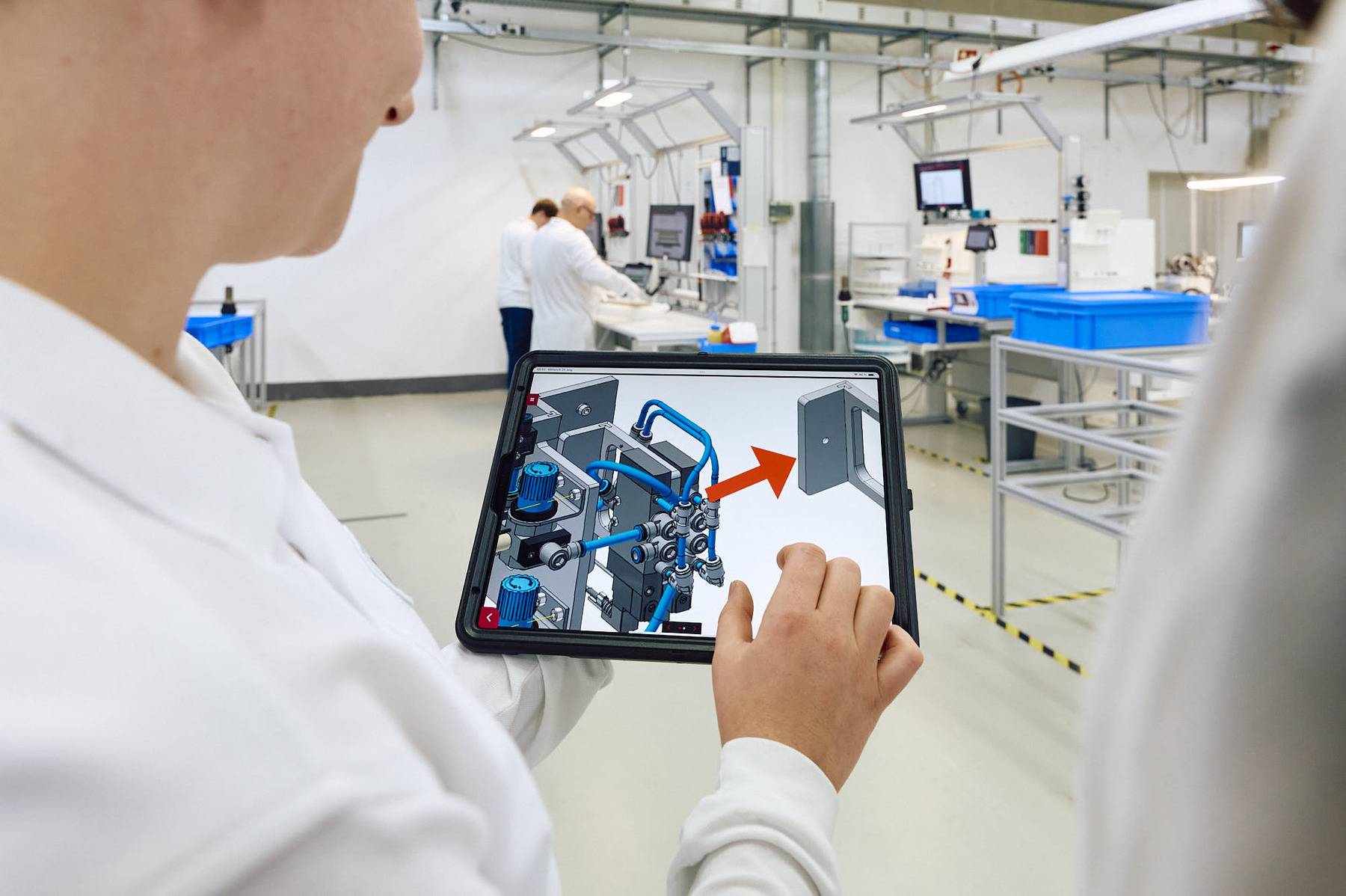
When an existing, fragmented archive—consisting, for example, of countless PDF files—is uploaded to the system, the “AI Import” feature performs a comprehensive analysis of the content. The AI independently structures the often disorganized content into chronologically logical work steps. Even when entirely new instructions are created directly on the physical object via a tablet using the step-by-step media function, the AI provides support. Through visual analysis of photos and symbols embedded in the images, the instructor generates technically accurate and linguistically clear descriptive texts with just one click. When updates are made, the AI also evaluates the version comparison and automatically generates complete release notes.
Module Architecture and Intelligent Variant Management
One of the most useful features of tepcon’s process management software is its elegant handling of branched process landscapes through integrated module and variant management. Instead of maintaining dozens of redundant documents for very similar processes, the software takes an advanced, object-oriented approach. Frequently used work steps, inspection routines, or forms are created once as universal “building blocks.” When such a building block is updated, the system automatically propagates the change to all dependent instructions.
At the same time, variant management solves the problem of increasing complexity. Completely different product variants are managed as clearly organized parameters within a central master instruction. By using Boolean expressions, the software breaks down product names into their properties and fully automatically controls the dynamic display and hiding of specific process steps. As a result, the operator sees only the information relevant to the specific variant.
Assignments, Checklists, and Comprehensive Logging
The tepcon instructor brings processes directly from theory into practice and serves as an operational tool. Using the “Assignments” module, managers plan and track within the system which team is responsible for which tasks. This is where workflow automation really shines: The system not only distributes instructions passively but also prompts employees to interactively confirm each completed process step in “Player Mode.”
Integrated checklists and digital forms eliminate the need for a traditional clipboard. In this way, work instructions and logs merge into a single workflow. If errors or material defects are detected during operations, they can be reported directly via a customizable ticket system thanks to integrated workflow functions. The system transparently documents issues and immediately notifies the relevant departments digitally via automated workflows—until the problem is resolved and the ticket is closed.
In a hurry? Click here to go directly to our product, the tepcon instructor!
Connectivity, Offline Availability, and Global Inclusion
Future-proof process management must never be an isolated, stand-alone solution. The tepcon instructor is architecturally designed to integrate seamlessly into existing IT landscapes as well as ERP or MES systems via standardized, open programming interfaces. This allows workflows to communicate directly with higher-level production planning systems.
Instructions are retrieved physically by scanning QR codes at the specific workstation. For critical operational use in environments with poor network connectivity, the guaranteed offline capability offers a procedural advantage. The instructions can be stored locally on the end device and accessed and executed independently. The enormous strength of the integrated multilingual capability is particularly evident in organizations that operate internationally. The software can automatically translate complete instructions into up to 133 different languages at the touch of a button, with a specialized dictionary ensuring that industry-specific terminology is rendered correctly.
Technology, Security, and Data Analysis
In addition to being easy for machine operators to use, modern software such as tepcon instructor must also meet the strict requirements of IT and quality departments. The focus here is on the secure handling of data and the transparent documentation of all changes.
Cloud Solution or On-Premises: Choosing the Right IT Architecture
When evaluating new systems, IT departments are often faced with the fundamental question of which infrastructure is best suited. Regardless of the final decision—whether a modern cloud solution is preferred or internal requirements mandate on-premises hosting—the tepcon instructor is designed to be entirely browser-based. A key technical advantage: All functions available to users via the web front end can also be fully accessed via GraphQL or REST interfaces. This allows the software to be flexibly integrated into existing IT landscapes and to communicate seamlessly with the surrounding systems in a modern industrial environment.

Versioning, Workflows, and Export Options
A key aspect of document management is audit trail compliance. All features of the tepcon instructor are supported and secured by strict versioning and structured approval workflows. These ensure that a procedure is not released to the workforce until it has been specifically reviewed by an authorized specialist.
Every change is stored in a traceable manner, ensuring that the history remains auditable at all times. For sharing with external partners, the comprehensive export function also allows entire completed workflows—including all form data—to be exported into custom corporate design templates (Word or PDF). Layouts can be precisely customized using variables to print complete and clear records of activities.
Seamlessly Integrating Compliance Management and QM Software
Regulatory requirements are increasing across all industries. Effective compliance management is therefore not optional—it’s mandatory. To satisfy auditors, many companies use specialized QM software. However, quality management (QM) works best when it is directly integrated into the workflow rather than designed as a parallel system. Companies often use an overarching GRC (Governance, Risk & Compliance) platform to centrally assess risks.
The tepcon instructor provides valuable baseline data for this purpose. The software ensures tamper-proof documentation of process executions in the background. This creates a detailed, digital audit trail that records the results achieved. To comply with data protection regulations and the requirements of works councils, personal performance data can be selectively anonymized within the system or protected through finely granular role-based access controls. This transparency is invaluable in liability matters without infringing on the workforce’s right to informational self-determination.
Process Mining and Proactive Process Analysis
When process data is available in real time and at a high level of granularity, it opens up entirely new dimensions of process analysis. A key term in this context is process mining. This involves using log data from IT systems to visually reconstruct actual process flows and identify bottlenecks.
While process mining is often based on ERP data, an operational solution like the tepcon instructor delivers actual real-time data from the shop floor directly to the analysis tools. The software logs how much time was required for each individual step and what results were achieved. This type of data forms the basis for comparing theoretical models with the physical reality on the shop floor.
Looking at the aforementioned knowledge management methods, it becomes clear that: Digital guides are, in principle, more scalable and can also be accessed anytime, anywhere.
Data Analysis and Process Optimization (Analytics)
The integrated analysis functions of the tepcon instructor make this collected data immediately usable. This allows for a clear visualization of how effectively processes are actually running. By linking to ERP-specific identifiers such as order numbers or individual serial numbers, the entire lifecycle of a manufactured component is documented in a fully traceable manner. This provides companies with comprehensive insights into the reality of their operations and enables them to use this essential, data-driven foundation to systematically identify and resolve bottlenecks.
From Theory to Practice: Application and the Human Factor
Even the best technical architecture only realizes its full value when it is applied in a real-world environment and is understood and accepted by employees on the ground. Theory and practice must therefore go hand in hand.
Use Cases in Everyday Industrial Settings (Assembly, Machinery, Field Service)
To illustrate the described functionalities, let’s look at typical scenarios from everyday production:
- When training semi-skilled assistants in assembly, the system overcomes language barriers by automatically translating instructions into up to 133 languages. The visual integration of images and 3D models guides staff safely through the process.
- When new instructions are created directly on a running machine using a tablet, the AI steps in to assist, automatically generating easy-to-understand descriptions and instructions from stored photos with markers.
- When service technicians are working in the field—for example, performing maintenance and repairs in heavily shielded production halls at the end customer’s site—they benefit from the fact that the software works reliably even offline. They simply save the work instructions locally on their device and complete their tasks without an internet connection. As soon as they are connected to the internet again, the device synchronizes all created logs with the main system without any data loss.
The Human Factor: Building User Acceptance
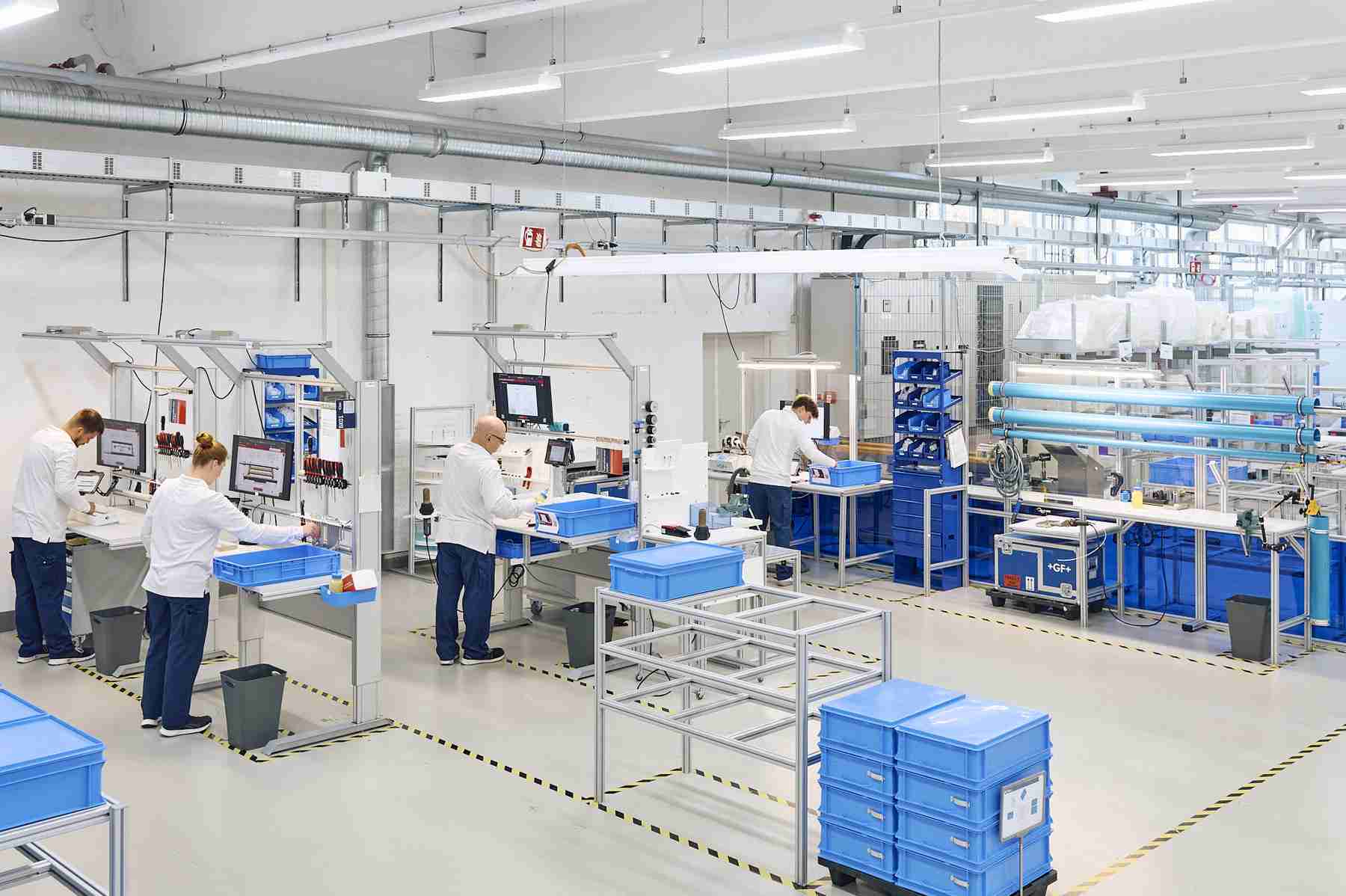
Acceptance by the workforce is always fundamental to the success of a software rollout. New tools often elicit skepticism. A truly efficient system like the tepcon instructor counteracts this by significantly reducing cognitive overload for employees on the job. Thanks to the integrated filters, the worker sees only the process steps relevant to the product variant at hand. This kind of visual focus on the essentials builds trust.
In addition, easy access via QR code, barcode, or direct link in Microsoft Teams breaks down technical barriers to entry. Management must understand that interactive elements actively involve the workforce in process design. If material shortages occur, they can be reported directly from the running process via a ticket system, which promotes collaborative troubleshooting.
Implementation: How a New Process Management Program Is Received
The introduction of new IT structures is a significant change process. A new process management program is most likely to be accepted by the workforce when the personal benefits are immediately apparent. The fact that the system saves valuable time by eliminating complicated search processes is the strongest argument for its implementation. When workers realize that their feedback via the ticket system is taken seriously and leads to rapid improvements, their initial skepticism turns into active support.
In a hurry? Click here to go directly to our product, the tepcon instructor!
The Management Perspective
Ultimately, investments in new software infrastructures must make financial sense. The integration of digital process control and resource management provides decision-makers with measurable leverage in this regard.
Continuous Improvement: From Current Processes to Best Practices
The goal of any process analysis is the continuous improvement of internal operations. Process management software supports methods such as Business Process Reengineering and Six Sigma. When a company thoroughly examines its current processes internally, weaknesses become apparent. The comprehensive logging provided by the tepcon instructor delivers precisely this objective baseline data, which is essential for such systematic optimization methods.
Best practices can be derived step by step from this data. If a particular shift consistently completes a setup task faster and with fewer errors, this optimized workflow can be entered into the system as a new standard module and rolled out to all other shifts. Optimization thus does not take place in a vacuum, but within the clearly defined and fully traceable framework of a data-driven strategy.
Cost-Effectiveness and Return on Investment (ROI)
The implementation of the software aims to achieve sustainable, data-driven optimizations and real cost reductions. Cost-effectiveness is primarily assessed through the return on investment (ROI). Measuring the ROI of process management software is often difficult, as many positive effects are initially indirect.
A key factor in making the cost savings of tepcon instructor immediately apparent, however, is the automation of the initial documentation creation process. Time-consuming manual post-processing is virtually eliminated, as artificial intelligence independently structures content into logical work steps. Highly skilled personnel can once again focus on value-added production. Furthermore, the building-block concept reduces administrative overhead. Since centrally updated building blocks are automatically inherited, redundancies are eliminated. During direct process execution, hiding irrelevant information speeds up throughput times at the machines. Clear operator guidance reduces the error rate and optimizes material costs, while the integrated translation function eliminates the need for costly invoices from external translation agencies.

Turn Your Process Management into an Agile Value-Adding Factor
Today, modern process management requires more than just checking off tedious documentation requirements. Do you want to permanently preserve valuable corporate knowledge, reduce error rates, and speed up your turnaround times? Then you need a digital approach that integrates seamlessly into your team’s day-to-day operations. With the tepcon instructor, you can bridge the gap between strategic planning at your desk and operational implementation right on the shop floor.
Free your processes from static files and transform them into intelligent, interactively controllable workflows. Turn your process management into a measurable and continuously optimizable value-added factor.
Take the next step now: Schedule a free initial consultation or jump right into a trial period to experience firsthand how the tepcon instructor makes your processes future-proof.