


Key Points at a Glance
Machine availability and plant availability are key performance indicators for any manufacturing industry. They measure how long a machine or plant is actually available – and thus how efficiently your production is running. Companies that systematically measure and improve their availability reduce unplanned downtime, lower costs, and strengthen their competitiveness. This article explains the basics, methods, and tools – and you’ll also learn how our tepcon instructor can help you optimize your operations.
Are you looking for the right digital tool to optimize equipment availability in your company?
Contact us – we’ll listen and find the right solution for your needs.
What is machine availability – and why is it so crucial?
Machine availability describes the percentage of time during which a machine is actually available for productive use – measured against the planned production time. The formula is:
Machine availability = (Planned production time – Downtime) / Planned production time × 100%
Let’s look at a calculation using a concrete example. If a machine is idle for 1.5 hours out of 8 planned hours due to malfunctions, maintenance, or setup, the result is 81.25% – a solid figure, but one that can be improved with specific measures.
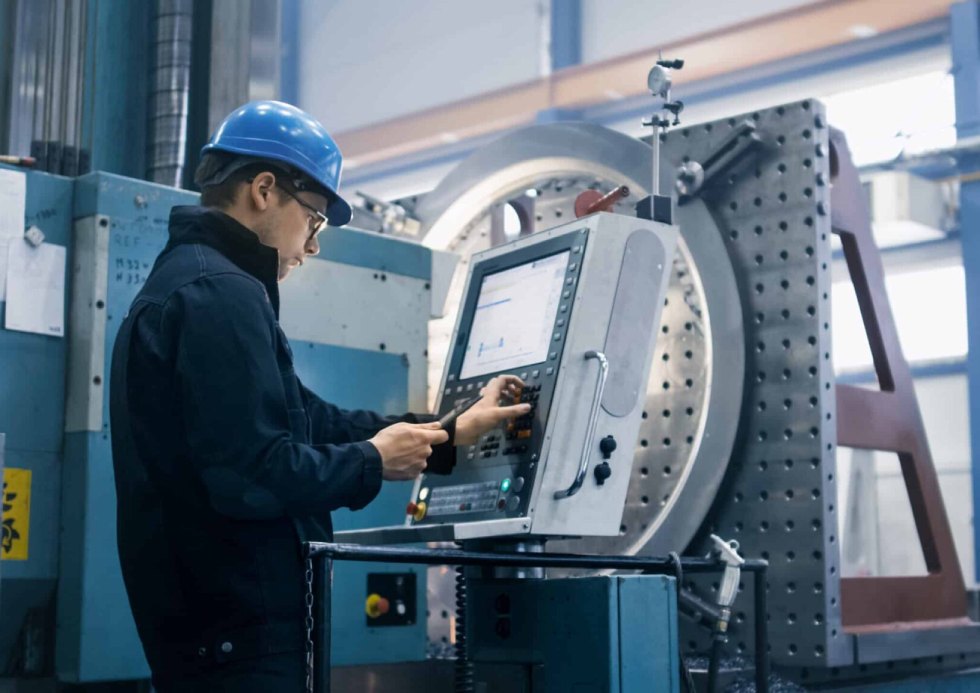
Definition of Plant Availability and Machine Availability
Machine availability refers to a single machine: It measures how long the machine is operational during a defined period. Technical malfunctions, maintenance, or setup times reduce the operating time and thus the availability value.
Plant availability, on the other hand, considers entire production lines or interlinked systems. If a single machine fails, it affects the availability of the entire process – even if all other machines and systems are running flawlessly.
However, the terms “plant availability” and “machine availability” are sometimes used interchangeably.
In this context, a distinction is often made between technical availability and operational availability. Overall Equipment Effectiveness (OEE) goes a step further and combines availability with performance and quality into a single process-oriented metric.
Why Companies Need to Focus on Plant and Machine Availability
Any unplanned downtime costs not only production time but also money: labor costs continue to accrue, orders are delayed, and the ROI on the machine investment declines. High availability ensures that production runs smoothly, delivery deadlines are met, and capacity planning works out as intended. Optimizing machine availability is one of the greatest areas for improvement in many companies.
In a hurry? Click here to go directly to our product, the tepcon instructor!
Benefits at a Glance
Consistently improving machine availability in production pays off on several levels:
- Higher productivity through increased production time per shift
- Lower costs by avoiding unplanned downtime
- better planning of production, personnel, and materials
- increased overall equipment effectiveness through improved availability
- shorter setup times and fewer organizational production downtimes
- higher quality, lower losses due to more stable production processes
Challenges and Obstacles: What Can Stand in the Way of Perfect Availability
Setup times, technical malfunctions, and organizational downtime often account for 40 to 70% of all availability losses. An overview of the most common causes:
Technical Malfunctions and Unplanned Downtime
Sudden breakdowns don’t just stop the affected machine – in the case of interlinked production lines, they can bring entire sections or even the entire production process to a standstill. Recurring malfunctions in specific components usually indicate inadequate maintenance.
Setup Times and Format Changes
Long setup times directly reduce planned production time and, consequently, the availability rate. Setup is a key area for optimization, especially when there is a high degree of product variety.
Organizational Downtime
Missing materials, unclarified orders, or information gaps on the shop floor can shut down machines and equipment for just as long as a technical defect – yet they are often underestimated.
Knowledge Dependency and Lack of Standardization
When the quality of maintenance and setup processes depends on individual key personnel and knowledge is not readily accessible, personnel changes lead to fluctuations in quality and longer downtime – at the expense of speed and equipment availability.

Methods for Ensuring Plant and Machine Availability
Preventive Maintenance: Taking Precautions Instead of Reacting
TPM – Total Productive Maintenance
Predictive Maintenance: The Next Level of Maintenance
SMED – Systematically Reducing Setup Times
Overall Equipment Effectiveness: An Overview of the Key Metric
Overall Equipment Effectiveness (OEE) measures the productivity of machines and equipment based on three factors: availability, performance, and quality.
How is the overall OEE calculated?
A machine with 90% availability, 85% performance, and 95% quality achieves an OEE of 72.7%. The availability factor measures the actual production time used; performance measures the production speed relative to the target performance; and the quality factor measures the percentage of defect-free parts.
Calculation of the OEE value:
- OEE = Availability × Performance × Quality
- OEE = 0.90 × 0.85 × 0.95 = 0.72675
- OEE = 72.68% (rounded to 73%)
This means that, taking all losses into account, the equipment operates at an overall efficiency of approximately 73%.
Looking at the aforementioned knowledge management methods, it becomes clear that: Digital guides are, in principle, more scalable and can also be accessed anytime, anywhere.
When is an OEE score considered good?
An OEE score of 80% or higher is considered very good in discrete manufacturing. Scores below 40% indicate a significant need for improvement. In practice, when companies measure their Overall Equipment Effectiveness for the first time, their scores are often significantly lower than they would have expected.
When is an OEE score considered good?
An OEE score of 80% or higher is considered very good in discrete manufacturing. Scores below 40% indicate a significant need for improvement. In practice, when companies measure their Overall Equipment Effectiveness for the first time, their scores are often significantly lower than they would have expected.
The Difference Between OEE and Technical Availability
While technical availability measures only a machine’s operational readiness, OEE also takes performance and quality into account. Companies that focus solely on technical availability may overlook significant losses in other areas.
Availability in the Age of Industry 4.0
Digitalization is fundamentally changing how we manage machine and plant availability. Today, networked sensors, MES systems, and cloud-based analytics tools enable the continuous, automatic collection of all relevant machine data – in real time and with significantly greater precision than any manual data collection method. Modern technologies such as IoT sensors automatically detect downtime, optimize maintenance intervals based on data, and provide the foundation for predictive maintenance strategies in maintenance and repair. Companies that take this step gain a robust data foundation for the continuous optimization of their production processes – and a genuine competitive advantage.
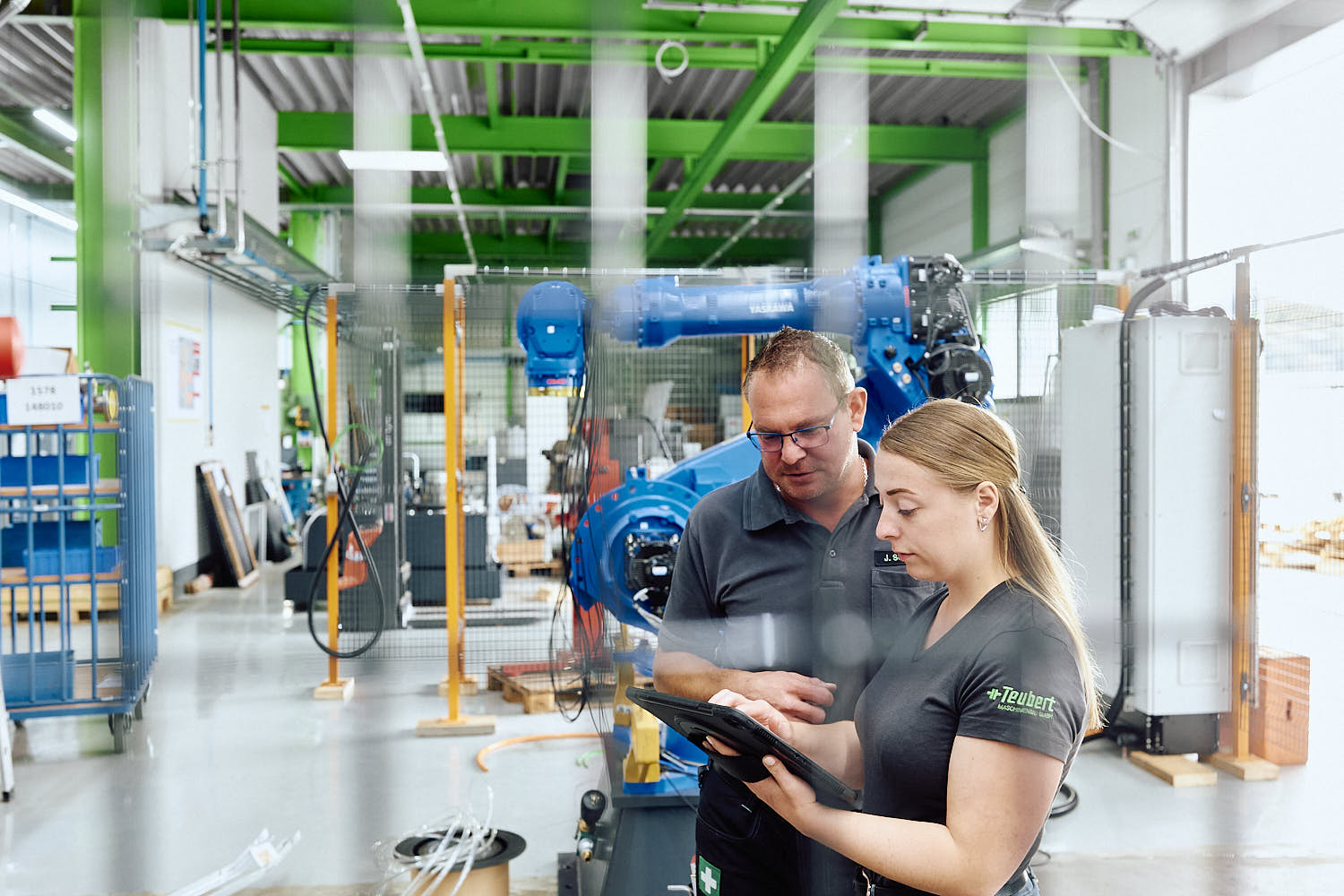
The tepcon instructor: A Tool for Optimizing Plant and Machine Availability
At tepcon, we have developed the instructor, a digital tool that addresses several key factors affecting machine and plant availability – from maintenance documentation to fault reporting.
Standardized maintenance instructions for consistent maintenance
With the tepcon instructor, you can create digital step-by-step maintenance instructions that are available to your technicians at any time – even offline. Marker images, videos, and 3D content make complex maintenance steps easy to understand and reliably reduce errors.
Digital Checklists, Work Orders, and Inspection Instructions
Maintenance tasks can be planned, assigned, and monitored in a structured manner. Every task completion is automatically logged, and every inspection step is documented in a traceable manner. This transforms reactive maintenance into a predictable, preventive maintenance strategy – with a direct impact on downtime.
The Ticket System: Responding Faster to Malfunctions
If a malfunction occurs, operators can log it immediately and notify the appropriate staff. All actions are documented until the problem is resolved. This reduces downtime and provides valuable data for analyzing recurring failures.
Guided Troubleshooting and Rapid Problem Resolution
In the event of a malfunction, the tepcon instructor guides your employees step by step through the troubleshooting process and subsequent resolution. Clear procedures and visual aids enable rapid, structured problem-solving right at the machine. This minimizes downtime – because while malfunctions cannot be avoided, their resolution can be specifically accelerated.
Setup Instructions and Building Blocks for Faster Format Changes
The instructor digitally maps setup processes according to SMED logic: standardized, with associated media and integrated checkpoints. Frequently used steps can be saved as building blocks and reused in various instructions – an efficient solution even for large machine fleets.
Analytics and Interfaces for Data-Driven Optimization
The analytics function provides transparent insights into process quality and optimization potential. Through GraphQL and REST interfaces, the instructor can be seamlessly integrated into existing ERP, MES, or CMMS systems – ensuring a consistent data foundation from maintenance planning through analysis.
Take the first step now
Would you like to systematically improve your machine availability? Do you have a question about the specific benefits the instructor can offer you in practice? Contact us – we’ll show you in a no-obligation initial consultation how the instructor can be used in your production environment.